TikTok Fuels American Obsession with Banned $10K Chinese EVs
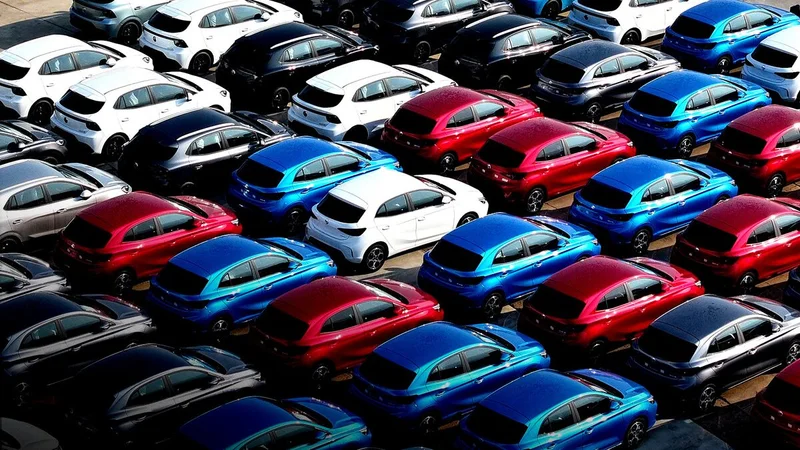
Image: Bloomberg AI
Main Takeaway
US drivers binge on social media videos of cut-price Chinese EVs they legally can't buy, creating a bizarre demand vacuum that Washington's bans only intensify.
Jump to Key PointsSummary
Why TikTok drivers now crave forbidden EVs
American car influencers are racking up millions of views praising Chinese electric vehicles that none of their followers can legally purchase. According to Bloomberg, clips showcasing BYD Seagulls priced under $11,000 and Xiaopeng G6 crossovers at half the cost of a Tesla Model Y have become a TikTok staple, even though these brands have zero US dealerships. The phenomenon mirrors the 1990s Japanese-import craze, Axios notes, but with the twist that social media accelerates desire faster than regulators can respond. The result is a surreal market where Americans window-shop on phones for cars trapped behind a 100 percent tariff wall.
How Chinese brands hacked American attention
The playbook is simple: ship a few cars to Mexico or Canada, let US influencers road-trip them, and watch the algorithm do the rest. Reuters reports that creators like Car Confections and Cleanerwatt have posted dozens of “what you can’t have” reviews that outperform coverage of domestically available EVs. Chinese automakers quietly sponsor some trips and loan vehicles to Canadian YouTubers who then film within driving distance of Buffalo or Detroit, a tactic The Verge calls “soft marketing without violating import rules.” Climate.uchicago adds that the content surge coincided with peak US gas prices in early 2026, amplifying the price-gap shock when viewers see a $10,000 EV that travels 250 miles per charge.
Washington’s ban is becoming a marketing superpower
Every new tariff announcement doubles as free advertising. The Los Angeles Times explains that when the Commerce Department floated an additional 25 percent levy on Chinese vehicles last month, Google searches for “BYD Seagull import loophole” spiked 400 percent. Digitaltrends frames the dynamic bluntly: “prohibition made the cars cooler.” Stratnewsglobal points out that Chinese state media has leaned into the narrative, portraying the US as protectionist while circulating clips of American influencers begging for access. The unintended consequence is that Americans now equate Chinese EVs with both affordability and rebellion—an intoxicating mix for any product category.
What this means for Detroit and Tesla
Domestic automakers are watching the TikTok frenzy with growing alarm. Autoblog cites unnamed Ford and GM lobbyists who fear a repeat of the 1980s Japanese disruption, only faster. Tesla, whose cheapest Model 3 still costs roughly three times a BYD Dolphin, has quietly accelerated plans for a rumored $25,000 compact, according to industry analysts quoted by Emoryeconomicsreview. The risk isn’t immediate sales loss—imports remain illegal—but long-term brand erosion among younger buyers who now view Chinese EVs as the default affordable option.
The supply-chain reality behind the hype
Behind the viral videos lies an uncomfortable truth: even if tariffs vanished tomorrow, most Chinese EVs would need months of US regulatory certification. Reuters notes that BYD’s blade batteries, while cheap, haven’t completed full NHTSA crash testing. The LA Times adds that software localization—everything from miles-to-kilometers toggles to Supercharger protocol compatibility—would add thousands in retrofit costs. So the $10,000 sticker seen on TikTok could balloon to $17,000 by the time a car legally hits a California dealer lot, narrowing but not eliminating the price gap with used Chevy Bolts.
What happens next
Expect the content wave to intensify before it crests. Bloomberg predicts Chinese automakers will double down on “grey-market” influencer tours through Mexico and the EU, feeding the US appetite without crossing legal lines. Meanwhile, Axios reports bipartisan chatter about banning even promotional content featuring banned vehicles—a move First Amendment lawyers are already calling “legally laughable.” The more likely outcome, per Emoryeconomicsreview, is a 2027 compromise: limited import quotas in exchange for US battery-plant investments, mirroring the 1980s Japanese playbook. Until then, Americans will keep binge-watching cars they can’t buy, while TikTok’s algorithm keeps minting new EV influencers one viral review at a time.
Key Points
TikTok and YouTube influencers are generating massive American demand for Chinese EVs priced as low as $10,000 despite a 100% import ban.
Chinese automakers use grey-market tactics like Canadian influencer road-trips to showcase cars without violating US import rules.
Every new tariff announcement paradoxically increases consumer interest, with Google searches for "BYD import loophole" spiking 400%.
Domestic automakers fear long-term brand erosion as younger buyers view Chinese EVs as the default affordable option.
Even if legalized tomorrow, regulatory compliance and retrofitting would likely raise the $10K sticker to around $17K.
Questions Answered
A 100% tariff effectively blocks imports, and the vehicles haven't completed US safety and emissions certification.
They film in Canada or Mexico where the cars are legally sold, or borrow them from Chinese companies for content creation near US borders.
No. Compliance, shipping, and dealer margins would likely push real-world pricing closer to $17,000.
BYD (Seagull, Dolphin) and Xiaopeng (G6) dominate TikTok and YouTube reviews due to their extreme price-to-range ratios.
Yes. Tesla is reportedly accelerating a $25,000 compact, while Ford and GM lobby for stricter enforcement of existing bans.
Unlikely. Legal experts cite First Amendment protections, though bipartisan discussions about content restrictions have begun.
Source Reliability
60% of sources are highly trusted · Avg reliability: 75
Go deeper with Organic Intel
Simple AI systems for your life, work, and business. Each one includes copyable prompts, guides, and downloadable resources.
Explore Systems