SpaceX Seals $60 Billion Cursor Takeover to Turbocharge Musk's AI Coding Ambitions
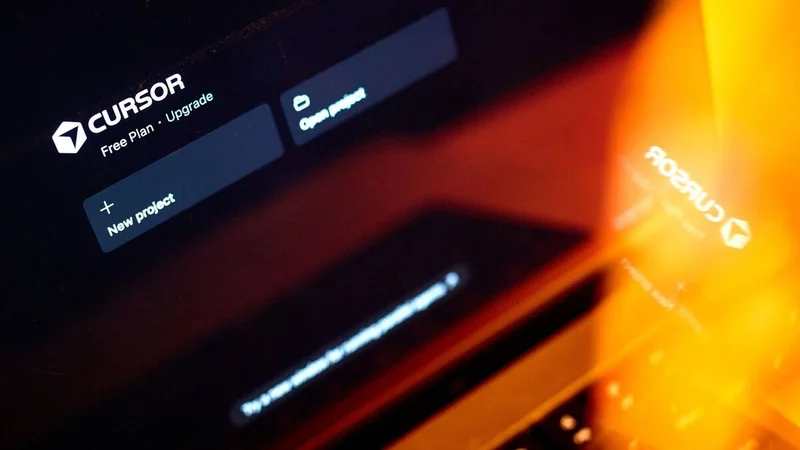
Image: Bloomberg AI
Main Takeaway
SpaceX formally agreed to acquire AI coding startup Cursor for $60 billion in stock days after its historic IPO.
Jump to Key PointsSummary
Why SpaceX is buying Cursor now
SpaceX has formally agreed to acquire AI coding startup Cursor in a $60 billion all-stock deal, according to regulatory filings and multiple reports. The transaction closes less than two months after the companies announced a strategic partnership with an option to buy, and comes mere days after SpaceX completed its blockbuster IPO. According to TechCrunch, the deal is designed to help SpaceX's AI division catch up to major AI labs, a division now built around xAI, which SpaceX merged with earlier this year. Bloomberg reports that the acquisition cements a key part of Elon Musk's efforts to close the gap with rivals on coding tools.
The timing is deliberate. SpaceX told IPO investors it sees a $26 trillion addressable market in AI, and Cursor gives it an immediate foothold in one of the fastest-growing segments: AI-assisted software development. For a company that just raised public capital, spending it on growth rather than rockets signals where Musk believes the next decade of value creation lies.
How the deal is structured
The $60 billion price tag is entirely in stock, not cash, which preserves SpaceX's liquidity while tying Cursor's fate to SpaceX's share price. This structure matters. Cursor's team and investors are now betting that SpaceX's public market valuation will outpace what they could have achieved independently. According to Law360, two major law firms have taken the lead on the transaction, suggesting complex regulatory and antitrust review ahead. The deal originated as an option to buy announced in April 2026, which SpaceX has now exercised.
Stock deals of this magnitude are rare in AI. They typically happen when the buyer wants to conserve cash for other priorities, or when the target's backers prefer equity upside. In this case, both apply. SpaceX needs capital for Starship and Starlink; Cursor's investors get a ride on a public vehicle.
What this means for AI coding tools
Cursor has emerged as one of the most popular AI coding assistants, competing directly with GitHub Copilot, Google's Gemini Code Assist, and a growing field of startups. The acquisition by SpaceX, rather than a traditional tech giant, reshapes competitive dynamics. Most AI coding tools are owned by cloud providers or standalone startups; none sit inside a space and satellite company with defense contracts and a social media platform under the same umbrella.
This matters for developers. Cursor's integration with xAI's models, particularly Grok, could create a vertically integrated stack that rivals Microsoft's GitHub-OpenAI pairing. Or it could distract Cursor from its core mission as it gets pulled into Musk's broader ecosystem. The outcome depends on whether SpaceX treats Cursor as a standalone product or a feature for its other platforms. Early signals suggest the latter: TechCrunch notes the deal is explicitly meant to help SpaceX's AI division catch up to competitors.
The regulatory and competitive landscape
A $60 billion deal in a concentrated market will attract scrutiny. Law360's reporting on the lead law firms indicates SpaceX is preparing for a thorough review. Antitrust concerns may focus on whether the combination of xAI's models with Cursor's distribution creates barriers for rival coding tools. Defense-related issues could also arise, given SpaceX's Pentagon contracts and the national security implications of AI-generated code.
Competitors are unlikely to sit still. Microsoft and GitHub may accelerate Copilot feature releases or pursue acquisitions of their own. Google could deepen Gemini's integration with Android Studio and Cloud. OpenAI, which has its own coding ambitions, might respond by making its API more attractive to Cursor rivals. The deal forces every player to reassess their position in a market that Forbes AI suggests has a surprise winner, though its analysis was not available in excerpts.
What happens next for SpaceX and xAI
The acquisition completes the merger of Musk's AI and space interests into a single public entity. SpaceX now houses rockets, satellites, social media through X, and AI coding tools. The integration challenge is enormous. xAI was already folded into SpaceX earlier this year; adding Cursor layers another culture and technology stack onto a company that is still proving it can operate as a public concern.
Near-term milestones include regulatory approval, retention of Cursor's engineering team, and product roadmap decisions. Will Cursor remain available to all developers, or become exclusive to SpaceX and xAI platforms? Will pricing change? These questions will determine whether the $60 billion generates returns or becomes a cautionary tale about overreach. For now, Musk has bought himself a major position in AI's most practical application: writing the code that runs everything else.
The bigger bet on AI's $26 trillion market
SpaceX's IPO materials framed AI as a $26 trillion opportunity, a figure that encompasses not just coding tools but autonomous systems, robotics, and generative applications across industries. Cursor represents the beachhead. By acquiring rather than building, SpaceX skips years of product development and gains millions of developer users overnight.
This approach has risks. Cursor was built on top of existing large language models, including those from OpenAI and potentially others. Dependencies on competitors for underlying technology create strategic vulnerability. If SpaceX wants true independence, it will need to migrate Cursor to Grok and future xAI models, a technical and user-experience challenge that could degrade the product. The $60 billion valuation assumes Cursor continues to grow; any stumble in execution would be costly for public shareholders already absorbing SpaceX's complex story.
Key Points
SpaceX formally agreed to acquire AI coding startup Cursor for $60 billion in stock.
The deal closes an option to buy announced in April 2026, weeks after SpaceX's IPO.
SpaceX aims to catch up to OpenAI, Microsoft, and Google in AI coding tools.
The all-stock structure ties Cursor's value to SpaceX's public market performance.
Two major law firms are leading the transaction, signaling complex regulatory review ahead.
Questions Answered
Yes, SpaceX has formally agreed to acquire Cursor for $60 billion in stock according to regulatory filings and multiple news reports. The deal was finalized in June 2026, shortly after SpaceX completed its IPO and exercised an option to buy that was established in April 2026.
SpaceX is acquiring Cursor to rapidly gain market position in AI coding tools rather than spending years on development. According to TechCrunch, the deal helps SpaceX's AI division, built around xAI, catch up to major AI labs. SpaceX has told investors it sees a $26 trillion addressable market in AI.
The full impact remains uncertain, but Cursor's integration with xAI's Grok models could create a vertically integrated stack. There is open questions about whether Cursor will remain broadly available or become tied more closely to SpaceX and xAI platforms, which would reshape its value proposition for developers.
The deal faces potential antitrust scrutiny and national security review given its size and SpaceX's defense contracts. According to Law360, two major law firms have taken the lead on the transaction, suggesting complex regulatory work ahead. The $60 billion scale in a concentrated AI market will attract significant attention.
The $60 billion all-stock acquisition is among the largest in AI history and unusual in that a space and satellite company is buying a coding tool rather than a traditional tech giant. This reshapes competitive dynamics, with Microsoft, Google, and OpenAI likely to respond with their own moves in the AI coding assistant market.
Source Reliability
42% of sources are highly trusted · Avg reliability: 70
Go deeper with Organic Intel
Simple AI systems for your life, work, and business. Each one includes copyable prompts, guides, and downloadable resources.
Explore Systems