Amazon shares jump as AWS growth accelerates for fifth straight quarter, capex plans expand
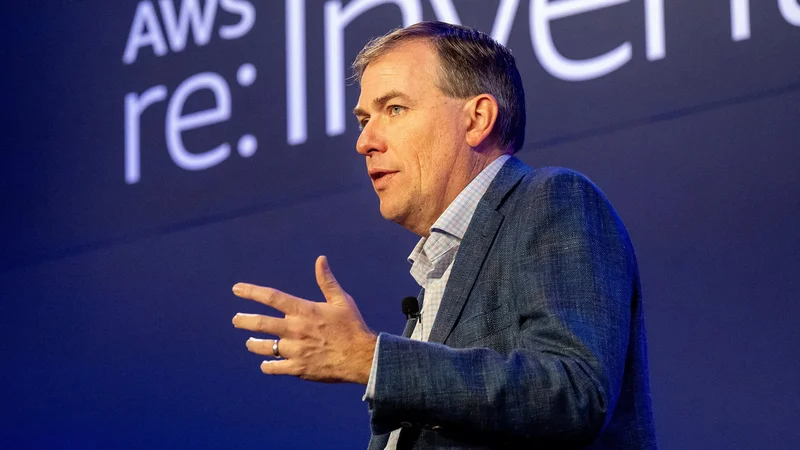
Image: Cnbc
Main Takeaway
Amazon shares climbed in after-hours trading after the company reported its fifth consecutive quarter of accelerating cloud revenue growth, with AWS sales hitting $37.59 billion and beating Wall Street estimates.
Jump to Key PointsSummary
AWS Revenue Hits $37.59 Billion as Cloud Growth Accelerates for Fifth Straight Quarter
Amazon Web Services generated $37.59 billion in revenue during the second quarter of 2026, a 28.4% increase from the $29.27 billion reported in the same period last year. That figure also represents a 5.6% sequential jump from the $35.58 billion recorded in the first quarter, according to Ycharts data tracking the division's quarterly performance. The result marks the fifth straight quarter where AWS growth has accelerated, a streak that Bloomberg reports eased investor anxiety about whether Amazon's massive infrastructure spending would ever produce adequate returns. The cloud unit now accounts for more than one-fifth of Amazon's total revenue, a milestone CNBC noted earlier this year when AWS first crossed that threshold. CEO Andy Jassy and CFO Brian Olsavsky fielded analyst questions on the earnings call, according to the transcript published by MarketBeat. The tone reflected confidence that the growth trajectory is sustainable, even as capital expenditure plans expand to support AI workloads and broader cloud demand.
After-Hours Stock Surge Follows Earnings Beat and Capex Increase
Amazon shares jumped in postmarket trading immediately following the earnings release. Reuters reports the company lifted its capital expenditure plan alongside the strong cloud sales figures, a combination that sent the stock climbing as investors interpreted the spending increase as a signal of sustained demand rather than reckless overinvestment. Options pricing ahead of the report pointed to an expected swing of roughly 6.3% on results day, above the average one-day move of 5.4% seen after recent quarters, according to SIG's earnings preview. That wider implied move indicated traders anticipated this particular set of numbers would carry more weight than usual. Bloomberg's video coverage confirmed that the second-quarter earnings beat Wall Street estimates, with the 28% year-over-year cloud revenue increase being the headline figure that drove the after-hours rally. The stock had entered the report roughly 18% higher year-to-date, sitting around $232 per share.
Capex Expansion Signals Demand-Driven Infrastructure Bet
The capex lift is the detail that transformed a solid earnings report into a market-moving event. Rather than cutting back on infrastructure spending, Amazon is doubling down. Reuters characterized the move as a direct response to the sustained cloud sales momentum, with the company betting that AI-driven workloads will continue to pull demand forward. This spending posture mirrors what competitors Microsoft and Google have signaled in their own recent quarters. CNBC previously reported that all three hyperscalers, plus Meta, are investing heavily for the AI era, creating a competitive dynamic where restraint could mean ceding market share. Amazon's decision to raise capex rather than harvest profits suggests leadership sees the window for infrastructure buildout as time-sensitive. The MarketBeat transcript shows Jassy and Olsavsky framing the investment as capacity expansion to meet enterprise customer demand. The subtext is clear: AWS isn't just maintaining its lead in cloud infrastructure, it's widening the moat while competitors race to keep pace.
Competitive Pressure Mounts as Hyperscalers Pour Billions into AI
AWS remains the cloud infrastructure market leader, but the gap with Microsoft Azure and Google Cloud is under constant pressure. CNBC's April report on the first quarter noted that stiffening competition is the backdrop for all three companies as they each pour billions into AI infrastructure. The second quarter results confirm that Amazon is holding its ground. SIG's earnings preview suggested that the advertising business could be the real story this season, but the cloud numbers ultimately dominated the narrative. That shift reflects a broader market reality: AI infrastructure spending is the metric that institutional investors are watching most closely across all the hyperscalers. Amazon's 28.4% year-over-year growth rate in AWS revenue, as tracked by Ycharts, compares favorably to the growth rates Microsoft and Google reported for their respective cloud divisions in recent quarters. The sustained acceleration across five quarters distinguishes Amazon's trajectory from competitors who have seen growth rates stabilize or decelerate.
AI Investment Thesis Validated by Five Quarters of Accelerating Growth
The earnings report provides the clearest evidence yet that Amazon's AI bet is translating into financial results. For multiple quarters, investors questioned whether the enormous capital expenditure on AI infrastructure would generate proportional returns. The fifth straight quarter of accelerating cloud growth is the answer. Bloomberg's analysis frames the results as directly easing those investor concerns. The revenue acceleration pattern suggests that AI workloads are not just a future promise, they're current reality driving real dollars through the AWS platform. Every quarter of acceleration makes the spending look less like speculation and more like capacity planning for demand that has already materialized. The conference call transcript from MarketBeat captures management's framing of the investment cycle. Jassy and Olsavsky described the capex increase as demand-driven rather than speculative, a distinction that matters enormously for how Wall Street prices the stock. When spending is reactive to customer demand, it gets valued differently than when it's preemptive and unproven.
The Road Ahead as Market Watches for a Sixth Quarter of Acceleration
The immediate focus shifts to whether the acceleration streak extends to six quarters. Options pricing and analyst consensus both suggest that each successive quarter of cloud growth carries higher stakes, with the market now expecting the trend to continue rather than treating it as a pleasant surprise. Macrotrends historical revenue data provides context that makes the current run stand out. AWS has grown from a relatively small contributor to the dominant profit engine for Amazon over the past decade, and the 2026 quarterly figures represent the division operating at a scale that would have been hard to imagine five years ago. The capex increase also sets up a watchpoint for the next quarter: whether the spending translates into sustained growth acceleration or whether it begins to pressure margins. For now, the market is rewarding the ambition. The after-hours stock move confirms that investors are buying the growth story.
Key Points
Amazon's AWS revenue hit $37.59 billion in Q2 2026, a 28.4% year-over-year jump and the fifth straight quarter of accelerating growth.
Amazon shares rose in after-hours trading after the company beat earnings estimates and raised its capital expenditure plan.
AWS now accounts for more than one-fifth of Amazon's total revenue, cementing its role as the company's primary growth engine.
Options markets had priced in a 6.3% post-earnings swing, above the 5.4% average, signaling heightened expectations for this report.
CEO Andy Jassy framed the capex increase as a response to growing customer demand for AI workloads rather than speculative investment.
Questions Answered
Amazon reported AWS revenue of $37.59 billion for the second quarter of 2026, up 28.4% from $29.27 billion in the same quarter last year. The figure also represents a 5.6% increase from the prior quarter's $35.58 billion.
Amazon shares jumped in after-hours trading because the company beat Wall Street estimates on cloud revenue and raised its capital expenditure plan. The capex increase signaled confidence in future AI-driven demand rather than spending concerns.
Amazon's cloud growth is accelerating, with Q2 2026 marking the fifth consecutive quarter of faster growth. The 28.4% year-over-year increase continues a streak that has eased investor concerns about returns on infrastructure spending.
AWS now accounts for over 20% of Amazon's total revenue, crossing the one-fifth threshold that CNBC reported as a milestone for the cloud division's contribution to the parent company.
Amazon's 28.4% AWS growth rate in Q2 2026 compares favorably to the growth rates Microsoft Azure and Google Cloud reported in their recent quarters. Amazon's five-quarter acceleration streak distinguishes it from competitors that have seen growth rates decelerate.
Source Reliability
43% of sources are highly trusted · Avg reliability: 64
Go deeper with Organic Intel
Simple AI systems for your life, work, and business. Each one includes copyable prompts, guides, and downloadable resources.
Explore Systems