SK Hynix Shares Plunge Up to 20% After Record Profit Misses Sky-High AI Expectations
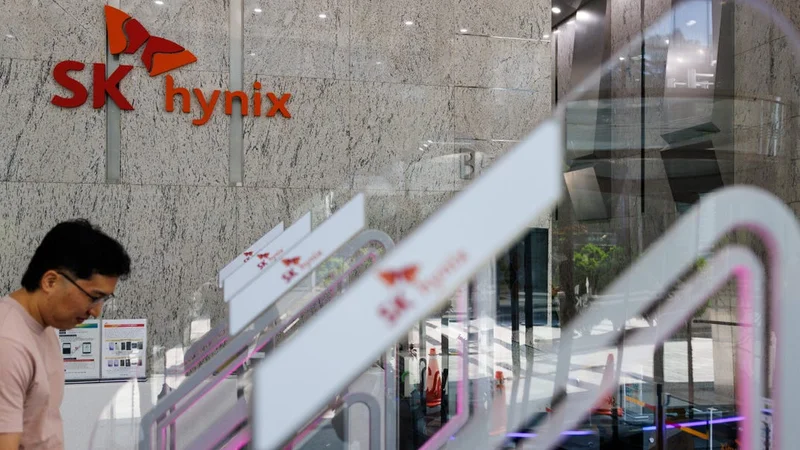
Image: Businessinsider
Main Takeaway
SK Hynix shares tumbled as much as 20% in Seoul after the Nvidia supplier reported a record 557% profit surge that still fell short of investor forecasts, heightening fears of decelerating AI spending.
Jump to Key PointsSummary
Why a 557% profit jump wasn't enough
SK Hynix reported a staggering 557% increase in operating profit for the second quarter, reaching 60.54 trillion won, roughly $41.6 billion. Revenue more than tripled to a record 79.32 trillion won, and the company posted a record 76% operating margin. For any other company in any other sector, those numbers would spark a celebration. Instead, shares cratered.
Investors had priced in even more. The LSEG SmartEstimate consensus forecast called for 64 trillion won in operating profit, and the roughly $4 billion shortfall sent the stock into a tailspin. Shares dropped as much as 19% to 20% during the session, according to Bloomberg and Business Insider, before closing down about 13%. It was the steepest single-day decline on record for the South Korean chipmaker.
The shipment delays that eroded margins
Behind the headline miss sits a specific operational snag. SK Hynix disclosed that delays in shipments of some advanced products limited price gains for its mainstay DRAM chips. The company dominates the market for high-bandwidth memory, the specialized chips that Nvidia's AI accelerators need to train and run large models, but even that position couldn't fully insulate it from timing hiccups.
Reuters reports the company is racing to lock in long-term supply deals to cushion itself against the industry's notoriously volatile demand cycles. That push for contractual stability signals an acknowledgment that the current boom, while extraordinary, won't deliver smooth quarterly growth forever. The shipment delays also raise a practical question for Nvidia: if SK Hynix can't get enough advanced HBM chips out the door on schedule, does that ripple into GPU availability further down the supply chain?
A record $31 billion spending bet rattles investors
The profit miss landed alongside another number that spooked the market: a record $31 billion in capital spending planned for this year. That's a monumental outlay, even for a company at the center of the AI infrastructure buildout, and it landed at a moment when fears about overinvestment in AI are already simmering across global markets.
Bloomberg's Ed Ludlow noted that the combination of the earnings shortfall and the massive capex commitment hit Korean stocks hard on Wednesday, dragging down the broader Kospi index. The spending plan forces investors to weigh two competing narratives. One is that SK Hynix is positioning itself to capture years of AI-driven demand for HBM. The other is that the industry is collectively pouring too much capital into capacity that might outstrip actual need, a classic semiconductor boom-and-bust pattern.
Fears of a broader AI spending slowdown
The SK Hynix sell-off didn't happen in isolation. It arrived just as Big Tech companies were preparing to report their own quarterly results, and it fed into a growing narrative that the AI boom may be decelerating. Bloomberg reported that the miss added to heightened fears about slower AI spending by major tech firms, the very customers that buy Nvidia's chips and, by extension, SK Hynix's memory.
Business Insider put it bluntly: a 557% profit jump couldn't save SK Hynix from an earnings-day slump or the KOSPI from a rout. Retail investors in South Korea have been piling into chip stocks, and the sudden reversal hit them hard. The dynamic is a stark reminder that AI enthusiasm has already been priced into these stocks. When results merely meet or slightly miss expectations, there's no room for error, and the sell-off can be brutal.
What this means for Nvidia and the HBM supply chain
SK Hynix is Nvidia's main supplier of high-bandwidth memory, and the company said it expects HBM sales to more than double this year. That's the bullish side of the story. The bearish side is that shipment delays for advanced products introduce uncertainty into the supply chain that feeds Nvidia's GPU production.
Fortune notes that SK Hynix remains at the forefront of HBM technology, and the 75% revenue jump and 25% dividend increase underscore the company's confidence. But Nvidia investors are now parsing the same signals that hammered SK Hynix shares. If memory supply constraints persist, Nvidia's ability to meet its own delivery targets could face headwinds, and that's the kind of second-order effect that turns a single-company miss into a sector-wide reckoning.
What happens next
The immediate focus shifts to Big Tech earnings reports. If companies like Microsoft, Meta, and Google signal sustained or increased AI infrastructure spending, the SK Hynix sell-off could look like an overreaction. If those reports show any hesitation, the rout could deepen and spread beyond Korean chipmakers.
SK Hynix's push for long-term supply deals is the clearest signal of where management sees the market heading. Locking in customers now, even at the cost of some near-term pricing power, is a defensive move designed to survive a potential downturn. The $31 billion spending plan is the offensive counterpart: a bet that the AI cycle has years left to run. Investors just made it clear they're not convinced the bet will pay off.
Key Points
SK Hynix shares plunged a record 19% after operating profit of 60.54 trillion won missed analyst estimates by roughly $4 billion
The company posted a 557% profit jump and record 76% operating margin, but investors had priced in even stronger AI-driven growth
Delays in shipments of advanced DRAM products limited price gains for the Nvidia supplier's mainstay memory chips
A record $31 billion capital spending plan for the year intensified market fears about AI overinvestment and a potential spending slowdown
The sell-off dragged down the broader KOSPI index as retail investors who had piled into chip stocks faced a sharp reversal
Questions Answered
SK Hynix shares fell up to 19% because its record 557% profit increase still missed analyst expectations by roughly $4 billion. Investors had already priced in the AI boom and were expecting even higher operating profit of 64 trillion won, not the 60.54 trillion won the company reported.
SK Hynix's operating profit rose 557% year-over-year to 60.54 trillion won, approximately $41.6 billion. Revenue more than tripled to 79.32 trillion won, and the company achieved a record 76% operating margin.
The company cited delays in shipments of some advanced products that limited price gains for its mainstay DRAM chips. These timing issues prevented SK Hynix from fully capitalizing on strong AI-driven demand for its high-bandwidth memory products.
SK Hynix earmarked at least $31 billion in capital spending for the year, a record outlay that coincides with growing market fears about overinvestment in AI infrastructure. The spending plan contributed to the stock sell-off by raising concerns about future returns.
SK Hynix is Nvidia's main supplier of high-bandwidth memory chips used in AI accelerators. The shipment delays and pricing pressure could potentially create bottlenecks in the supply chain that feeds Nvidia's GPU production, though SK Hynix still expects HBM sales to more than double this year.
SK Hynix's earnings miss fueled fears that AI spending by Big Tech companies may be decelerating, but the evidence is mixed. The company still reported record revenue and expects HBM sales to double, suggesting demand remains strong even if growth rates are moderating from peak levels.
Source Reliability
50% of sources are trusted · Avg reliability: 69
Go deeper with Organic Intel
Simple AI systems for your life, work, and business. Each one includes copyable prompts, guides, and downloadable resources.
Explore Systems