Siri AI Arrives to Challenge ChatGPT, but Apple's Overhaul Lands in a World That Already Moved On
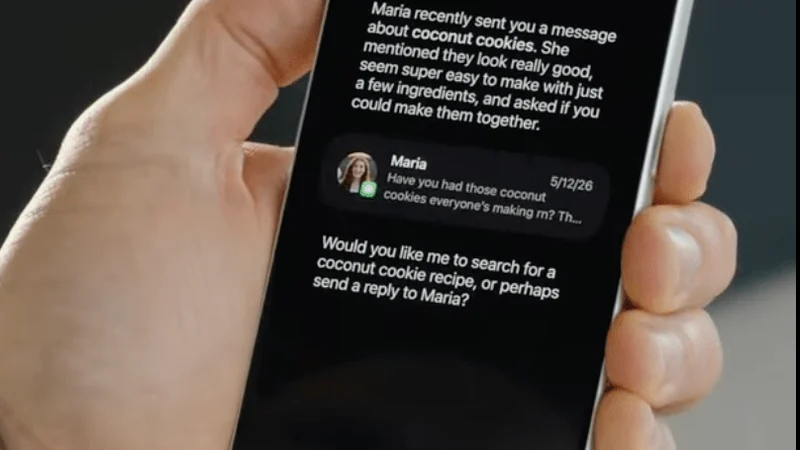
Image: TechCrunch AI
Main Takeaway
Apple's rebuilt Siri AI in iOS 27, launching this fall, instantly becomes the world's most widely distributed chatbot by tapping into personal iPhone data, but it enters a market where ChatGPT has already evolved into a more powerful agent.
Jump to Key PointsSummary
The scale of the launch
When Apple releases Siri AI this fall as part of iOS 27, it will instantly become the world's most widely distributed artificial intelligence chatbot, according to Bloomberg. The overhauled assistant is the centerpiece of Apple's platform strategy, rebuilt on a custom foundation model with added on-device intelligence. Macrumors reports the update finally delivers features originally promised at WWDC 2024, including the ability to pull user data from apps like Mail, Messages, and Photos.
Businessinsider frames this as a pivotal moment years in the making. In 2024, Apple positioned its AI as a partner to ChatGPT. Now, the evidence in the new Siri suggests a competitive breakup. The assistant that never really delivered is finally ready, but it lands in a landscape where chatbots have already evolved into autonomous agents, TechCrunch notes.
Where Siri AI beats ChatGPT
Siri AI's defining advantage is its unfettered access to personal data stored on the iPhone. Macworld's hands-on testing found the assistant excels at searching through photos, emails, and messages in ways ChatGPT cannot replicate. Felloai confirms this split: Siri wins on device control and privacy, while ChatGPT dominates on reasoning, writing, coding, and creative tasks.
Bloomberg's detailed comparison shows Siri AI can answer questions like "What was that restaurant I went to last month?" by parsing location history and messages. This personal context layer is something no standalone chatbot can offer. SoftwareSeni points out that Apple built Siri AI on a custom Gemini foundation model, then layered on-device intelligence on top, creating a hybrid architecture that keeps sensitive data local while still tapping cloud models for world knowledge. [source:Macworld,Felloai,Bloomberg AI,Softwareseni
Where ChatGPT still dominates
ChatGPT remains the stronger tool for complex reasoning, creative writing, and coding. Felloai's testing shows ChatGPT outperforms Siri AI on any task requiring deep analysis or long-form content generation. Macworld's review reached a similar conclusion: professionals who need advanced tools will still require ChatGPT's full functionality. The new Siri appeals to casual users seeking quick answers and device control.
Bloomberg's head-to-head testing found that while Siri AI handles productivity tasks like setting reminders and summarizing emails well, it struggles with nuanced writing tasks and multi-step problem solving. The assistant can now hand off tough questions to ChatGPT, Claude, or Gemini through Siri Extensions, a feature SoftwareSeni highlights as Apple's pragmatic acknowledgment that no single assistant can do everything.
The privacy architecture
Apple's approach to privacy is a central differentiator. SoftwareSeni reports that Siri AI processes as much as possible on-device, with only necessary queries routed to cloud models. This contrasts with ChatGPT's default cloud processing model. Felloai notes that in mainland China, Apple routes world-knowledge queries through Alibaba's Qwen instead of ChatGPT, adapting its privacy and compliance stance regionally.
Businessinsider reports that Apple's shift from ChatGPT partner to competitor is evident in the new architecture. The company no longer relies on OpenAI as a default information layer, instead building its own intelligence stack while offering third-party extensions as optional add-ons. This gives Apple control over the privacy narrative in a way the ChatGPT integration never did.
Why the launch feels anticlimactic
TechCrunch's headline captures the mood: Apple finally fixed Siri, so why does it feel anticlimactic? The answer lies in timing. After multiple rounds of delays documented by TechCrunch, including a 250 million dollar settlement over delayed AI features, Siri AI arrives in a world where chatbots have already become agents. The assistant does what Apple promised it would, but the bar for what constitutes impressive AI has risen dramatically since 2024.
Macworld's testing reinforces this tension. Siri AI is a capable assistant for people who want AI without complexity, but it does not chase the frontier of what chatbots can do. It is a refinement, not a revolution. Bloomberg's coverage echoes this, framing Siri AI as a solid productivity tool rather than a breakthrough in AI capability. The assistant is finally functional, but that functionality feels like catching up rather than leaping ahead.
What happens next
Siri AI will reach hundreds of millions of devices this fall, a distribution advantage no competitor can match. Bloomberg reports that the assistant will be available to all iOS 27 users, instantly making it the most widely distributed AI chatbot. The question is whether distribution alone can shift user habits. Felloai suggests that many users will continue using ChatGPT for creative and professional work while defaulting to Siri for quick device tasks.
Businessinsider frames the competitive dynamic as a breakup in progress. Apple and ChatGPT were partners; now they are competitors. The Siri Extensions feature keeps the door open for ChatGPT inside Siri, but the core experience pushes users toward Apple's own intelligence. The long-term winner depends on whether users value deep personal integration over raw AI capability, and whether Apple can iterate fast enough to close the reasoning gap.
Who should use which assistant
Macworld's recommendation is straightforward: Siri AI is for people who want AI without thinking about AI. It handles everyday tasks, answers questions from personal context, and controls devices seamlessly. ChatGPT is for users who need advanced reasoning, creative output, or cross-platform access. Felloai adds that the two assistants are not mutually exclusive. Siri Extensions let users route complex queries to ChatGPT or Claude without leaving Siri's interface.
SoftwareSeni describes the three-way split between Siri, ChatGPT, and Gemini as a platform, a product, and a hybrid. Siri is the platform, ChatGPT is the product, and Gemini is both. Understanding which does what determines whether you should pick one or use all three. For most iPhone users, Siri AI will become the default for everyday tasks, while power users will keep ChatGPT for heavy lifting.
Key Points
Apple's Siri AI launches in iOS 27 this fall, instantly becoming the world's most widely distributed AI chatbot with deep personal data access.
Siri AI beats ChatGPT on device control and personal context retrieval, but ChatGPT remains superior for reasoning, writing, and coding tasks.
The assistant is built on a custom Gemini foundation model with on-device intelligence, keeping sensitive data local while routing complex queries to the cloud.
Apple's Siri Extensions feature allows users to hand off tough questions to ChatGPT, Claude, or Gemini without leaving the Siri interface.
The launch feels anticlimactic after years of delays because the AI landscape has already evolved beyond what Siri AI offers.
Questions Answered
Siri AI is Apple's completely rebuilt voice assistant for iOS 27, launching this fall. It combines on-device intelligence with a custom foundation model to access personal data from apps like Mail, Messages, and Photos, while also offering world knowledge through cloud processing.
Siri AI wins on device control, privacy, and personal context by accessing your iPhone data directly. ChatGPT outperforms Siri AI on complex reasoning, creative writing, coding, and any task requiring deep analysis. The two assistants serve different purposes and can work together through Siri Extensions.
Siri AI does not use ChatGPT by default. Apple built its own intelligence stack on a custom model. However, through Siri Extensions, users can optionally route complex queries to ChatGPT, Claude, or Gemini. In mainland China, Alibaba's Qwen handles world knowledge queries instead.
Yes. After partnering with ChatGPT in 2024, Apple's Siri AI represents a competitive shift. The new assistant no longer relies on OpenAI as a default information layer, instead using Apple's own intelligence with third-party extensions as optional add-ons.
The launch feels anticlimactic because of repeated delays and a 250 million dollar settlement over missed features. By the time Siri AI arrived, the AI landscape had already evolved to agents and advanced reasoning, making Apple's long-awaited update feel like catching up rather than leaping ahead.
Source Reliability
43% of sources are trusted · Avg reliability: 69
Go deeper with Organic Intel
Simple AI systems for your life, work, and business. Each one includes copyable prompts, guides, and downloadable resources.
Explore Systems