Pentagon Maintains Anthropic Ban Despite Lutnick’s Claim of a Washington Reset
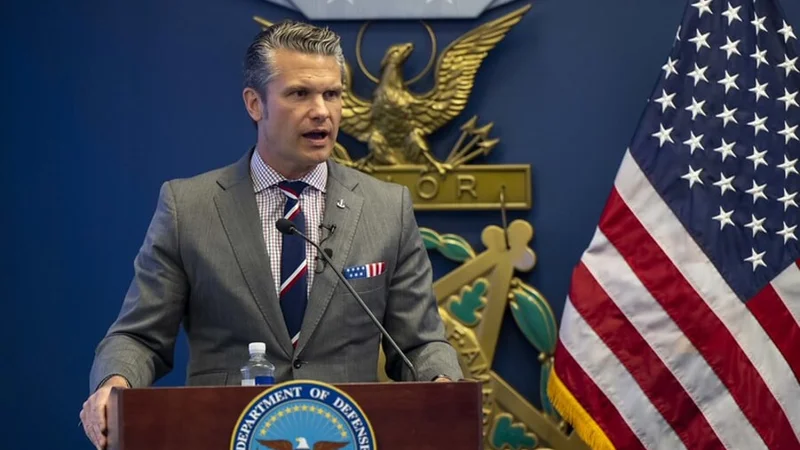
Image: Lawfaremedia
Main Takeaway
The Pentagon says its Anthropic ban remains active, contradicting Commerce Secretary Howard Lutnick’s claim that the AI company has repaired relations with the Trump administration.
Jump to Key PointsSummary
A public split inside Washington
The Pentagon says its restrictions on Anthropic remain in force, creating a direct clash with Commerce Secretary Howard Lutnick’s statement that the company is “back on the right side” of the Trump administration. Lutnick also said, “We trust Anthropic” and that the company had done what officials asked, according to Axios-based accounts published by Reuters and Livemint.
The conflicting messages leave Anthropic’s government status unresolved. Lutnick’s remarks signal a political thaw, while the Defense Department’s position keeps the practical barrier to defense work in place. Bloomberg described the dispute as a disagreement between the Commerce secretary and a senior Pentagon official, with no indication that the defense designation had been formally withdrawn.
How the Pentagon dispute began
The conflict centers on Anthropic’s limits for military use of Claude, including restrictions involving domestic surveillance and autonomous weapons. Defense Secretary Pete Hegseth designated Anthropic a national-security supply-chain risk on Feb. 27 after President Donald Trump directed federal agencies to stop using the company’s technology, according to Lawfaremedia and the New York Post.
Anthropic’s position put safeguards at the center of a procurement fight. The company had built defense relationships through Amazon and Palantir, and Pentagon technology officials had considered it an important AI supplier. CNBC reported that the blacklist unsettled experts because the department had previously made significant use of Anthropic’s systems and partnerships.
The courts keep the ban alive
The legal picture is just as divided as the political messaging. A federal judge struck down the Pentagon’s designation, ruling that the action amounted to retaliation for protected speech, according to Roic and Lawfaremedia. That ruling challenged the government’s authority to punish a contractor for refusing particular military applications of its models.
A separate account from Bankinfosecurity said an appeals court allowed the Pentagon to enforce the supply-chain-risk designation while related challenges continue. That decision keeps Claude models out of defense systems during the litigation. The competing rulings explain why a favorable trial-court decision did not automatically restore Anthropic’s access to military contracts.
Why the contradiction matters
The dispute reaches beyond one vendor because it tests who sets operating limits for AI in national security. Anthropic has argued for constraints on uses that involve surveillance or autonomous weapons, while defense officials have sought broader access to commercial AI systems. Congress’s research service has framed the confrontation around autonomous weapon systems and the issues lawmakers face as the government incorporates AI into military operations.
For the Pentagon, maintaining a supplier ban supports its demand for control over defense applications and reduces dependence on a company that sets its own restrictions. For Anthropic, the case concerns whether safety commitments can survive government pressure. The outcome will shape how AI companies write military-use policies, negotiate contracts and respond when national-security officials reject those boundaries.
What happens next
Anthropic’s immediate position depends on the courts and on whether the Defense Department changes its designation through a formal action. Lutnick’s comments alone don't lift the ban, and the Pentagon’s current stance means defense access remains constrained even as administration rhetoric softens.
The company also faces a broader commercial question. Amazon and Palantir helped connect Anthropic to defense work, while Pentagon officials have said the department can't rely on any single AI provider. That pressure favors a wider supplier base, including OpenAI, Google and Microsoft, but it also raises switching costs as military organizations standardize models, security controls and procurement rules.
The wider AI procurement test
The Anthropic fight has become a test of whether public-sector AI contracts reward maximum access or enforceable safety limits. A government victory would give agencies greater authority to exclude vendors over model restrictions. A court victory for Anthropic would strengthen the case that companies can retain boundaries on sensitive uses without losing federal business through political retaliation.
The contradictory statements also expose coordination problems across the administration. Commerce officials can describe restored trust, but defense procurement decisions operate through separate authorities and legal processes. Until those processes produce a final ruling or a formal Pentagon reversal, Anthropic remains caught between a diplomatic reset and an active defense ban.
Key Points
Anthropic remains barred by the Pentagon despite Howard Lutnick saying relations with the Trump administration improved.
The dispute centers on Anthropic restrictions covering military surveillance and autonomous weapon systems.
A federal judge challenged the Pentagon designation, while an appeals court allowed enforcement during litigation.
Amazon and Palantir helped Anthropic establish defense relationships before the company’s government blacklist.
The case will shape AI safety terms, military procurement and vendor independence across federal agencies.
Questions Answered
Anthropic remains subject to the Pentagon’s restrictions while legal challenges continue. Lutnick’s statement about restored trust did not formally reverse the Defense Department’s designation.
The Pentagon designated Anthropic a national-security supply-chain risk after the company restricted military uses of Claude. The disagreement involved domestic surveillance and autonomous weapons applications.
Howard Lutnick said Anthropic was back on the Trump administration’s “right side” and that officials trusted the company. His remarks signaled a political thaw but did not remove the Pentagon’s active restrictions.
A federal judge struck down the Pentagon designation as retaliation for protected speech, while an appeals court allowed the Pentagon to enforce the designation during further litigation. Claude therefore remains excluded from defense systems for now.
The courts will determine whether the Pentagon can permanently enforce its supply-chain-risk designation. Anthropic also needs a formal Defense Department reversal before its defense access is fully restored.
Source Reliability
40% of sources are highly trusted · Avg reliability: 77
Go deeper with Organic Intel
Simple AI systems for your life, work, and business. Each one includes copyable prompts, guides, and downloadable resources.
Explore Systems