OpenAI Puts AI-Generated Science Through Academic Review With Three New Research Claims

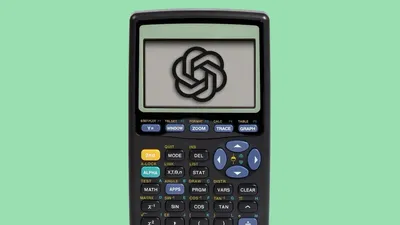
Image: MIT Technology Review AI
Main Takeaway
OpenAI announced AI-assisted results in mathematics, computer science, and physics, pairing each claim with a different academic review and release process.
Jump to Key PointsSummary
OpenAI’s science push takes shape
OpenAI says its models produced research results in mathematics, computer science, and physics, then placed the work inside a broader program for academic scrutiny. The announcement covers a harmonic-analysis result related to the Kakeya and Stein restriction conjectures, a claimed disproof of the Exponential Time Hypothesis, and a rigorous existence result for certain 4D quantum field theories.
The claims arrive as OpenAI builds OpenAI for Science, an internal team focused on adapting its models and tools for scientific work. The initiative treats model output as a starting point for verification, explanation, and further research rather than as a finished publication. The company’s announcement and outside coverage frame that distinction as central to the project.
Three fields, three different claims
The mathematics result concerns local smoothing for the Euclidean wave equation, with implications for problems tied to harmonic analysis, the Kakeya conjecture, and Stein’s restriction conjecture. OpenAI released the mathematical output for researchers to inspect and explain, reflecting the difficulty of turning a machine-generated proof into an argument specialists can readily follow.
The computer-science claim addresses the Exponential Time Hypothesis, a longstanding conjecture in computational complexity. OpenAI says its result disproves the hypothesis. In physics, the company describes a rigorous existence proof for selected 4D quantum field theories, including work connected to quantum chromodynamics. The range of subjects gives the announcement unusual breadth, while each result still depends on specialist checking and interpretation.
Why verification is the real test
The central question is whether AI-generated manuscripts can become durable scientific knowledge after experts test every step. Formal verification is part of that process, particularly for claims whose technical details are difficult to assess from a conventional summary. OpenAI presents public artifacts, formalization, and community review as mechanisms for making the work inspectable.
That standard matters because a plausible proof outline and a correct proof are different things. The Verge described external experts as “shepherds” who helped guide the computer-science and physics results, while mathematicians advised OpenAI to release its output directly so researchers could organize explanatory work themselves. The division of labor places interpretation with academic communities instead of treating the model’s first draft as the final account.
Shepherds reshape the release model
OpenAI’s shepherd model gives outside experts a role in deciding how technical results should reach researchers. For the mathematics result, the company says advisers recommended releasing the AI output and allowing the community to develop its own explanations. For computer science and physics, shepherds helped organize groups to understand and assess the work.
That approach creates different publication paths for different disciplines. A result that can be checked through formal methods still needs readable exposition, independent replication, and context within existing literature. The model also acknowledges that scientific understanding is social and cumulative: specialists identify errors, clarify definitions, connect new arguments to prior work, and decide whether a claim changes a field.
OpenAI for Science broadens the effort
OpenAI for Science gives the company a dedicated structure for exploring how large language models can assist scientists. Kevin Weil, who leads the team, described an effort aimed at making scientists more productive, while recent model activity has drawn attention from researchers across several disciplines, according to MIT Technology Review.
The initiative arrives after OpenAI released hundreds of mathematics manuscripts and as the company expands access to its models for academic researchers. Axios reported that OpenAI is opening its top models to 100,000 academics, a move that would widen experimentation beyond the company’s own teams. Broader access can generate more scrutiny and new use cases, but it also raises practical questions about compute, evaluation standards, and how researchers separate useful assistance from unsupported model output.
What researchers will watch next
The next stage is independent assessment of the three claims, followed by clearer explanations, formal checks, and evidence that other researchers can reproduce or extend the results. The mathematical work will face close reading from harmonic analysts; the complexity result will be tested against the assumptions behind the Exponential Time Hypothesis; and the physics proof will be examined for both mathematical rigor and relevance to quantum field theory.
OpenAI’s announcement therefore marks a test of process as much as capability. If academic communities validate and build on the results, the shepherd model could become a template for releasing machine-assisted research. If substantial gaps emerge, the episode will still clarify where current systems produce promising drafts rather than dependable science.
Key Points
OpenAI announced AI-assisted results spanning harmonic analysis, computational complexity, and quantum field theory.
OpenAI’s mathematics claim addresses local smoothing and problems linked to the Kakeya conjecture.
OpenAI says its computer-science result disproves the Exponential Time Hypothesis.
OpenAI uses academic shepherds to guide review, explanation, and release of machine-generated research.
OpenAI for Science is expanding model access and tools for academic researchers.
Questions Answered
OpenAI announced results in mathematics, computer science, and physics. The claims concern harmonic analysis, the Exponential Time Hypothesis, and rigorous existence proofs for selected 4D quantum field theories.
OpenAI’s mathematics result concerns local smoothing for the Euclidean wave equation. The work connects to the Kakeya and Stein restriction conjectures and was released for researchers to examine and explain.
OpenAI says its computer-science result disproves the Exponential Time Hypothesis. Academic researchers still need to inspect the argument, verify its assumptions, and assess its place in complexity theory.
OpenAI’s shepherds are external experts who help academic communities understand and assess AI-generated research. They guided the release and review process for the computer-science and physics results.
OpenAI’s science claims will undergo independent technical review, formal checking, and community interpretation. Researchers will test whether the results are correct, reproducible, and useful for extending existing work.
Source Reliability
57% of sources are highly trusted · Avg reliability: 70
Go deeper with Organic Intel
Simple AI systems for your life, work, and business. Each one includes copyable prompts, guides, and downloadable resources.
Explore Systems