OpenAI Engineer Arrested After Hidden Recorder Found in Executive Conference Room
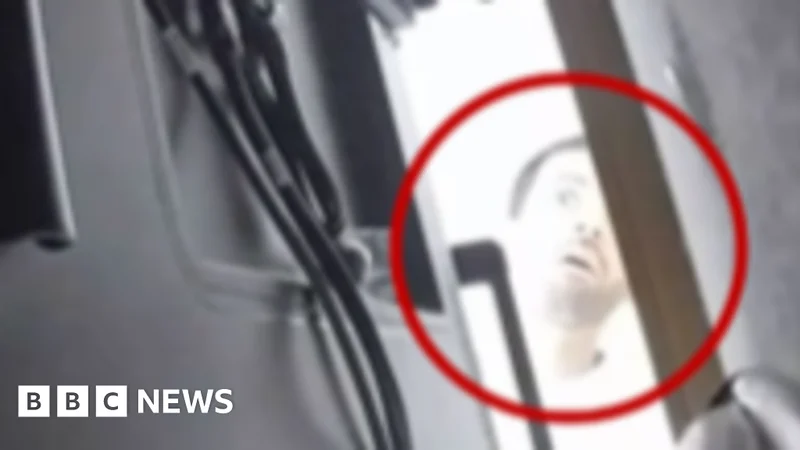
Image: Bbc
Main Takeaway
OpenAI engineer Abdulrahman Alfozan was arrested after a hidden recording device was found in an executive conference room, prompting an FBI investigation.
Jump to Key PointsSummary
The arrest and allegation
OpenAI engineer Abdulrahman Alfozan was arrested on October 9 after federal investigators accused him of planting a hidden recording device in an executive conference room at the company’s San Francisco offices. OpenAI said it dismissed the employee and referred the matter to the FBI after discovering the device during a security sweep. The Justice Department identified Alfozan as a 35-year-old Saudi national and US permanent resident who joined OpenAI in 2025, according to Fortune, BBC and CNBC.
The criminal case remains an allegation, and the arrest does not establish guilt. Prosecutors charged Alfozan in federal court after investigators reviewed the device, workplace evidence and surveillance footage. Bloomberg AI, The Washington Post and San Francisco Chronicle described the incident as an investigation into covert recording at a room used by senior executives.
How the device was found
OpenAI’s technical surveillance countermeasures team found the recorder on September 30 during a sweep of the conference room, Fortune reported. The device was connected to a USB port on the back of a television and concealed with toilet paper, according to BBC and The Verge. Other accounts described it as encrypted or sophisticated, indicating that investigators treated the equipment as more than an ordinary consumer recorder.
The room’s use by executives raised the stakes because conversations there could involve company strategy, personnel decisions and advanced AI development. OpenAI said it used one of its models to help understand the device and trace its origin, while Business Insider reported that the company’s systems helped identify the person who allegedly planted it.
The alleged preparation
Federal prosecutors say the alleged placement involved planning that extended beyond a single visit to the conference room. Wired reported that chatbot prompts tied to the case showed Alfozan seeking help with setting up a covert listening device days before the recorder was discovered. The account described the device as hidden in toilet paper and attached behind a monitor, while other reporting placed it near the television’s USB connection.
The precise purpose of the recording remains central to the case. FBI Director Kash Patel said investigators believed the scheme involved capturing sensitive communications about the company’s superintelligence technology, according to TechCrunch. OpenAI and federal authorities have not publicly established how much audio, if any, the device recorded or whether confidential information was obtained.
Why the incident matters for OpenAI
The case exposes a physical security risk inside a company whose most valuable assets include confidential research, product plans and executive discussions. OpenAI’s response combined internal counter-surveillance, model-assisted analysis, employee dismissal and referral to federal investigators. That sequence shows how AI companies are applying their own systems to security work while confronting threats that begin with ordinary office access.
The incident also arrives during heightened scrutiny of OpenAI and rival AI developers over safety, governance and protection of sensitive technology. CNBC linked the arrest to broader questions facing the ChatGPT maker and its competitors. The Guardian placed the episode alongside earlier privacy concerns involving rogue agents and hacking incidents, adding pressure on companies to show that security controls cover staff access as well as network defenses.
What the case leaves unresolved
Several questions remain open, including the intended recipient of any recordings, the duration of the device’s operation and whether executives’ conversations were captured. The available public accounts also differ in describing the exact placement of the recorder, with references to a television USB port, a monitor and concealment inside toilet paper. Those details may be clarified through court filings and later hearings.
OpenAI has confirmed the discovery, dismissal and FBI referral, while federal prosecutors have supplied the arrest and charging allegations. BBC, Reuters, The Washington Post and Bloomberg Law framed the matter as an active criminal proceeding rather than a completed finding of misconduct. The next significant developments will come from the Justice Department’s evidence, court proceedings and any response from Alfozan or his legal team.
Key Points
OpenAI engineer Abdulrahman Alfozan was arrested after an alleged hidden recorder was found in an executive conference room.
OpenAI’s security team discovered the device during a September 30 sweep and referred the matter to the FBI.
Prosecutors allege the recorder was concealed with toilet paper and connected to a television USB port.
Wired reported chatbot prompts allegedly helped prepare the device’s covert installation at OpenAI.
OpenAI used an AI model to analyze the sophisticated device and trace its origin, according to company statements.
Questions Answered
OpenAI engineer Abdulrahman Alfozan was arrested over allegations that he planted a hidden recording device in an executive conference room. OpenAI fired him and referred the matter to the FBI after the device was discovered.
OpenAI’s recording device was found in an executive conference room at its San Francisco offices. Prosecutors said it was concealed with toilet paper and connected to a USB port on the back of a television.
Authorities have not established publicly whether the OpenAI device successfully recorded confidential conversations. The investigation is examining how long it operated, what it captured and who might have received recordings.
An OpenAI employee allegedly used chatbot prompts while preparing to plant the recording device, according to Wired. The prompts were cited in a criminal complaint, while the case remains an allegation.
OpenAI used its security team, workplace evidence and an AI model to analyze the device and its origin. Reports also described surveillance footage and company systems as part of the identification process.
Source Reliability
71% of sources are highly trusted · Avg reliability: 86
Go deeper with Organic Intel
Simple AI systems for your life, work, and business. Each one includes copyable prompts, guides, and downloadable resources.
Explore Systems