Oil Surges Past $92 as Trump Threatens Retaliation Against Iran
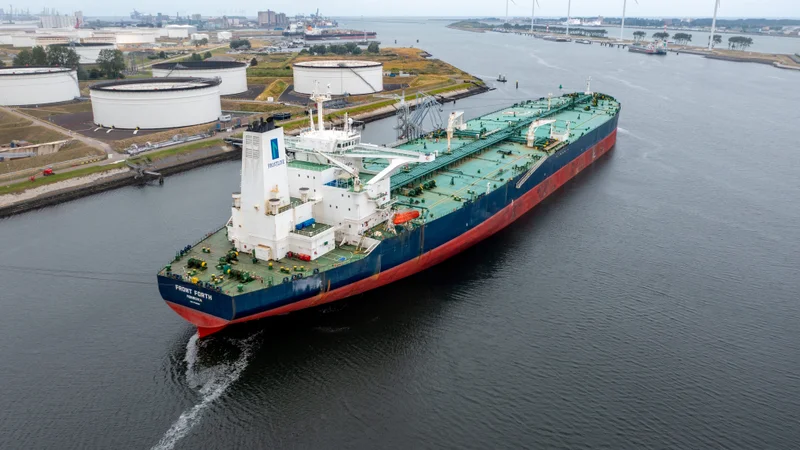
Image: Cnbc
Main Takeaway
Brent crude jumped to $92.65 per barrel on July 30, 2026 after President Trump threatened to hit Iran hard in retaliation for a ballistic missile attack on U.S. forces.
Jump to Key PointsSummary
How much oil costs right now
As of the morning of July 30, 2026, Brent crude oil traded at $92.65 per barrel, according to Fortune data. That marks a sharp $3.12 jump from the previous morning's level of $89.53 and puts the global benchmark roughly $19 above where it stood a year ago.
The price surge represents the highest level recorded in the last several weeks of Fortune's daily tracking. Just three weeks earlier, on July 10, Brent had slumped to $76.80 per barrel, meaning crude has rallied more than 20% in under a month. The rapid climb erased what had been a notable mid-summer dip, when prices briefly fell from the $94 range down to the mid-$70s.
Robinhood's prediction markets show traders betting on continued strength, with contracts for July 30 WTI settlement heavily favoring prices above $83 per barrel. The most actively traded contracts sat at the $82.99 to $84.49 range, suggesting market participants expect the rally to hold through the end of the month.
What triggered the sudden price spike
The catalyst for the latest jump is unmistakable. CNBC reports that President Donald Trump told Fox News the U.S. will hit Iran hard in retaliation for an attempted surprise attack on American forces. Iran's Islamic Revolutionary Guard Corps launched ballistic missiles at U.S. forces, according to U.S. Central Command, though the missiles were successfully intercepted.
The escalating tensions come after a brief pause in fighting, CNBC notes. The geopolitical shockwave sent Brent crude soaring back above the $90 threshold, a psychological barrier that traders had been watching closely since the earlier July dip. Oil markets react sharply to any threat of supply disruption in the Strait of Hormuz, through which roughly a fifth of the world's oil flows.
The timing of the attack and Trump's response caught markets off guard, reversing what had been a softening trend earlier in July. The Fortune daily tracker shows oil had fallen from $94.50 a month prior to $76.80 by July 10, before tensions reignited the risk premium built into every barrel.
The month-long rollercoaster in prices
Oil's trajectory through July 2026 has been anything but smooth. Fortune's daily pricing data paints a picture of extreme volatility: Brent stood at $94.50 a month before July 10, then collapsed nearly 19% to $76.80. From there, prices clawed back to $90.43 by July 27, slipped to $89.08 on July 28, then surged to $92.65 on July 30.
That kind of whipsaw action reflects a market torn between competing narratives. On one side, economic growth concerns and the brief pause in Middle East tensions had pressured prices lower. On the other, the Iran attack and Trump's response reignited the geopolitical risk premium that had been priced out during the lull.
Year-over-year comparisons show just how much the market has tightened. The July 30 price of $92.65 compares to $73.64 a year earlier, a 25.8% increase. Even the July 10 low of $76.80 sat 10% above where oil traded in early July 2025.
What the prediction markets are signaling
Robinhood's event contract markets provide a real-time view of where traders think oil is heading. For the July 29 WTI settlement, contracts above $83.99 traded at 99 cents on the dollar, indicating near-certainty among participants that prices would hold above that level. The $84.49 contract traded at just 2 cents, suggesting traders see a ceiling near that mark for the day.
For July 30, the pattern shifted slightly higher. The $83.49 contract traded at 64 cents, the $83.99 at 53 cents, and the $84.49 at 40 cents, showing a gradual decay in confidence as the strike prices rise. This distribution implies traders expect WTI to settle somewhere in the $83 to $85 range for July 30, which would represent a modest pullback from the Brent spike but still an elevated level.
On the Brent side, Robinhood's 5:00 PM EDT close market for July 30 showed the $86.50 contract trading at 61 cents and the $87 contract at 55 cents, with probabilities tapering above that. This suggests the market expects Brent to settle somewhat below the $92.65 morning print, though still firmly in the mid-to-high $80s.
What drives oil prices beyond geopolitics
While the Iran headlines dominate, the Fortune series explains that oil prices ultimately hinge on supply and demand fundamentals. No one can predict with certainty where prices go next, the articles note, but the core drivers remain consistent: global economic growth, production decisions by OPEC and its allies, and unexpected supply disruptions.
The year-over-year price increase of roughly $19 per barrel, from $73.64 to $92.65, reflects more than just the latest Middle East flare-up. It signals a broader tightening of the physical market over the past twelve months, with demand recovering faster than supply can keep pace. The brief dip to $76.80 in mid-July now looks like an anomaly driven by temporary ceasefire optimism that quickly evaporated.
Barchart's futures data for both July and August 2026 WTI contracts provides the technical backdrop that professional traders use to gauge momentum. The quote boards show day highs, lows, and settlement prices that institutional desks monitor for signals about where the next move might land.
What this means for consumers and businesses
When oil jumps from $76 to $92 in a matter of weeks, the effects ripple through the economy. Fortune notes that oil price changes affect energy costs and even the price of everyday items. Gasoline prices, which track crude closely with a short lag, are almost certainly heading higher at the pump.
For businesses, the impact varies by sector. Airlines and shipping companies see their fuel costs rise immediately, while manufacturers face higher input costs for petroleum-based materials. The rapid swing from a 19% monthly drop to a 24% monthly gain within the same month creates planning headaches for companies trying to hedge their exposure.
The year-over-year increase of roughly 25% means the cumulative effect on inflation is not trivial. After a year of prices hovering in the $70 range, the shift to sustained $90-plus oil represents a meaningful headwind for central banks trying to keep inflation in check.
What happens next
The immediate question is whether Trump's threatened retaliation materializes and, if it does, how Iran responds. Military action in the region could push oil well above $100 if the Strait of Hormuz faces any disruption. Conversely, if diplomatic channels reopen and tensions de-escalate, the geopolitical premium could drain out of prices as quickly as it appeared.
Robinhood's prediction markets suggest traders are pricing in a modest pullback from the spike highs, but not a collapse back to the mid-$70s. The floor appears to have been raised, with WTI contracts showing strong support above $83 and Brent holding above $86 in the after-market pricing.
The Fortune daily tracker will continue to capture the next moves. With oil at $92.65 on July 30 and the Iran situation still fluid, the market is bracing for what could be the most volatile stretch of the year.
Key Points
Brent crude oil surged to $92.65 per barrel on July 30 after President Trump threatened retaliation against Iran
Iran's Revolutionary Guard launched ballistic missiles at U.S. forces, which were intercepted according to Centcom
Oil prices swung violently in July, falling to $76.80 mid-month before rebounding 20% on renewed Middle East tensions
Robinhood prediction markets show traders expecting WTI to settle between $83 and $85 for July 30
Year-over-year, Brent is up 25.8% from $73.64 to $92.65, signaling a structurally tighter physical market
Questions Answered
Brent crude oil traded at $92.65 per barrel as of 6:30 a.m. Eastern Time on July 30, 2026, according to Fortune's daily price tracker. That's a $3.12 increase from the previous day's level of $89.53.
Oil prices spiked after President Trump threatened to hit Iran hard in retaliation for an attempted ballistic missile attack on U.S. forces. Iran's Islamic Revolutionary Guard Corps launched missiles at American forces, which were successfully intercepted by U.S. Central Command.
Brent crude has risen approximately $19 from $73.64 a year ago to $92.65 on July 30, 2026, representing a 25.8% year-over-year increase. The sustained climb reflects a tighter physical market and rising geopolitical risk premiums.
Robinhood's event contracts for July 30 WTI settlement show heavy trading in the $83 to $85 range, with probabilities declining above $84.49. This suggests traders expect WTI to hold at elevated levels but below the Brent morning spike.
Oil prices were extremely volatile in July 2026, falling from around $94.50 a month before July 10 to $76.80 on July 10, then recovering to $92.65 by July 30. That represents a swing of nearly $20 per barrel within a single month.
Source Reliability
50% of sources are trusted · Avg reliability: 69
Go deeper with Organic Intel
Simple AI systems for your life, work, and business. Each one includes copyable prompts, guides, and downloadable resources.
Explore Systems