Apple Develops Screenless Fitness Tracker as Whoop, Fitbit and Garmin Redefine Wearables
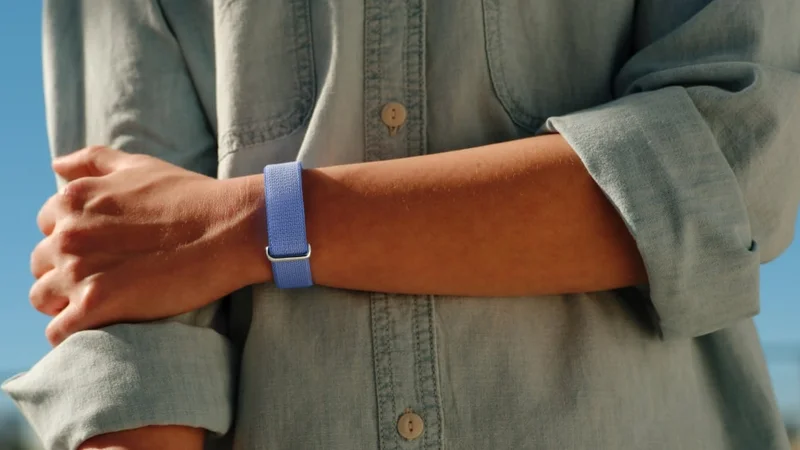
Image: Pcmag
Main Takeaway
Apple is developing a screenless fitness tracker aimed at Whoop, with the device reportedly scheduled no earlier than 2028 as competition widens.
Jump to Key PointsSummary
Apple’s screenless tracker plan
Apple is developing a screenless health and fitness tracker designed to compete with Whoop, according to Bloomberg. The device is part of a broader review of future Apple Watch designs and would shift Apple toward a quieter wearable built for continuous tracking rather than on-device interaction.
The project remains in development, and Bloomberg’s Spanish-language report places its arrival no earlier than 2028. Apple has not publicly announced the product. The reported concept follows a broader industry turn toward devices that collect health data in the background while leaving displays, apps and notifications to a phone. The Independent described Apple’s industrial design team as considering several new Apple Watch directions, including entirely different form factors.
Why Whoop changed the category
Whoop established the screen-free wearable as a distinct fitness product, emphasizing recovery, sleep, strain and continuous use instead of a watch face. Its wrist-worn design has helped create demand for trackers that stay out of the way during exercise, work and sleep.
That approach is now attracting major platform companies. Fitbit Air, launched by Google at $99, drops the display, uses haptics and passive tracking, and offers about a week of battery life, according to PCMag. Gear Patrol framed the product as evidence of consumer fatigue with increasingly demanding smartwatches, while Stuff grouped Fitbit Air and Garmin Cirqa with Whoop as part of a shift toward lightweight, always-on health devices.
Competition is spreading quickly
Apple would enter a field that already includes Whoop, Fitbit Air and Garmin Cirqa, with Amazon’s Halo also presented as a screen-free alternative in coverage from Diario Libre. The competitive pitch centers on continuous health monitoring, low distraction and specialized fitness insights rather than notifications or app access on the wrist.
Fitbit’s $99 price gives Google an accessible entry point, while Whoop competes through a dedicated recovery-focused experience. Amazon’s Halo was described as tracking heart rate, sleep quality, body fat and vocal tone through an accompanying app, including 3D body-fat scans made with a camera. These products show that screenless wearables are splitting into distinct strategies: inexpensive passive tracking, premium recovery analytics and broader health programs.
What Apple brings to the fight
Apple’s strongest advantage would be its health platform, existing Watch user base and control over the iPhone ecosystem. A screen-free tracker could serve customers who want Apple’s health features without wearing a full smartwatch, while also letting Apple preserve the Watch as its richer, interactive device.
The design creates practical tradeoffs. Removing the display can extend battery life, reduce distractions and make overnight wear easier, but it also pushes feedback, setup and interpretation onto a phone. Apple would need to distinguish the product from the Apple Watch while explaining why users should buy a second wearable. Its entry could also pressure Whoop, Fitbit and Garmin on sensor quality, software integration and pricing.
The product questions ahead
Apple’s reported tracker faces unresolved questions about its name, shape, sensors, pricing and business model. Bloomberg’s reporting identifies the core concept and the 2028-or-later timing, but public details about specifications and subscription requirements remain limited.
The timing gives competitors room to strengthen their positions. Fitbit can build on Air’s low price and long battery life, Garmin can target athletes with Cirqa, and Whoop can deepen its recovery analytics. Apple’s challenge is to make a screenless product feel like a distinct category rather than a stripped-down Watch. The answer will depend on whether its health insights, comfort and ecosystem integration justify another device on the wrist.
Wearables move toward quiet computing
Apple’s reported project reflects a broader change in wearable design: health tracking is becoming less dependent on screens and more dependent on sensors, algorithms and companion apps. The appeal is behavioral as much as technical. A device that offers no stream of alerts can remain present during sleep and exercise without competing for attention.
That shift also raises the importance of data interpretation and trust. Screenless products ask users to accept that meaningful feedback will arrive later through software, making the app experience central to the product. If Apple proceeds, its entry would validate the category for a much larger audience and intensify competition around recovery data, battery life, privacy and recurring services.
Key Points
Apple is developing a screenless fitness tracker targeting Whoop’s recovery-focused wearable category.
Bloomberg reports Apple’s screenless tracker will arrive no earlier than 2028.
Google’s $99 Fitbit Air brings display-free health tracking to a lower-priced consumer market.
Whoop, Fitbit Air and Garmin Cirqa are accelerating competition around screenless continuous monitoring.
Apple would use its health software and iPhone ecosystem to differentiate a second wearable.
Questions Answered
Apple is developing a screenless health and fitness tracker aimed at Whoop’s wrist-worn recovery device. The product is intended for continuous monitoring without the display and app features of a traditional smartwatch.
Apple’s screenless fitness tracker is reportedly scheduled for no earlier than 2028. Bloomberg has not reported a final launch date, price or complete specification list.
Apple’s tracker would focus on passive health and fitness monitoring without an on-device screen. Feedback and analysis would be handled through an iPhone app, while the Apple Watch would remain Apple’s interactive smartwatch platform.
Apple is entering as consumers and competitors show growing interest in less distracting wearables designed for continuous use. Whoop, Fitbit Air and Garmin Cirqa have helped establish screen-free tracking as a separate product category.
Whoop, Google’s $99 Fitbit Air and Garmin Cirqa are the clearest competitors to Apple’s reported tracker. Amazon Halo has also been described as a screenless activity monitor with health features delivered through an app.
Source Reliability
50% of sources are established · Avg reliability: 73
Go deeper with Organic Intel
Simple AI systems for your life, work, and business. Each one includes copyable prompts, guides, and downloadable resources.
Explore Systems