NVIDIA Expands Nemotron Open Models and Agent Tools for Local, Efficient AI Development
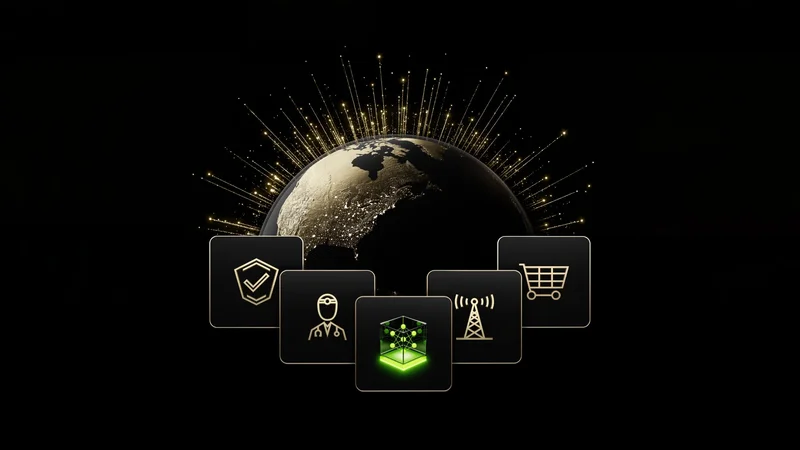
Image: NVIDIA Blog
Main Takeaway
NVIDIA is expanding its Nemotron family with lightweight agent models, streaming speech recognition, routing software and an open platform for local AI development.
Jump to Key PointsSummary
NVIDIA’s open-model strategy
NVIDIA is using its Nemotron model family to push AI agents toward local and distributed deployment. The company says its open models give developers greater control over data, workflows and where systems run, spanning PCs, workstations, edge devices, data centers and cloud infrastructure.
The August 11 announcements combine model releases, developer tooling and ecosystem partnerships rather than presenting a single product. NVIDIA’s own blog frames the effort as a response to the shift from chatbots toward longer-running autonomous agents. Developer.nvidia materials center on Nemotron models and local GPU deployments, while CNBC reports that NVIDIA is planning an open-source agent platform called NemoClaw. Together, the releases position NVIDIA’s hardware and software stack as the operating layer for developers building agents outside a single hosted service.
Nemotron targets agent workloads
Nemotron 3.5 Lightning is designed for long-running agentic workloads, with NVIDIA describing it as a high-efficiency model in its class. The company says the lightweight model is intended to reduce the cost and resource demands of agents that plan, call tools and operate across extended workflows.
Developer.nvidia’s related materials describe a wider Nemotron lineup, including Nemotron 3 Ultra and models built for local and multi-node execution. The available source excerpts don't provide benchmark figures, licensing details or hardware requirements, so the practical advantage remains tied to testing by developers. BDTechTalks characterizes Nemotron 3 as setting a new bar for open models, while NVIDIA’s own material emphasizes efficiency and control. The distinction matters: an agent model must sustain repeated inference, tool calls and context handling, not simply answer isolated prompts.
Speech models bring agents closer
Nemotron 3.5 ASR Streaming extends the release push into real-time speech recognition. The 0.6B model listed by Hugging Face is built for streaming automatic speech recognition, giving developers a compact component for voice interfaces and spoken agent workflows.
Baseten and Together describe the model through deployment and API lenses, while Mindstudio and Wavect focus on voice-agent use cases, cost and streaming behavior. Those sources point to a practical route for building assistants that listen continuously or respond with low delay. A small speech model can run closer to users and feed transcriptions into a larger reasoning system, though the supplied articles don't establish comparative accuracy, latency or language coverage. The model’s presence across Hugging Face and hosted infrastructure shows how NVIDIA is pairing open weights or releases with both self-managed and managed paths.
Routing and safety fill the stack
NVIDIA’s NeMo Switchyard is a routing library intended to direct requests among models and workflows. That function becomes more useful as local deployments mix small models for routine tasks with larger models for difficult reasoning, reducing unnecessary compute and giving operators more control over data movement.
The broader Nemotron release also includes a content safety model, according to Build.nvidia, adding a control layer around agent outputs and inputs. NVIDIA’s local-AI developer pages describe GPU-based execution and multi-node configurations, while the company’s model pages provide the catalog surface for the expanding family. Routing and safety are operational concerns rather than headline benchmarks, but they determine whether open agents can be monitored, governed and run economically in production. Their inclusion shows NVIDIA is building an ecosystem around models, not releasing weights in isolation.
Partnerships widen adoption
NVIDIA is tying Nemotron and local AI to a wider partner network. Mistral AI says it is partnering with NVIDIA to accelerate open frontier models, adding a model developer with its own open-model strategy to NVIDIA’s ecosystem. Investor.nvidia presents the company’s platform as infrastructure for knowledge-work agents.
Hugging Face provides a distribution and discovery channel for model developers, while Together offers hosted access to Nemotron 3.5 ASR. These routes address different audiences: researchers and hobbyists can inspect or adapt models, startups can access managed inference, and enterprises can deploy on controlled infrastructure. CNBC’s reporting on NemoClaw adds a platform dimension, but the available excerpt doesn't specify its release date, license or technical architecture. Adoption will therefore depend on documentation, model quality, compatibility and the terms governing commercial use.
What developers should watch
Developers now have a broader NVIDIA-centered stack for local agents, covering compact reasoning, speech input, model routing, safety checks and GPU deployment. The immediate opportunity is to test which workloads fit on a workstation or edge device and which still require centralized inference.
The main unresolved issues are measurable performance and openness. The supplied sources don't include independent benchmarks, detailed licenses, training-data disclosures or production reliability results. NVIDIA’s announcements establish a direction, and partner distribution makes experimentation easier, but developers still need to validate latency, memory use, accuracy, safety behavior and operating cost on their own workloads. If those pieces hold up, Nemotron can strengthen NVIDIA’s position beyond chips, giving the company influence over the models and agent tooling that make its hardware useful.
Key Points
NVIDIA expands Nemotron with efficient agent models, streaming ASR, routing tools and local deployment resources.
Nemotron 3.5 Lightning targets long-running autonomous agents across local and cloud GPU environments.
Nemotron 3.5 ASR Streaming is a 0.6B model for real-time speech recognition and voice-agent applications.
NeMo Switchyard routes workloads across models and workflows to manage efficiency, control and data movement.
NVIDIA’s planned NemoClaw platform would broaden its open-source agent development strategy.
Questions Answered
NVIDIA Nemotron 3.5 Lightning is a lightweight model designed for long-running agentic AI workloads. NVIDIA presents it as an efficient option for agents that plan, call tools and manage extended workflows across local and cloud systems.
NVIDIA Nemotron 3.5 ASR Streaming is a 0.6B automatic speech recognition model for real-time voice applications. Developers can use it to transcribe streaming audio and provide spoken input to AI agents.
NVIDIA NeMo Switchyard is a routing library for directing requests among models and workflows. It supports deployments that assign routine tasks to smaller models and reserve larger models for complex reasoning.
NVIDIA is planning an open-source agent platform called NemoClaw, according to CNBC. The supplied coverage doesn't provide its release date, license or full technical architecture.
NVIDIA says local AI gives developers greater control over data, deployment location and workflows. Local execution can also reduce latency and support agents on PCs, workstations, edge devices and private infrastructure.
Source Reliability
33% of sources are highly trusted · Avg reliability: 70
Go deeper with Organic Intel
Simple AI systems for your life, work, and business. Each one includes copyable prompts, guides, and downloadable resources.
Explore Systems