Thinking Machines Lab Ships Its First Open Model, Inkling, Betting on Real-Time Interaction and Customizable AI
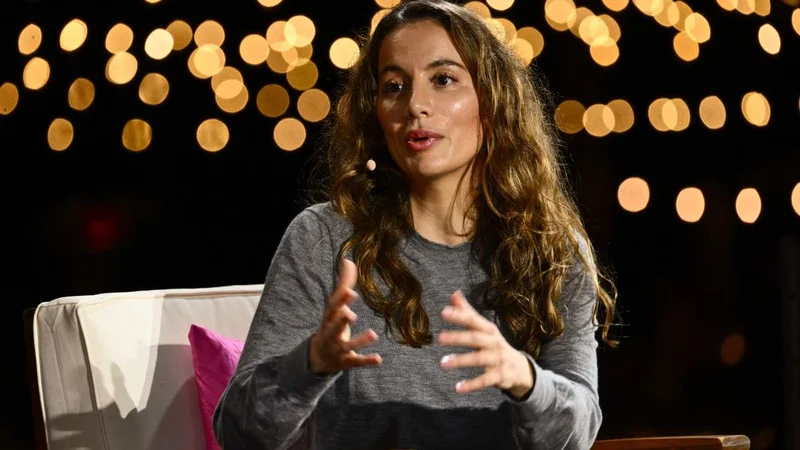
Image: TechCrunch AI
Main Takeaway
Thinking Machines Lab, founded by ex-OpenAI CTO Mira Murati, released its first model Inkling, a 975-billion-parameter open-weight system trained on video.
Jump to Key PointsSummary
What Inkling actually is
Thinking Machines Lab, the startup founded by former OpenAI CTO Mira Murati, shipped its first proprietary model on Wednesday. The model, called Inkling, is a 975-billion-parameter mixture-of-experts system that draws on roughly 41 billion active parameters for any given task. According to TechCrunch, the company trained it on 45 trillion tokens of text, image, audio, and video, and it reasons natively across all three modalities.
Wired reports that Inkling was trained from scratch to make sense of audio and video input as well as text. The company's own release materials say it performs well at many tasks and handles advanced reasoning and coding, though it does not top popular benchmarks. The model is open-weight, meaning researchers and startups can download and modify it directly, a move that sets it apart from the closed flagship models sold by OpenAI, Anthropic, and Google.
The interaction model architecture underneath
Before Inkling's release, Thinking Machines previewed a different system in May 2026 called TML-Interaction-Small. Unite describes it as a 276-billion-parameter mixture-of-experts architecture with 12 billion active parameters, designed to process audio, video, and text in 200-millisecond chunks. Siliconangle explains that this approach enables full-duplex communication: the AI listens, sees, and responds without waiting for a user to finish a turn.
The company calls this an interaction model, and it represents a deliberate departure from the turn-based pattern that dominates today's chatbots. VentureBeat notes that researcher Rafael Rafailov publicly challenged the industry's scaling orthodoxy at TED, arguing the path to superintelligence is not about training bigger models but about learning better. This philosophical stance underpins the technical choices across both TML-Interaction-Small and Inkling.
The open-weight bet against one-size-fits-all
TechCrunch frames Inkling as a test of Thinking Machines' central thesis: AI that organizations adapt for themselves will outperform the one-size-fits-all models from major labs. Unlike the proprietary systems from OpenAI, Anthropic, or Google, Inkling is open-weight. Outside developers and companies can download it, modify it, and fine-tune it for their own use cases.
Wired adds that the lab used Inkling to fine-tune and improve itself, a sign of how AI models are increasingly used to build AI. This self-referential training loop doubles as a proof point for the company's broader argument that customizable, open models create compounding advantages that closed systems cannot match. The startup has raised about $2 billion at a $12 billion valuation, according to Unite, and this release is its first tangible product after more than a year of infrastructure work.
A competitive landscape with real pressure
Thinking Machines Lab enters a frenetic market dominated by deep-pocketed incumbents. TechCrunch reports that the company spent a year and a half building infrastructure largely out of public view. Unite adds that the release lands amid sustained pressure from talent departures and a stalled follow-on funding round. The company has not shipped anything beyond a fine-tuning tool before now.
VentureBeat's coverage highlights the intellectual challenge the lab is mounting against the scaling strategies of OpenAI and others. Rafailov's TED remarks position the company's approach as a direct critique of the bet that ever-larger models will unlock artificial general intelligence. The open-weight release of Inkling is a public proof point that the lab can produce competitive models under its own research philosophy, even as it faces internal and financial headwinds.
What happens next for developers and enterprises
The availability of an open-weight, multimodal model at this scale gives developers a new option outside the ecosystems controlled by Google, Meta, and OpenAI. TechCrunch notes that Inkling's mixture-of-experts design keeps it faster and cheaper to run than a dense model of comparable size. The 200-millisecond interaction loop demonstrated in the research preview suggests downstream products built on Thinking Machines technology will feel more conversational and interruptible than current AI interfaces.
Siliconangle reports that the company wants to move beyond the era of turn-based AI interactions entirely, which implies that future releases will continue to prioritize real-time, full-duplex communication. For enterprises, the open-weight license means the ability to host and modify Inkling on their own infrastructure, a selling point for regulated industries that cannot send data to third-party APIs. The lab has not yet announced pricing, API access, or enterprise support tiers.
The broader signal for the AI industry
Inkling's release represents more than a single model launch. Wired frames it as a move that could help Thinking Machines establish itself as a legitimate rival to Anthropic and OpenAI. The combination of open-weight licensing, native multimodal training, and a full-duplex interaction architecture differentiates the lab's offering from both closed-source leaders and existing open models like Meta's Llama family.
VentureBeat captures the philosophical tension at play. The industry's dominant narrative treats scale as the primary lever for progress. Thinking Machines Lab is shipping a product that argues for a different lever: learning efficiency and architectural innovation. Whether that bet pays off depends on whether developers and enterprises adopt Inkling at scale, and whether the company can sustain its momentum given the financial and talent pressures Unite describes. The next milestone will be whether the company announces a follow-on funding round or commercial partnerships to build on this first release.
Key Points
Thinking Machines Lab released Inkling, a 975-billion-parameter open-weight model trained natively on text, audio, and video.
Inkling uses a mixture-of-experts design with 41 billion active parameters, making it cheaper and faster to run than a dense model.
The company previously previewed a smaller 276-billion-parameter interaction model that processes input in 200-millisecond chunks for real-time conversation.
The open-weight license lets enterprises download, inspect, and modify Inkling, directly challenging the closed models from OpenAI and Anthropic.
Researcher Rafael Rafah publicly rejected the scaling orthodoxy, arguing that superintelligence requires better learning, not bigger models.
Questions Answered
Inkling is Thinking Machines Lab's first proprietary AI model, a 975-billion-parameter mixture-of-experts system released as open-weight. It was trained from scratch on 45 trillion tokens of text, image, audio, and video and reasons natively across all three modalities.
Inkling is open-weight, meaning developers and companies can download and modify it directly, unlike the closed flagship models from OpenAI and Anthropic. It also uses a full-duplex interaction architecture designed for real-time, interruptible conversations rather than turn-based exchanges.
In May 2026, the company released a research preview of TML-Interaction-Small, a 276-billion-parameter mixture-of-experts system with 12 billion active parameters. It was built to process audio, video, and text in 200-millisecond chunks, enabling AI that can listen and speak without waiting for a user to finish talking.
The company has raised about $2 billion at a $12 billion valuation but faces sustained pressure from talent departures and a stalled follow-on funding round, according to reporting from Unite. The Inkling release is its first major product after more than a year of infrastructure work.
Thinking Machines Lab bets that customizable, open-weight models will outperform one-size-fits-all systems, and that real-time, full-duplex interaction will replace turn-based chatbots. Researcher Rafah has also challenged the industry's focus on scaling bigger models, arguing that better learning is the key to superintelligence.
Source Reliability
60% of sources are trusted · Avg reliability: 77
Go deeper with Organic Intel
Simple AI systems for your life, work, and business. Each one includes copyable prompts, guides, and downloadable resources.
Explore Systems