Moonshot's Kimi K3 Is a 2.8T-Parameter Open-Weight Model Trained on Restricted Nvidia Chips, and Washington Is Paying Attention
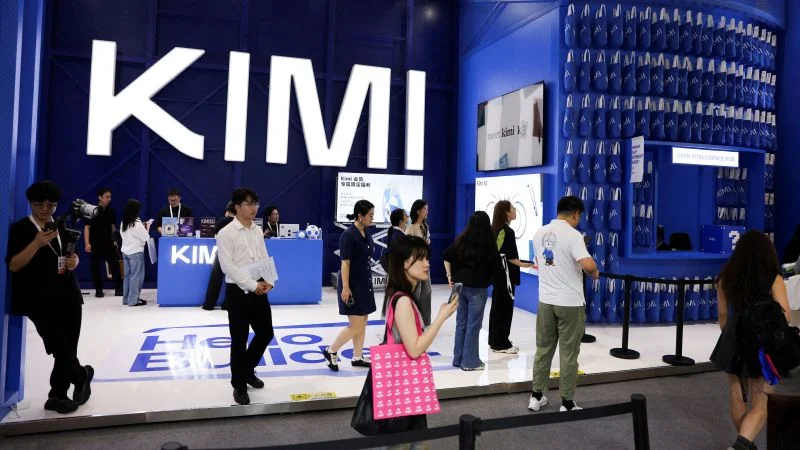
Image: Cnn
Main Takeaway
Moonshot AI released Kimi K3, a 2.8-trillion-parameter open-weight model that rivals proprietary frontier systems, trained on roughly 20,000 Nvidia Hopper and Blackwell chips accessed through foreign cloud providers in defiance of US export controls.
Jump to Key PointsSummary
How Kimi K3 caught Silicon Valley off guard
Moonshot AI, a Chinese startup previously unknown to most outside the industry, released its Kimi K3 model on July 27 and immediately triggered a wave of anxiety across Silicon Valley and Washington. The model is a 2.8-trillion-parameter multimodal reasoning system with a 1-million-token context window, designed for long-horizon coding, knowledge work, and agentic tasks. According to the company's own technical blog, Kimi K3 is the world's first open 3T-class model, built on a novel architecture called Kimi Delta Attention with Attention Residuals.
CNN reports that Moonshot had to suspend new subscriptions within two days of launch because demand overwhelmed its infrastructure. That level of immediate adoption echoes the DeepSeek moment from January 2025, when another Chinese startup blindsided the industry with competitive performance at a fraction of the expected cost. Big Technology notes that independent benchmarks place Kimi K3 in direct competition with frontier models from OpenAI and Anthropic, though Moonshot acknowledges its system still trails the most powerful proprietary models like Claude Fable 5.
The hardware supply chain that made it possible
Moonshot trained Kimi K3 using roughly 20,000 Nvidia Hopper chips supplied through a computing agreement with Alibaba, according to Bloomberg sources with knowledge of the companies' operations. Tom's Hardware goes further, reporting that the US government says Moonshot also purchased Nvidia Blackwell systems and rented time on foreign cloud providers to acquire compute, circumventing both US export controls and Chinese import restrictions. The Chinese government officially blocks Blackwell imports as part of its push to build a domestic advanced chip industry, but the chips are getting through regardless.
The model's open-weight release, which landed at midnight UTC on July 27, ships with a checkpoint size of 1.56TB and 104 billion active parameters at any given moment. Spheron's deployment guide notes that running Kimi K3 requires a supernode configuration with at least 64 accelerators, making it practical for well-funded organizations but not hobbyists. The hardware requirements underscore a central tension: China's AI progress remains heavily dependent on Western semiconductors even as both governments try to decouple their technology stacks.
Why the open-weight strategy is the real story
Kimi K3's open-weight release strategy has reignited debate over whether the US should ban Chinese open-source models. The South China Morning Post reports that Chinese open-weight models are gaining wider adoption overseas, raising concerns in Washington over China's accelerating AI progress. Moonshot made the model weights publicly available and released a Kimi Delta Attention implementation for vLLM, the popular open-source inference engine, which makes integration straightforward for any organization with sufficient compute.
Karen McCormick, Chief Investment Officer at Beringea, told Bloomberg that the bigger story is the growing availability of cheaper, open-weight models regardless of origin. The strategic implication is that restricting chip exports may slow but cannot stop Chinese AI development. The open-weight approach lets Moonshot distribute its models globally without needing to operate cloud services in every market, and it pressures Western AI companies to justify their premium pricing when comparable capabilities become freely available.
Market shock and the race to the bottom
Quartz reports that Kimi K3 sent US chip stocks tumbling as investors reassessed the durability of America's AI advantage. The sell-off echoed the DeepSeek panic from early 2025, when a single demonstration of cost-efficient Chinese AI erased hundreds of billions in market value. The concern is structural: if frontier-level models can be built with restricted hardware and released for free, the economic moats around companies like OpenAI, Anthropic, and Google begin to look shallower.
The pricing pressure is real. Northflank's technical guide details Kimi K3's API pricing, which undercuts comparable proprietary offerings by a wide margin. The model's 1-million-token context window and native multimodal capabilities, including visual reasoning, make it a direct competitor for enterprise workloads that currently run on US-built systems. The combination of low cost, open weights, and competitive performance creates a race to the bottom that benefits developers and consumers but threatens the unit economics of AI companies that have raised billions on the promise of sustained premium margins.
What Washington does next
The Kimi K3 launch has intensified calls in Washington for tighter export controls and new restrictions on open-weight model distribution. The South China Morning Post notes that the model's ability to support non-Nvidia ecosystems, including domestic Chinese AI accelerators, makes it harder for the US to control the hardware supply chain through sanctions alone. If Chinese models can run efficiently on Chinese chips, the leverage of export restrictions diminishes significantly.
Tom's Hardware reports that the US government is already investigating how Moonshot acquired Blackwell systems. The investigation signals that enforcement is becoming a higher priority, but it also reveals how porous the current controls are. The fundamental challenge is that AI model weights are digital information, which is far harder to control than physical semiconductors. Any attempt to ban open-weight releases would face legal challenges and would be difficult to enforce globally. The policy debate is shifting from whether China can catch up to how the US should respond now that it has.
The global adoption trajectory
The model's early demand suggests that Chinese open-weight models are finding a global audience. CNN reports that Moonshot suspended new subscriptions within two days, and the company's API documentation shows support for enterprise-scale deployment. The South China Morning Post emphasizes that Chinese open-weight models are gaining wider adoption overseas, which creates a feedback loop: more users mean more feedback, more fine-tuning, and faster improvement.
Northflank's technical analysis confirms that self-hosting Kimi K3 is practical for organizations with sufficient GPU clusters, which means the model will not remain a Chinese phenomenon. It will run on servers in the US, Europe, and wherever else developers choose to deploy it. The open-weight release makes it impossible to contain the model's spread, and the 1-million-token context window makes it especially useful for document analysis, codebase understanding, and long-form generation tasks that enterprise customers value. The model is not just a research artifact, it is a product that is being used in production.
What happens next for the AI industry
The Kimi K3 launch marks a structural shift in the AI industry's competitive dynamics. The combination of open weights, competitive performance, low pricing, and circumvention of export controls suggests that the era of AI as a proprietary, US-controlled technology is ending. The model's architecture, a 2.8-trillion-parameter mixture-of-experts system with 104 billion active parameters, represents a design philosophy that prioritizes efficiency and deployment flexibility over raw scale.
Moonshot has committed to releasing the full model weights by July 27, 2026, and the company has already published its Kimi Delta Attention implementation for vLLM. The open-source community is now building tooling, fine-tunes, and deployment configurations around the model. For US policymakers, the immediate question is whether to escalate export controls or accept that AI development is now a global activity. For AI companies, the question is whether proprietary models can maintain a pricing premium when open-weight alternatives are this competitive. The answer will shape the industry for the next decade.
Key Points
Moonshot AI released Kimi K3, a 2.8-trillion-parameter open-weight model that rivals frontier systems from OpenAI and Anthropic on coding and reasoning tasks.
The model was trained on roughly 20,000 Nvidia Hopper and Blackwell chips accessed through Alibaba's cloud and foreign providers, circumventing US export controls.
Kimi K3's open-weight release triggered a US chip stock selloff and reignited Washington debates over restricting Chinese open-source AI models.
The model's 1-million-token context window, multimodal capabilities, and API pricing undercut proprietary alternatives from US companies.
Moonshot suspended new subscriptions within two days of launch due to overwhelming global demand for the model's API and applications.
Questions Answered
Kimi K3 is a 2.8-trillion-parameter open-weight multimodal reasoning model developed by Chinese startup Moonshot AI. It has a 1-million-token context window, native vision capabilities, and is designed for long-horizon coding, knowledge work, and agentic tasks. The model was released with open weights on July 27, 2026.
Moonshot AI accessed roughly 20,000 Nvidia Hopper chips through a cloud computing agreement with Alibaba. The company also reportedly purchased Nvidia Blackwell systems and rented time on foreign cloud providers, circumventing both US export controls and Chinese import restrictions on advanced semiconductors.
Kimi K3 is competitive with frontier models from OpenAI and Anthropic on coding, knowledge work, and reasoning benchmarks. However, Moonshot acknowledges that Kimi K3 still trails the most powerful proprietary models like Claude Fable 5 and GPT-5 in overall performance.
Kimi K3 demonstrated that frontier-level AI can be built using restricted hardware and released as open-weight models at a fraction of the cost of proprietary alternatives. This raised investor concerns that the competitive moats around US AI companies and chip manufacturers are eroding, triggering a selloff similar to the DeepSeek market shock of January 2025.
Kimi K3 can be self-hosted but requires significant compute. The model checkpoint is 1.56TB, and deployment requires at least 64 accelerators like H100, B200, or B300 GPUs. Moonshot has released a Kimi Delta Attention implementation for vLLM and SGLang to support self-hosting.
The Kimi K3 release has triggered renewed debate in Washington over whether to restrict Chinese open-source models, but no ban has been announced. The US government is investigating how Moonshot acquired Blackwell chips, and policymakers are considering tighter export controls on both hardware and model weights.
Source Reliability
36% of sources are highly trusted · Avg reliability: 73
Go deeper with Organic Intel
Simple AI systems for your life, work, and business. Each one includes copyable prompts, guides, and downloadable resources.
Explore Systems