Moonshot AI's Kimi K3 Stuns Silicon Valley, Matching Top US Models at a Fraction of the Cost
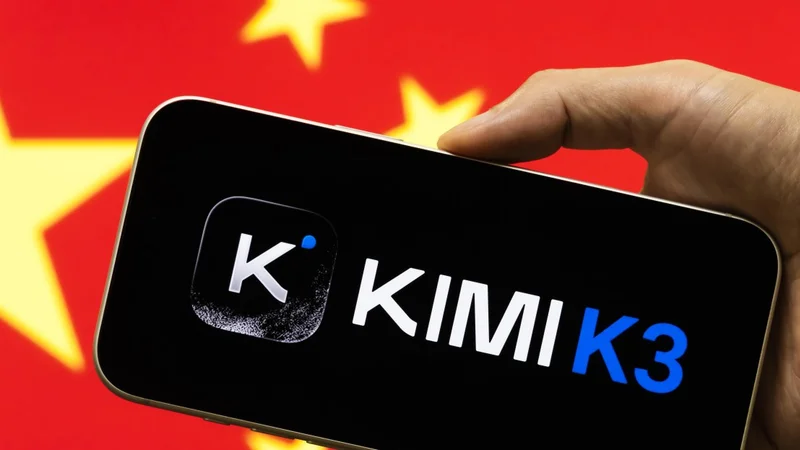
Image: The Verge AI
Main Takeaway
Moonshot AI's open-source Kimi K3 model vaulted to the top of coding benchmarks within hours of release, outperforming GPT and Claude on key tasks.
Jump to Key PointsSummary
How Kimi K3 instantly reshaped the AI leaderboard
Moonshot AI, a Beijing-based startup, released its Kimi K3 model on Thursday and saw it rocket to the number one position on Arena.ai's coding leaderboard within hours. The model didn't just compete with the frontier, it beat proprietary heavyweights like OpenAI's GPT 5.6 Sol and Anthropic's Claude Fable 5 on widely watched independent benchmarks. According to TechCrunch, Moonshot's own technical report admits K3 still trails those proprietary giants in some areas, but independent analysis tells a clearer story: the gap has effectively collapsed.
The timing was electric. The Verge reports that Kimi K3's debut came just days before Alibaba unveiled its own frontier model, delivering what analysts describe as a one-two punch to American AI dominance. Arena.ai's public leaderboard data confirmed the model's surge, while Vals AI's independent evaluation, cited by the New York Times, validated the performance claims. The speed of the ascent, not just the capability, is what rattled the industry.
What's inside the model that has Washington worried
Kimi K3 is a 2.8 trillion parameter system with a one million token context window and native vision capabilities, according to ThemeLari. That architecture makes it suited for extended coding sessions, deep research, document analysis, and multi-step agentic tasks. Moonshot AI has committed to an open-weight release, a strategic decision that multiplies the model's impact by putting frontier level AI into the hands of developers worldwide at zero licensing cost.
TechCrunch captured the ideological flashpoint this ignited, reporting that the release prompted fresh discourse about what critics call full AI communism. The open-source nature of the release means US export controls, designed to throttle China's access to advanced chips and models, face a new kind of challenge: a model that, once released, can't be contained. Axios reported that the model outperformed or matched Anthropic's Opus on several internal benchmarks, a comparison that stings given the billions in capital deployed by American labs.
Why Washington is treating this as a national security alarm
The political reaction was immediate and pointed. Former White House AI and cryptocurrency czar David Sacks argued that the U.S. is "tying itself in knots" over AI regulation and risks losing its competitive edge, according to The Hill. His statement encapsulates a growing frustration among American policymakers who see the bureaucratic friction of safety testing and export controls as a self-imposed handicap while Chinese labs sprint ahead.
The New York Times frames the development as a direct threat to America's technological lead, noting that AI is now central to national security, economic power, and geopolitical influence. The Hill adds that the release sent shockwaves through the American AI industry precisely because it was not just a research paper, it was a working, benchmark-topping model. The AFP report carried by Yahoo Finance highlights the fresh discussion over the China-US rivalry, with the implicit question being whether export controls on chips have failed to prevent China from reaching the frontier.
Why the cost efficiency argument stings Silicon Valley
Moonshot's claims about cost efficiency are arguably more threatening than the raw performance numbers. The Verge reports that both Moonshot and Alibaba are pitching their models as rivals to OpenAI and Anthropic at a fraction of the cost. This isn't just about matching capability, it's about doing it with less compute, less capital, and under the constraints of US export controls that were supposed to make this impossible.
The economics shift the entire competitive frame. If a Beijing startup can train a frontier model that competes with GPT 5.6 Sol without access to the latest Nvidia chips, then the billions American companies are spending on compute look less like a moat and more like a liability. The Yahoo Finance piece notes that this has intensified concerns about America's eroding technological advantage, not just in the lab but in the global marketplace where price sensitive enterprises and developers choose their tools.
The open-source strategy and its geopolitical ripple effects
Moonshot's decision to open-source Kimi K3 fundamentally alters the strategic calculus. TechCrunch reports that the release has generated a wave of discourse about open source AI and China's role in democratizing access to frontier models. A closed model can be sanctioned, restricted, or blocked. An open weight release, once downloaded and re-hosted, is effectively uncontainable.
This mirrors the broader pattern identified in OpenAI's threat report, cited by Wfdd, which found that operators working on behalf of Beijing have mounted covert efforts targeting US AI companies and data centers. The Kimi K3 release, whether intentionally or not, fits into a pattern where China's AI strategy blends open-source generosity with strategic competitive pressure. The New York Times notes that the model's release comes just as AI is becoming central to economic power, making the open-source play not just a technical choice but a geopolitical maneuver.
What happens next for the US China AI race
The immediate aftermath is a scramble for policy response and competitive repositioning. The Hill's coverage of David Sacks' comments suggests the regulatory pendulum may swing toward acceleration rather than caution. American AI labs now face a dual pressure: match the raw performance of models like Kimi K3 while justifying their massive capital expenditures to investors who see a 2.8 trillion parameter model released for free.
Axios reports that Kimi K3's vault into the top tier of global models happened within hours of release, a speed that leaves no room for gradual adaptation. The AFP report carried by Yahoo Finance underscores that the program stunned the US tech industry on Friday, setting off fresh discussion over the rivalry. The question is no longer whether China can catch up, but whether America's lead ever existed in the way policymakers assumed. The coming months will reveal whether this is a wake-up call or a turning point.
Key Points
Moonshot AI's Kimi K3 open-source model topped the Arena.ai coding leaderboard within hours of its Thursday release.
Independent benchmarks show K3 outperforming Anthropic's Claude Fable 5 and OpenAI's GPT 5.6 Sol on key tasks.
The 2.7 trillion parameter model with a one million token context window is being released as open-weight, making it uncontainable.
Former White House AI czar David Sacks warned that US regulatory caution is handicapping America's competitive edge against China.
The release came days before Alibaba's own frontier model, delivering a one-two punch that challenges US AI dominance.
Questions Answered
Kimi K3 is a 2.7 trillion parameter open-source AI model developed by Beijing-based startup Moonshot AI. It features a one million token context window and native vision capabilities, designed for coding, research, and agentic tasks. The model vaulted to the top of the Arena.ai coding leaderboard within hours of its release.
Independent benchmarks from Arena.ai and Vals AI show Kimi K3 outperforming OpenAI's GPT 5.6 Sol and Anthropic's Claude Fable 5 on coding tasks. Moonshot's own technical report acknowledges it still trails the most powerful proprietary models overall, but the performance gap has effectively collapsed on many key metrics.
Yes, Moonshot AI is releasing Kimi K3 as an open-weight model, meaning anyone can download, modify, and deploy it without licensing fees. This open-source strategy has amplified the model's geopolitical impact because it cannot be contained once released.
Former White House AI and cryptocurrency czar David Sacks argued that the U.S. is 'tying itself in knots' over AI regulation and risks losing its competitive edge. He made the comments shortly after Kimi K3's release sent shockwaves through the American AI industry.
Kimi K3 demonstrates that a Chinese startup can produce frontier-level AI that competes with the best American models despite US chip export controls. Its rapid ascent to the top of benchmarks, combined with its open-source release and cost efficiency, challenges the assumption that America holds a durable lead in AI.
The immediate aftermath is a scramble for policy response and market recalibration. The US government faces pressure to reassess whether export controls and regulatory caution are effective, while American AI labs must justify their massive capital expenditures against a free open-source competitor. The coming months will likely see accelerated policy debates and a renewed focus on cost efficiency.
Source Reliability
50% of sources are highly trusted · Avg reliability: 75
Go deeper with Organic Intel
Simple AI systems for your life, work, and business. Each one includes copyable prompts, guides, and downloadable resources.
Explore Systems