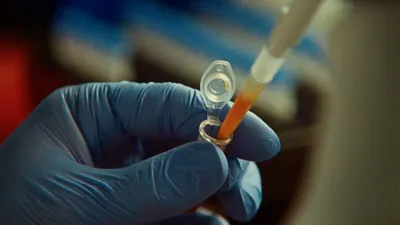
Moderna and Merck’s Personalized mRNA Vaccine Cuts Melanoma Recurrence in Phase 3 Trial

Image: News.bloomberglaw
Main Takeaway
Moderna and Merck said their personalized mRNA vaccine, combined with Keytruda, reduced melanoma recurrence and distant spread in a large Phase 3 trial.
Jump to Key PointsSummary
The trial’s central result
Moderna and Merck said a personalized mRNA vaccine combined with Keytruda reduced the risk of melanoma returning or spreading in a Phase 3 trial of high-risk patients whose tumors had been completely removed. The companies said the INTerpath-001 study met its primary measures of recurrence-free survival and distant metastasis-free survival, comparing intismeran autogene plus Keytruda with Keytruda alone.
The study enrolled more than 1,100 people with resected stage IIB through stage IV melanoma, according to company information and media reports. Interim findings showed patients receiving the combination remained free of recurrence for longer than those receiving Merck’s immunotherapy alone. The trial remains ongoing, and the companies have not yet released the full dataset in a peer-reviewed publication.
Why melanoma is the test case
Melanoma has become a leading proving ground for cancer immunotherapy because the disease can return after surgery and can spread rapidly. Keytruda, also known as pembrolizumab, already plays a major role in reducing that risk, but recurrence and treatment resistance remain significant problems for patients with advanced disease.
The vaccine is designed for each patient by analyzing tumor-specific mutations and producing an mRNA treatment aimed at teaching the immune system to recognize those individual cancer markers. That approach differs from a universal vaccine because the formula is tailored to the biology of one person’s tumor. Cancer groups and clinical researchers have continued pursuing such treatments as resistance emerges against immunotherapies and targeted drugs.
What the companies reported
Merck and Moderna described the results as the first statistically significant and clinically meaningful improvement in both recurrence-free survival and distant metastasis-free survival for a personalized cancer vaccine combination in the adjuvant melanoma setting. The companies said they plan to present detailed data at an upcoming international medical meeting and discuss regulatory submissions with health authorities.
The announcement gave investors a sharp signal about the commercial stakes. Moderna shares rose more than 100% during trading, with reports placing the early move as high as 150%, while Merck also gained. The market response reflects expectations that a successful oncology product could broaden Moderna’s business beyond its COVID-19 vaccine franchise and strengthen Merck’s position in cancer treatment.
Evidence still awaits scrutiny
The headline result is important, but the public evidence remains incomplete because the companies released topline findings rather than the detailed hazard ratios, survival curves, subgroup analyses, safety data and duration of follow-up. Those figures will determine how large the benefit is and whether it changes treatment decisions for different melanoma risk groups.
The trial’s ongoing status also matters. Recurrence-free survival and distant metastasis-free survival are meaningful endpoints, but regulators and doctors will examine the durability of the effect, adverse events, manufacturing consistency and the practical time and cost required to create a vaccine for every patient. Peer-reviewed publication and presentation at a medical meeting will provide the wider oncology community with a fuller basis for assessing the claim.
The business and research fallout
A positive Phase 3 result strengthens the case for individualized mRNA therapies beyond infectious disease. Moderna has spent years applying its platform to cancer, while Merck contributes Keytruda and experience in large oncology trials. Their partnership now has a late-stage clinical result that can support regulatory discussions and encourage similar programs from pharmaceutical companies.
The outcome also raises practical questions about scale. Personalized manufacturing, tumor sequencing, quality control and treatment scheduling must fit within the narrow window after surgery, when patients face the risk of relapse. If the benefit holds up, the program could create a new model for pairing a patient-specific vaccine with an established immune checkpoint inhibitor. If the effect is modest or difficult to deliver, adoption will depend heavily on cost, logistics and patient selection.
What happens next
Moderna and Merck are preparing a detailed presentation and regulatory engagement for intismeran autogene plus Keytruda. Those steps will establish the treatment’s measured benefit, safety profile and proposed place in melanoma care more clearly than the announcement alone.
For patients and clinicians, the immediate result is a significant clinical signal rather than an approved new standard. Keytruda remains the comparator and foundation of the regimen described in the trial. The next milestones are full data disclosure, peer review, regulatory filing and a clearer account of how quickly and affordably hospitals can produce a vaccine matched to an individual tumor.
Key Points
Moderna and Merck’s personalized mRNA vaccine reduced melanoma recurrence and distant spread with Keytruda in Phase 3.
INTerpath-001 enrolled more than 1,100 high-risk melanoma patients after complete tumor removal.
The combination met recurrence-free survival and distant metastasis-free survival endpoints against Keytruda alone.
Full efficacy, safety, subgroup and durability data remain pending at an upcoming medical meeting.
Positive results strengthen personalized mRNA cancer vaccine research and Moderna’s oncology strategy.
Questions Answered
Moderna and Merck said their personalized mRNA vaccine combined with Keytruda reduced melanoma recurrence and distant metastasis in a Phase 3 trial. The INTerpath-001 study met its primary recurrence-free and distant metastasis-free survival endpoints against Keytruda alone.
Moderna’s personalized melanoma vaccine uses tumor-specific information to create an mRNA treatment tailored to an individual patient. The vaccine is intended to help the immune system recognize cancer markers when paired with Merck’s Keytruda.
Moderna and Merck’s melanoma vaccine has not received approval based on the announced results. The companies plan to present detailed findings and discuss regulatory filings, while the trial remains ongoing.
Moderna and Merck’s result is important because it provides late-stage evidence for a personalized mRNA cancer vaccine in melanoma. It also supports combining a patient-specific vaccine with an established immune checkpoint inhibitor.
Moderna and Merck will present detailed INTerpath-001 data and engage regulators on submissions. Clinicians and regulators will assess the treatment’s benefit, safety, durability, manufacturing process and cost before any approval decision.
Source Reliability
63% of sources are highly trusted · Avg reliability: 83
Go deeper with Organic Intel
Simple AI systems for your life, work, and business. Each one includes copyable prompts, guides, and downloadable resources.
Explore Systems