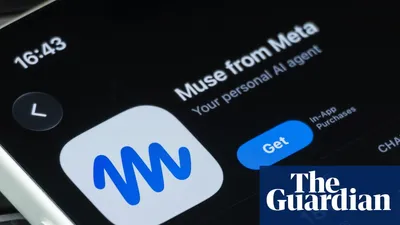
Meta Launches Muse AI Agent Push as It Races OpenAI and Anthropic in Personal and Coding Tools

Image: The Verge AI
Main Takeaway
Meta unveiled Muse, a personal AI agent and coding push that expands its costly strategy overhaul against OpenAI, Anthropic, and Google.
Jump to Key PointsSummary
Meta’s new AI offensive
Meta is expanding its AI strategy with Muse, a personal agent designed to perform everyday tasks on a user’s behalf. The launch gives the company a more direct answer to products from OpenAI, Anthropic, and Google as it tries to turn AI investment into services people use regularly.
Muse is positioned around practical assistance, including online shopping, email, organization, and project work. Meta’s public messaging frames the system as an agent that acts, rather than simply responding to prompts. The Verge describes the effort as part of a multibillion-dollar overhaul, while Bloomberg identifies the announcement as an extension of Mark Zuckerberg’s vision for personalized AI. Meta’s Newsroom presents the broader goal in similar terms, emphasizing action over conversation.
Personal tasks become the battleground
Muse enters a market where AI companies are competing to control routine digital work. Meta says the agent will help users manage tasks and projects, bringing automation closer to shopping, communications, and personal organization.
Ease of use and privacy are central to the pitch. The Verge reports that Meta is focusing on making AI accessible to a broad audience while providing privacy options, an important distinction for an agent that handles messages, purchases, and other personal activity. Bloomberg’s description centers on an assistant acting on a user’s behalf, while the Meta Newsroom’s language stresses systems that can carry out actions. Together, the launch shows Meta treating the personal agent as a consumer product category rather than a research demonstration.
Muse Spark targets paid AI work
Meta’s Muse effort also includes Spark model releases that point toward a commercial agent platform. Digitalapplied describes Muse Spark 1.1 as Meta’s first paid agent model, while Meta AI Blog materials identify the same version in an official introduction. Axios reports a later Muse Spark 1.3 release as work on the personal agent continues.
The version sequence matters because it ties Meta’s consumer assistant ambitions to an evolving model family. A paid model can support enterprise or developer use, while successive releases provide a path for improving reliability and task performance. BuiltIn’s coverage highlights features, risks, and next steps around Muse Spark, placing the product in the wider discussion about how agent systems handle autonomy, user data, and real-world execution.
Coding brings a second front
Meta is pursuing software development alongside personal assistance. CNBC’s coverage identifies Muse Code as a product aimed at Anthropic and OpenAI, and a second CNBC headline describes Meta’s entry into the AI coding market.
Coding agents are strategically important because they sit close to daily professional workflows and offer a clear route to paid adoption. Meta’s move places its agent work against products that already compete for developers, engineering teams, and enterprise budgets. The Muse family therefore spans consumer organization and technical production, two markets with different expectations for accuracy, permissions, and accountability. The coding push also gives Meta a way to compete on usefulness even as it works to rebuild its standing in general-purpose AI.
Open models and strategic rebuilding
Meta is pairing product launches with open agent research. Research.meta introduced Muse Glimmer as an open agentic model, extending the company’s long-running strategy of releasing model technology for outside researchers and developers.
That approach creates a contrast with paid, user-facing agents. Open models can broaden experimentation and attract builders, while commercial products give Meta control over the user experience and revenue model. The two tracks also reinforce each other: research releases can expand the developer ecosystem, and consumer products can reveal which agent capabilities matter in practice. BuiltIn’s focus on risks and next steps underscores the pressure around this strategy, particularly when agents move from generating text to taking actions.
What happens next for Meta
Meta’s next test is execution. Muse must complete tasks accurately, earn permission for sensitive actions, protect personal information, and provide enough value to become a habit. Those requirements are harder than producing fluent answers because an agent can create costs or confusion when it makes a mistake.
The launch also raises a competitive question: whether Meta can convert its enormous consumer reach into sustained AI usage. OpenAI, Anthropic, and Google remain the named rivals, while coding tools add pressure from developer-focused products. Meta’s combination of personal assistance, paid Spark models, coding software, and open research gives it several routes into the market, but each route demands reliable performance. Muse is the clearest public sign yet of Meta’s attempt to turn its AI reset into an operating business.
Key Points
Meta launched Muse, a personal AI agent for shopping, email, organization, and project management.
Muse Spark model releases extend Meta’s agent strategy toward paid products and continued model development.
Meta entered AI coding with Muse Code, targeting developer workflows dominated by Anthropic and OpenAI.
Meta’s privacy and ease-of-use focus addresses consumer concerns around agents handling sensitive tasks.
Research.meta introduced Muse Glimmer as an open agentic model for researchers and developers.
Questions Answered
Meta Muse is a personal AI agent designed to complete tasks such as online shopping, email, organization, and project work. Meta is presenting it as an assistant that acts on a user’s behalf, with an emphasis on ease of use and privacy.
Meta Muse competes with OpenAI and Anthropic by combining personal task automation with coding tools. Meta is also developing Muse Spark models and Muse Code, giving it products aimed at consumers, developers, and paid AI users.
Meta Muse Spark 1.1 is an agent model associated with Meta’s commercial AI strategy. Coverage describes it as Meta’s first paid agent model, while later reporting identifies Muse Spark 1.3 as part of the continuing personal-agent effort.
Meta Muse Glimmer is an open agentic model introduced by Meta’s research organization. It extends Meta’s open-model approach by giving researchers and developers access to agent technology.
Meta is focusing on AI agents to move beyond chat responses and automate useful digital work. The strategy gives Meta a path into consumer assistants, software development, enterprise workflows, and paid AI services.
Source Reliability
46% of sources are highly trusted · Avg reliability: 76
Go deeper with Organic Intel
Simple AI systems for your life, work, and business. Each one includes copyable prompts, guides, and downloadable resources.
Explore Systems