Meta's $50B+ Chip Shopping Spree: Amazon CPUs, AMD GPUs, and the End of Nvidia's Reign
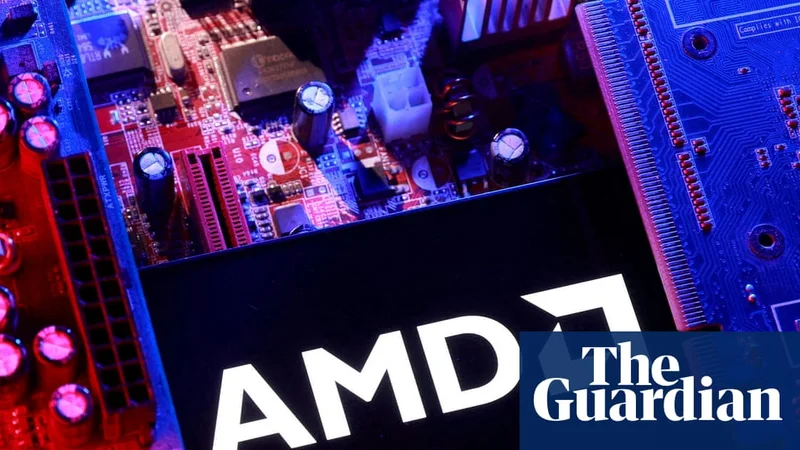
Image: Theguardian
Main Takeaway
Meta just dropped over $50 billion on AI chips from Amazon, AMD, and Google in a single week, signaling a seismic shift away from Nvidia's grip on AI.
Jump to Key PointsSummary
What Meta Actually Bought
Meta didn't just sign one deal. They orchestrated a three-way chip splurge that totals over $50 billion across multiple providers. According to Bloomberg, Meta locked in a multibillion-dollar agreement to rent hundreds of thousands of Amazon's AWS Graviton CPUs. Reuters and The Guardian confirm a separate $60-100 billion AMD deal for AI accelerators. Meanwhile, SiliconANGLE reports a Google TPU partnership worth billions more.
The Amazon portion stands out because it's not about GPUs. TechCrunch notes Meta will use millions of ARM-based Graviton CPUs for "agentic workloads", essentially AI tasks that don't need Nvidia's specialized graphics chips. This represents a fundamental shift in how Meta thinks about AI infrastructure.
Why Amazon's CPUs Matter for AI
Amazon's Graviton chips were designed for general cloud computing, not AI. Yet Meta's betting big on them for inference tasks, the moment when trained AI models actually answer questions or generate content. This is clever economics. While Nvidia's H100s cost $25,000+ each and burn massive power, Graviton CPUs sip energy and cost a fraction.
The deal structure is rental, not purchase. Meta's essentially leasing compute capacity from AWS rather than owning hardware. This gives them flexibility to scale up or down based on demand, avoiding the capital crunch that's hit other AI companies.
AMD's $100B Gamble and Meta's Equity Play
The AMD agreement is more traditional but massive in scope. ABC7 News reports the deal includes an option for Meta to acquire up to 10% of AMD's stock. This isn't just procurement, it's strategic investment. CNET notes Meta joins OpenAI in taking direct stakes in chip companies.
The partnership covers 6 gigawatts of computing power, enough to run a small city. This positions AMD as a serious challenger to Nvidia's AI dominance, with Meta as their anchor customer.
What This Means for the Chip Wars
Meta's multi-vendor approach signals the end of Nvidia's monopoly moment. By splitting orders between Amazon (CPUs), AMD (GPUs), and Google (TPUs), Meta creates leverage in negotiations and reduces single-vendor risk.
This mirrors what's happening across big tech. Emirates247 reports the industry will spend $660 billion on AI infrastructure in 2026. Meta's strategy shows the smartest players aren't betting on one horse, they're building portfolios of specialized silicon.
The timing is crucial. VC.traded notes hyperscalers are actively exploring alternatives to Nvidia chips as demand outstrips supply. Meta's deals give them preferential access to three competing architectures.
The Real Winners Beyond Meta
Amazon emerges as the surprise victor. Their homegrown chips, originally designed to reduce Intel dependence, are now mission-critical for Meta's AI ambitions. This validates AWS's $35 billion annual chip R&D investment.
AMD gets a $100 billion vote of confidence when questions swirl about AI bubble dynamics. The equity component gives them a stable mega-customer while they scale production to challenge Nvidia's 80% market share.
Google's TPU deal, though smaller, keeps them relevant in the AI chip conversation. Their custom silicon has been mostly internal until now.
What Happens Next
Expect other tech giants to copy Meta's playbook. The economics are too compelling. Why pay $25,000 per Nvidia chip when Amazon CPUs can handle 40% of AI tasks at 10% of the cost?
Chip startups should be nervous. With Meta, Google, and Amazon all investing in custom silicon, the window for independent AI chip companies is shrinking. The smart money's already moving to specialized software that can optimize across multiple chip architectures.
For developers, this fragmentation means more complexity but potentially lower costs. Meta's open-source approach means we'll probably see tools that abstract away which chip runs which workload.
Key Points
Meta signed simultaneous deals worth $50B+ with Amazon (Graviton CPUs), AMD (AI chips), and Google (TPUs) in a single week
Amazon's ARM-based Graviton CPUs will handle AI inference workloads, challenging the GPU-only paradigm
Meta secured equity options in AMD (up to 10% stake) and rental agreements with AWS, not just purchase orders
This multi-vendor strategy reduces Nvidia's market dominance and creates competitive leverage for future negotiations
Industry spending on AI infrastructure projected to hit $660B in 2026, with Meta setting the template for diversified chip portfolios
Questions Answered
For specific AI inference tasks (like running trained models), Amazon's ARM-based Graviton CPUs offer better power efficiency and cost per operation compared to expensive Nvidia GPUs. Meta's using them for 'agentic workloads' that don't require heavy parallel processing.
Meta has committed over $50 billion across three major deals: the Amazon CPU rental agreement, the $60-100 billion AMD GPU partnership, and a separate multibillion-dollar Google TPU deal.
Not yet. The AMD deal includes an option for Meta to acquire up to 10% of AMD's stock based on performance milestones, but it's structured as a potential future equity stake, not an immediate acquisition.
Meta's approach is unique because it diversifies across three competing architectures (ARM CPUs, AMD GPUs, Google TPUs) simultaneously, uses rental agreements instead of purchases, and targets specific workload optimization rather than one-size-fits-all GPU clusters.
Source Reliability
38% of sources are highly trusted · Avg reliability: 72
Go deeper with Organic Intel
Simple AI systems for your life, work, and business. Each one includes copyable prompts, guides, and downloadable resources.
Explore Systems