Lake Mariner’s $3.2 Billion AI Campus Reveals Who Controls Data Center Risk
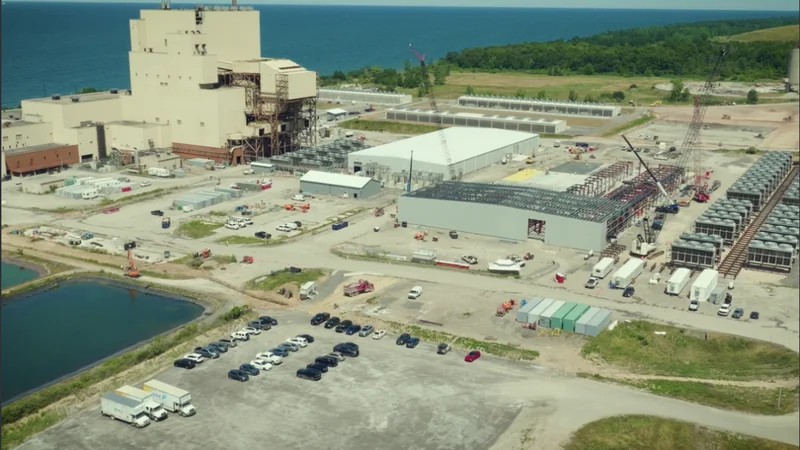
Image: Ars Technica AI
Main Takeaway
Lake Mariner’s $3.2 billion AI data center fire exposed a corporate structure that can blur responsibility for safety, power, financing, and operations.
Jump to Key PointsSummary
A fire exposed the central problem
A fire at the unfinished Lake Mariner data center in Somerset, New York, revealed an accountability gap around a $3.2 billion AI infrastructure project. Local firefighters reportedly had limited information about the site when the blaze broke out in early June, raising a basic question: which company is responsible when ownership, construction, financing, computing capacity, and operations sit across different entities?
The project’s significance extends beyond one construction incident. The facility represents the scale and complexity of modern AI campuses, where a visible building can conceal a chain of developers, contractors, technology providers, investors, utilities, and prospective customers. The corporate structure matters because each participant controls a different piece of the risk, while public agencies and emergency responders must deal with the site as a single physical facility.
TeraWulf anchors the project
TeraWulf is identified as the company behind the Lake Mariner AI campus, placing the cryptocurrency and data-center operator at the center of questions about ownership, safety, and power accountability. The project’s $3.2 billion price tag makes the facility a major capital commitment, while its unfinished status means construction hazards and operational hazards overlap.
That overlap complicates responsibility. A developer can control the site without controlling every contractor; a power partner can influence electrical systems without running the building; and an AI customer can depend on capacity without owning the equipment or property. The Lake Mariner episode puts pressure on contracts, site procedures, disclosure practices, and emergency planning, especially when local officials need rapid access to accurate information.
AI infrastructure spreads responsibility
The corporate web behind Lake Mariner reflects a broader financing model for AI data centers. Large campuses require land, grid access, buildings, cooling systems, networking, accelerators, and long-term customers. Those requirements encourage partnerships and project-finance structures that divide assets and obligations among several companies.
That division can lower the cost of development and bring specialized expertise into one project, but it also creates gaps when something fails. Legal exposure can involve construction defects, workplace safety, environmental rules, electrical systems, fire response, data-center operations, or customer contracts. Project-finance structures add another layer because lenders and investors care about contracted revenue, collateral, insurance, and the ability of an operator to keep the facility running.
Chips and customers shape the economics
The project is also tied to the race for AI computing capacity, where access to chips and power determines how quickly facilities generate revenue. One account describes Google backing a $3.2 billion AI data center and deploying its own processors as part of a challenge to Nvidia’s dominance. The claim connects data-center construction with the chip market, although the available excerpts do not establish whether Google is a Lake Mariner partner.
That distinction matters because similar dollar figures appear across unrelated AI infrastructure stories. Cisco’s investment strategy, Microsoft’s multibillion-dollar commitments in Sweden and the United Kingdom, and SenseTime’s HK$3.2 billion share placement all show how widely capital is flowing into AI infrastructure. They provide context for the boom, but their published titles do not establish a direct role in Lake Mariner.
Local agencies face practical risks
For local emergency services, corporate complexity has a physical consequence: responders need to know who controls access, what materials are present, how electrical systems are configured, and which hazards remain during construction. A fire at an unfinished building can involve temporary power, construction materials, heavy equipment, and incomplete safety systems before the facility reaches normal operating conditions.
The incident also illustrates why permitting and emergency planning must keep pace with AI campuses. Responsibility cannot rest only on a corporate chart. It must be translated into named contacts, shared site plans, inspection records, training, and clear authority during an emergency. Litigation risk rises when a project has multiple entities but no obvious public-facing owner for a specific failure.
What happens next for large campuses
Lake Mariner’s significance lies in the governance test created by AI infrastructure at industrial scale. Developers and investors need clear allocation of safety, power, construction, and operating duties before a campus is built, while municipalities need direct access to the information required to protect responders and residents.
The project also gives lenders, customers, and technology partners a reason to examine corporate structures more closely. AI demand can justify enormous facilities, but revenue commitments and chip deployments do not remove ordinary obligations around fire protection, construction oversight, grid coordination, and public accountability. As more companies assemble shared AI campuses, those details will determine whether complexity supports growth or conceals responsibility.
Key Points
TeraWulf’s $3.2 billion Lake Mariner campus exposed unclear accountability after a construction fire.
Multiple developers, contractors, financiers, utilities, and customers can divide responsibility for one AI facility.
Local firefighters reportedly lacked critical information about the unfinished data center during the incident.
Project-finance structures can separate ownership, revenue, collateral, operations, insurance, and legal liability.
Google, Microsoft, Cisco, and SenseTime show the wider capital surge behind AI infrastructure.
Questions Answered
TeraWulf’s Lake Mariner project in Somerset, New York, experienced a fire in an unfinished building in early June. The incident highlighted how little information local firefighters had about the developing facility.
The Lake Mariner AI data center is described as a $3.2 billion project. Its scale reflects the large capital requirements for power, buildings, cooling, networking, and AI computing equipment.
Lake Mariner involves the kinds of separated responsibilities common in large data-center projects, including development, construction, financing, power, equipment, and operations. That structure can make it unclear which company must answer for a safety failure or emergency response problem.
Google’s direct role in TeraWulf’s Lake Mariner project is not established by the available article excerpts. A separate account describes Google backing a $3.2 billion AI data center and using its own chips, but the connection to Lake Mariner is unconfirmed.
Future AI data centers should assign clear responsibility for fire safety, electrical systems, emergency contacts, construction oversight, and operating continuity. Municipal responders also need current site plans, hazard information, and direct access to responsible personnel.
Source Reliability
58% of sources are established · Avg reliability: 53
Go deeper with Organic Intel
Simple AI systems for your life, work, and business. Each one includes copyable prompts, guides, and downloadable resources.
Explore Systems