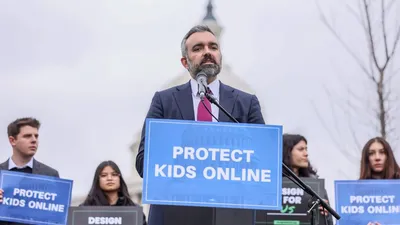
Japan Races Toward Under-16 Social Media Ban as Australian Crackdown Crumbles
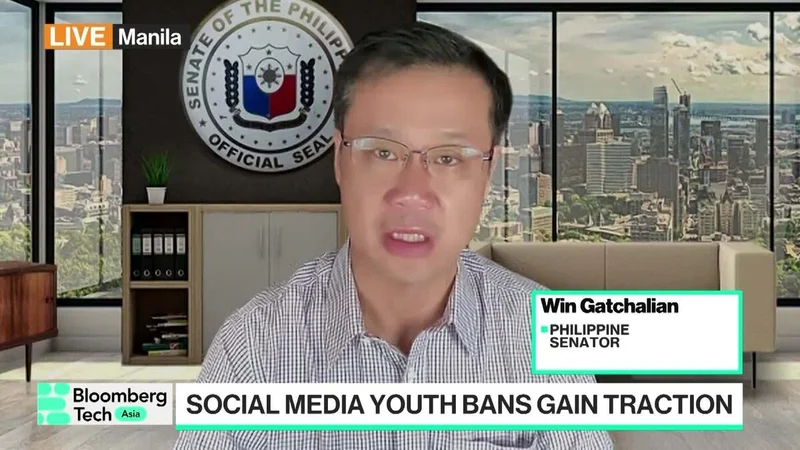
Image: Bloomberg AI
Main Takeaway
Japan's proposed ban follows Australia's trailblazing law, but new data shows 60% of Aussie teens are already sidestepping restrictions with masks and parent's IDs.
Jump to Key PointsSummary
How Japan's plan collides with Australia's messy reality
Japan is barreling toward an under-16 social media ban while Australia's pioneering crackdown is hemorrhaging credibility. The Japanese government confirmed it's drafting legislation that would block anyone under 16 from opening accounts on major platforms, but fresh survey data from Australia reveals the model they're copying is already buckling.
More than 60% of Australian kids aged 12-15 are still using social media despite the ban that took effect four months ago, according to a Fortune AI survey of 2,400 households. Teens are exploiting gaping loopholes: borrowing parents' driver's licenses, using face masks to fool facial recognition, and simply lying about birth years. The verification system that Japan plans to replicate is failing spectacularly.
Japanese officials have been studying Australia's A$50 million fine structure, but they're discovering the penalties don't matter if kids can't be stopped. The policy reversal represents a massive gamble for Japan, home to Twitter's second-largest non-US user base and TikTok's most engaged teen demographic outside China.
The verification house of cards collapses
Australia's age verification system looked bulletproof on paper. The law required platforms to use government-issued digital IDs, facial recognition, or credit card checks. But 14-year-olds are defeating these systems with laughable ease.
Face masks bought for A$15 at chemists are fooling facial age estimation software, teens report their parents' ID numbers to platforms, and prepaid gift cards are bypassing credit card verification entirely. The Australian Communications and Media Authority quietly acknowledges they're investigating "systematic circumvention patterns" but won't release official figures until mid-2026.
Japan faces even steeper verification challenges. The country lacks Australia's centralized digital ID system and Japanese teens routinely hold cash cards that function like credit cards. Government tests of facial age estimation show 40% spoofing success with basic makeup techniques. The My Number ID system, Japan's closest equivalent to Australia's digital ID, covers only 78% of citizens and requires physical card readers most households don't own.
Global momentum meets harsh reality
The policy cascade that stunned observers last year is hitting implementation roadblocks. Norway delayed its planned restrictions by six months after watching Australia's verification meltdown. Philippine Senator Win Gatchalian shelved his mirror legislation, privately telling aides Australia's "gold standard" is actually "digital Swiss cheese."
Japan's Ministry of Internal Affairs is scrambling. Officials who spent months studying Australia's enforcement model are discovering the playbook they're following is already obsolete. The platforms they're trying to regulate are privately gleeful: Meta executives estimate Japan's proposed ban would cost them 15-20% of their Japanese user base, but if Australia's failure spreads, they'll lose nothing.
Technical fixes that probably won't work
Japanese bureaucrats are testing three verification approaches, each with fatal flaws. Linking social accounts to My Number IDs would exclude 22% of teens whose families haven't registered. Credit card verification fails because Japanese teens legitimately hold cards linked to parents' accounts. AI-powered facial age estimation is demonstrably defeatable with drugstore face masks.
The technology gap is widening. While regulators draft rules based on 2024 verification tools, platforms are rolling out 2026 countermeasures. TikTok's new "family pairing" system lets parents approve teen accounts remotely, creating a legal gray area where technically-banned users access platforms through parental permission. Instagram is testing "supervised accounts" that comply with age restrictions while still serving ads to under-16 users.
What happens next
Japan's ruling coalition planned to introduce legislation before summer 2026, but Australia's verification disaster has thrown timelines into chaos. Lawmakers who championed the ban are discovering that enforcement mechanisms that looked robust in briefing documents are collapsing in real life.
The platforms smell blood. They're quietly lobbying Japanese officials to adopt "supervised teen accounts" instead of outright bans, arguing these systems protect kids while preserving their advertising revenue. The A$50 million fines that scared Australian platforms look increasingly theoretical when 60% of banned users keep logging in anyway.
Japan's social media ban isn't just stalled — it's facing an existential crisis. The global movement that looked unstoppable six months ago is discovering that teenagers are better at breaking rules than governments are at making them.
Key Points
60% of Australian teens are circumventing the social media ban using masks and parents' IDs
Japan's planned verification systems face steeper technical hurdles than Australia's failing model
Norway and Philippines have delayed similar legislation after watching Australia's collapse
Platforms are developing new "supervised teen" systems to bypass outright bans
Japan's summer 2026 legislation timeline is now uncertain after Australian verification failure
Questions Answered
Only about 40% according to the Fortune AI survey. 60% are still using platforms through various circumvention methods.
Face masks to fool facial recognition, borrowing parents' driver's license numbers, lying about birth years, and using prepaid gift cards instead of credit cards.
Japan planned to, but Australia's verification failures have officials scrambling to find alternatives that actually work.
Source Reliability
60% of sources are trusted · Avg reliability: 66
 Poochinthehouse.wordpress
Go deeper with Organic Intel
Simple AI systems for your life, work, and business. Each one includes copyable prompts, guides, and downloadable resources.
Explore Systems