Investors Reassess AI Spending Pace as Massive Capex Faces Rising Pressure to Deliver Returns
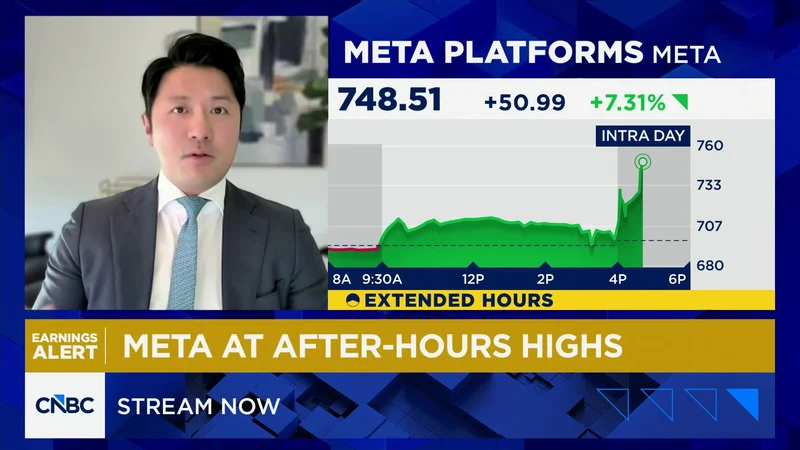
Image: Cnbc
Main Takeaway
AI investors are reassessing the boom’s pace and returns as hyperscalers increase spending, including Meta’s $135 billion capital-expenditure plan.
Jump to Key PointsSummary
Markets question the boom’s speed
Financial markets are reassessing how quickly artificial intelligence spending can expand and produce returns, T. Rowe Price technology portfolio manager Tony Wang said on Nov. 5. His view keeps the long-term AI opportunity intact while shifting attention toward execution, financing and the timetable for commercial payoff.
The change in focus follows a technology selloff that Wang described as evidence the AI cycle has entered a later stage. Investors are weighing whether soaring expectations have outrun the pace at which companies can deploy computing capacity, generate revenue and show measurable productivity gains. Bloomberg’s account centered on that reassessment of speed, feasibility and long-term returns, while CNBC’s earlier interviews framed the same debate through earnings and market volatility.
Capex faces a harder test
The central financial test is whether AI capital expenditure produces returns large enough to justify its scale. Meta raised its capital-spending guidance to $135 billion, a figure that has intensified scrutiny of the money flowing into data centers, processors and supporting infrastructure. Wang discussed Meta and IBM earnings beats while arguing that strong quarterly results alone don't settle the return-on-investment question.
That standard changes the conversation for hyperscalers. Investors now need evidence that added capacity supports durable revenue, protects margins or creates efficiencies that offset the cost of construction and hardware. The spending cycle can continue, but each new increase carries a larger burden of proof. CNBC’s Oct. 21 discussion put ROI at the center, while the later Bloomberg and CNBC segments connected that financial test to the broader market pullback.
Financing becomes part of the risk
AI infrastructure spending is also prompting questions about how hyperscalers fund expansion. Charles Schwab chief investment strategist Liz Ann Sonders said investors are examining the financial burden on large technology companies, including their use of credit and equity financing, as markets evaluate AI’s “speed limit.”
Debt and equity funding give companies more capacity to build, but they also make the investment cycle more sensitive to returns, interest costs and shareholder expectations. A slower payoff period can pressure valuations even when demand for computing remains strong. Sonders’ comments broaden Wang’s analysis from business feasibility to balance-sheet exposure, showing why the debate now reaches beyond chip supply and model performance. The market is pricing the cost of time as closely as the promise of future growth.
A later cycle changes stock selection
The shift toward a later AI cycle favors companies that can demonstrate monetization and disciplined spending. Wang’s Oct. 30 comments linked the technology selloff to that later stage, when investors move from rewarding broad exposure to separating durable beneficiaries from companies carrying expensive expansion plans.
That distinction affects both platform operators and suppliers. Meta’s higher spending plan creates an opportunity for infrastructure vendors, but it also raises expectations for future gains. IBM’s earnings performance provides a counterpoint focused on business results rather than infrastructure scale. Apple represents another route to value creation: Wang previously called AI integration a major opportunity for the company after its 2024 developer conference, emphasizing products and user adoption as a way to translate AI into consumer revenue. Together, the comments point to a market seeking proof across several layers of the stack.
What investors will watch next
Investors will watch whether AI spending produces visible revenue growth, operating efficiency and customer demand quickly enough to support current valuations. They will also track whether hyperscalers finance expansion primarily through cash flow or rely more heavily on borrowing and equity issuance.
The market’s reassessment doesn't declare the AI boom over. It places the boom on a stricter timetable. Companies with strong earnings, clear deployment plans and evidence of customer value have a stronger case for continued investment; companies depending mainly on distant returns face greater scrutiny. The next phase will be measured less by announced capacity than by utilization, margins and the cash generated from systems already being built.
Key Points
T. Rowe Price’s Tony Wang says markets are reassessing AI’s pace, feasibility and long-term investment returns.
Meta’s $135 billion capital-spending guidance intensifies pressure on hyperscalers to prove AI infrastructure ROI.
Technology stocks face later-cycle scrutiny as investors distinguish monetization from expensive capacity expansion.
Charles Schwab’s Liz Ann Sonders highlights credit and equity financing risks for hyperscaler AI spending.
Apple’s consumer AI integration remains a separate path for converting artificial intelligence into product value.
Questions Answered
T. Rowe Price’s Tony Wang said markets are reassessing the pace, feasibility and long-term returns of the AI boom. He said the reassessment does not mean the boom is over, but it raises the standard for spending and execution.
Meta’s $135 billion capital-spending plan is under scrutiny because investors want evidence that large AI infrastructure investments will generate sufficient revenue and profits. The plan has become a clear test of whether hyperscaler capex can deliver acceptable returns.
T. Rowe Price’s Tony Wang said a later AI cycle means investors are examining company results and spending discipline more closely. Stocks face greater differentiation based on monetization, margins, utilization and cash flow.
Hyperscalers are being evaluated on their use of cash, credit and equity financing for AI expansion. Charles Schwab’s Liz Ann Sonders said investors are examining the financial burden created by that spending and the time required to earn returns.
AI investors will focus on revenue growth, operating efficiency, infrastructure utilization, margins and cash generation. Companies with clear customer demand and disciplined spending face a stronger case than businesses relying mainly on distant AI returns.
Source Reliability
100% of sources are highly trusted · Avg reliability: 87
Go deeper with Organic Intel
Simple AI systems for your life, work, and business. Each one includes copyable prompts, guides, and downloadable resources.
Explore Systems