India’s GSLV Success Rebuilds Confidence as Space Program Targets Moon, Human Flight and Commercial Scale
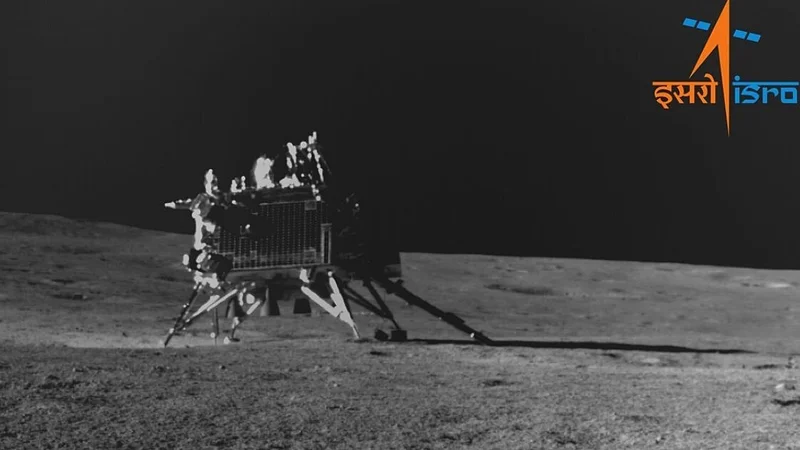
Image: Planetary
Main Takeaway
India’s GSLV reached orbit with the EOS-05 imaging satellite after 2 launcher failures, strengthening a space program pursuing lunar exploration, human flight and commercial growth.
Jump to Key PointsSummary
A crucial launch success
India’s Geosynchronous Satellite Launch Vehicle reached its designated orbit on Sept. 4, delivering the EOS-05 imaging satellite in a successful mission that restored momentum to the national space program. The rocket lifted off at 2:55 a.m. local time from Sriharikota and deployed its payload 18 minutes later, according to the Indian Space Research Organisation’s launch broadcast.
The result came after 2 consecutive failures involving another launcher that had served as India’s workhorse. The successful GSLV flight therefore carried significance beyond its satellite payload: it demonstrated operational recovery while India expands launch, exploration and human-spaceflight plans. The mission also gave ISRO a timely operational win as the country seeks a larger role in the global space economy.
What the EOS-05 mission adds
EOS-05 is India’s first imaging satellite designed to operate from geosynchronous orbit, where a spacecraft travels in step with Earth’s rotation. That position supports persistent observation of broad areas and gives the mission a distinct role within India’s Earth-monitoring capabilities.
The launch also highlights the importance of the GSLV family as India handles heavier and more demanding missions. ISRO’s broader mandate combines national development, space science and planetary exploration, with self-reliance in space technology as a declared primary objective. The Indian Economic Service describes the program as a vehicle for socioeconomic development, while the agency’s recent record shows an effort to connect practical satellite services with higher-profile exploration.
A program built on recent milestones
India’s current ambitions rest on a series of visible achievements. Chandrayaan-3 made India the fourth country to land a spacecraft on the Moon in 2023 and the first to reach the lunar south polar region, according to the Planetary Society. The landing followed the failure of Chandrayaan-2, making the later success an important demonstration of ISRO’s ability to recover from setbacks.
The country is now pursuing a 15-year lunar roadmap alongside the Gaganyaan human-spaceflight program. India’s participation in the Axiom-4 mission also sent Group Captain Shubhanshu Shukla to the International Space Station, where Indian researchers conducted microgravity experiments. A separate PSLV launch in December 2024 carried the SpaDeX spacecraft, designed to test orbital docking technology needed for more complex missions.
The cost challenge
India’s technical progress sits beside a steep launch-cost disadvantage. The average estimated cost of placing 1 kilogram into low Earth orbit exceeded $13,000 in India in 2025, compared with $3,225 in the United States, according to a study published in Economics Letters.
The analysis used data from more than 6,740 launches between 1960 and 2025 and linked lower costs to scale and accumulated technological experience. That gap matters as India tries to expand commercial launch services and attract private investment. A successful GSLV mission improves confidence in reliability, but recurring missions, higher flight rates and more efficient rockets remain central to closing the economic distance with established competitors.
What happens next
India’s next phase combines reliability, infrastructure and mission complexity. The Gaganyaan program requires dependable launch systems, crew-safety testing and sustained institutional capacity, while lunar plans demand increasingly capable spacecraft and precision operations. SpaDeX’s docking work points toward the technologies needed for rendezvous, assembly and future orbital infrastructure.
The Sept. 4 launch gives ISRO a concrete success after recent failures, but one flight doesn't settle the program’s longer-term questions. India’s space strategy now faces a practical test: convert scientific and national achievements into a repeatable launch cadence, lower costs and a stronger commercial ecosystem. The agency’s expanding ambitions will be judged as much by dependable execution as by headline milestones.
India’s expanding space position
India has established itself among the world’s major space powers through lunar exploration, satellite operations and growing human-spaceflight ambitions. The Chandrayaan-3 landing gave the country global visibility, while the GSLV success reinforces the operational foundation behind its next set of missions.
The program remains shaped by a distinct combination of public purpose and strategic ambition. ISRO’s work supports national development, Earth observation and scientific research, while government plans extend toward the Moon, crewed flight and a larger private space sector. The latest launch strengthens that trajectory, even as high costs and recent failures show that India’s rise will depend on scale, reliability and disciplined engineering.
Key Points
India’s GSLV successfully deployed EOS-05 after 2 consecutive failures involving another launcher.
EOS-05 is India’s first imaging satellite designed for operations from geosynchronous orbit.
India’s space roadmap includes Gaganyaan, lunar exploration and orbital docking technology.
India’s estimated launch cost exceeded $13,000 per kilogram in 2025, versus $3,225 in the United States.
Chandrayaan-3 and SpaDeX established milestones supporting India’s broader space ambitions.
Questions Answered
India’s GSLV launched the EOS-05 imaging satellite into its designated orbit. EOS-05 is India’s first imaging satellite designed to operate from geosynchronous orbit, where it can monitor broad areas while moving with Earth’s rotation.
India’s GSLV launch restored confidence after 2 consecutive failures involving another launcher used as ISRO’s workhorse. The successful flight demonstrated that India could continue delivering payloads while addressing reliability pressure.
India’s GSLV launch supports the country’s plans for Gaganyaan, lunar exploration and more complex orbital missions. Reliable launch capability is essential for human spaceflight, heavier payloads and sustained scientific activity.
India’s biggest commercial space challenge is launch cost. A study estimated India’s 2025 low Earth orbit launch cost at more than $13,000 per kilogram, compared with $3,225 in the United States.
India’s space program will focus on dependable launches, crewed-flight preparation, lunar missions and orbital docking capabilities. The country also needs higher launch frequency and lower costs to build a larger commercial space sector.
Source Reliability
50% of sources are trusted · Avg reliability: 77
Go deeper with Organic Intel
Simple AI systems for your life, work, and business. Each one includes copyable prompts, guides, and downloadable resources.
Explore Systems