Howard Marks Softens His AI Skepticism as Market Stumbles Challenge the Sector’s Aura of Certainty
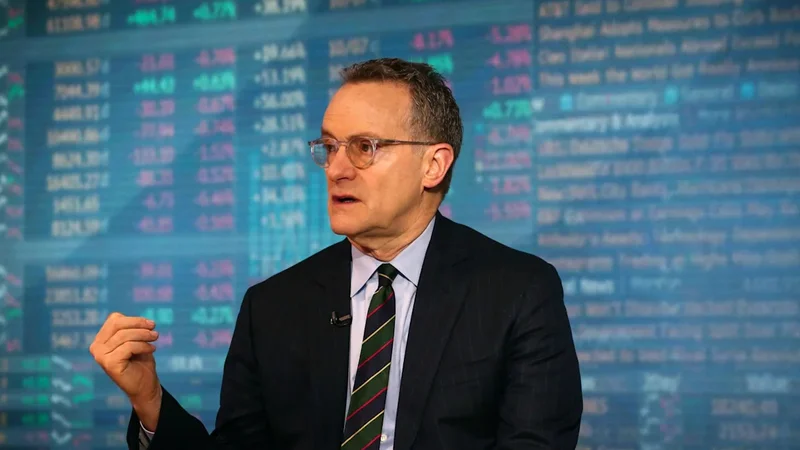
Image: Finance.yahoo
Main Takeaway
Oaktree co-chair Howard Marks says AI market stumbles have weakened belief in the sector’s infallibility, even as a Claude tutorial changed his view of its capabilities.
Jump to Key PointsSummary
Skepticism gains ground
Recent market setbacks tied to artificial intelligence have weakened the sector’s aura of infallibility, Oaktree Capital Management co-chair Howard Marks said in an interview with Bloomberg TV. His comments place a prominent investor’s caution inside a broader reassessment of AI enthusiasm, where impressive technical demonstrations now compete with questions about valuation, reliability and business returns.
Marks has spent decades studying speculative cycles and investor psychology, making his comments notable beyond any single technology stock. Bloomberg’s account describes a partial bursting of the belief that AI companies and projects should be treated as economically untouchable. Other accounts portray his position as more nuanced: he has revised his view of AI’s capabilities while continuing to avoid a definitive call on whether the sector represents a bubble.
A tutorial changes his view
Marks’ reassessment followed a tutorial from Anthropic’s Claude, according to accounts published by Fortune and republished through Yahoo Finance. The exercise left him impressed enough to describe a profound level of awe in a client memo, a striking shift from his earlier skepticism about the technology’s significance.
The change concerns what AI systems can do, especially their growing autonomy and ability to perform complex intellectual tasks. Marks reportedly prepared an earlier memo examining whether AI represented a financial bubble, then revisited his conclusions after challenges from his son, who works in venture capital. MarketWatch’s headline similarly characterizes the shift as a 180-degree turn after the Claude tutorial, though Marks’ reported comments retain clear limits around what AI can understand and how investors should price it.
Capability and valuation diverge
Marks’ updated view separates AI’s technical power from the investment case surrounding it. He has acknowledged that investors underestimated what AI systems can accomplish, while declining to treat that capability as proof that current valuations are justified. Bloomberg’s reporting on his comments centers on skepticism returning after recent stumbles, while the podcast summary describes an “AI upgrade” focused on autonomy rather than valuation.
That distinction matters because technology adoption and shareholder returns follow different paths. A system can perform increasingly sophisticated work while companies supplying it face intense competition, heavy computing costs and uncertain pricing power. Marks’ refusal to label AI definitively as a bubble or not a bubble reflects the investor’s emphasis on disciplined judgment under incomplete information, rather than a simple endorsement or rejection of the sector.
The limits of machine judgment
Marks still draws a line between AI’s ability to process information and the judgment investors use when conditions change. The podcast account says he questioned whether second-level thinking, the ability to reason about how other participants will interpret events, can be taught to an AI system. That concern preserves a central part of his investment philosophy even after his view of AI’s capabilities improved.
His perspective also connects the debate to experience rather than raw computing power. A separate account highlights Oaktree’s deployment of roughly $450 million a week during the 2008 financial crisis, when the firm had little dependable data and had to act amid extreme uncertainty. The example frames investing as a discipline involving judgment, timing and emotional control, areas where impressive demonstrations from Claude do not settle the question of machine insight.
Why investors are recalibrating
The episode gives investors two separate signals: AI deserves more respect as a technology, and AI-linked assets deserve more scrutiny as investments. Marks’ comments arrive after market disappointments weakened confidence in automatic gains, making room for skepticism without requiring a rejection of the underlying innovation.
That recalibration also affects how executives and fund managers assess spending. Enthusiasm can support aggressive infrastructure commitments, but weaker market confidence raises the standard for proving demand, margins and durable competitive advantages. Bloomberg’s report on renewed skepticism and the accounts of Marks’ changed outlook point to a market entering a more selective phase, where technical progress alone carries less weight than evidence of durable economic value.
What happens next for AI markets
AI markets are likely to be judged through a sharper split between demonstrated capability and realized cash flow. Marks’ revised opinion gives the technology greater credibility while his continuing reluctance to make a valuation call keeps the investment debate open. The same tension will shape decisions around AI stocks, private funding and corporate adoption.
For companies building AI products, the immediate test is practical performance: reliable output, useful autonomy and a business model that survives expensive infrastructure. For investors, the test is whether those gains translate into defensible earnings rather than another cycle of expanding expectations. Marks’ message is therefore neither a retreat from AI nor a blank check for it. It is a demand for better judgment after the sector’s first wave of certainty has worn down.
Key Points
Howard Marks says AI market stumbles have revived skepticism around the sector’s perceived infallibility.
Anthropic’s Claude tutorial changed Marks’ assessment of AI capabilities and intensified his personal awe.
Marks separates AI’s expanding autonomy from the unresolved question of whether valuations are justified.
Oaktree’s investment philosophy emphasizes second-level thinking, judgment and action under severe uncertainty.
AI companies now face higher expectations for reliability, durable demand, margins and defensible earnings.
Questions Answered
Howard Marks said recent AI-related market stumbles have increased skepticism and weakened belief in the sector’s infallibility. He still recognizes major advances in AI capability while questioning investment valuations and business durability.
Anthropic’s Claude tutorial showed Howard Marks capabilities that exceeded his earlier expectations. The experience led him to express deep awe and revise his assessment of AI’s autonomy and intellectual reach.
Howard Marks has not called AI definitively a bubble or said it is free of bubble risk. He separates the technology’s impressive capabilities from the question of whether AI-related valuations will produce adequate investment returns.
Howard Marks questions whether AI can develop second-level thinking, which involves anticipating how other people will interpret events and respond. He treats that judgment as distinct from information processing and task automation.
AI investors will face greater pressure to distinguish technical progress from durable cash flow. Reliability, customer demand, infrastructure costs, margins and competitive advantages will matter more as market enthusiasm becomes more selective.
Source Reliability
40% of sources are trusted · Avg reliability: 68
Go deeper with Organic Intel
Simple AI systems for your life, work, and business. Each one includes copyable prompts, guides, and downloadable resources.
Explore Systems