Germany Bets €3 Billion on AI to Fill Labor Gaps as Workforce Shrinks
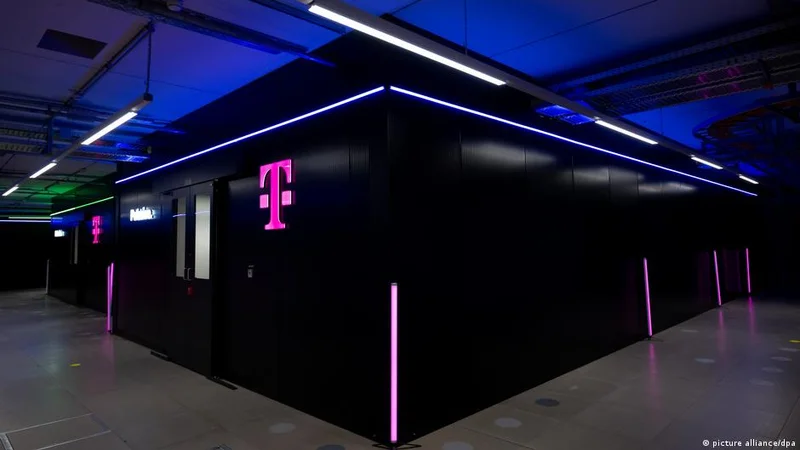
Image: Dw
Main Takeaway
Germany launches a €3 billion AI initiative to offset a shrinking workforce, with the market projected to hit €204 billion by 2033.
Jump to Key PointsSummary
Why Germany is turning to AI for workers
Germany's workforce is aging and retiring faster than it can be replaced. The country now faces a shortfall of hundreds of thousands of skilled workers annually, and AI is being pitched as a practical fix rather than a futuristic dream. This shift is reshaping how German businesses think about automation, moving it from a cost-cutting tool to a survival strategy.
The economic arithmetic is stark. Bloomberg reports that AI adoption across the German economy could unlock roughly €300 billion in value, enough to plug significant productivity gaps left by departing workers. The government has backed this vision with a €3 billion "AI Made in Germany" initiative aimed at making Germany and Europe global leaders in artificial intelligence.
What changed in the back office
The concrete reality of Germany's AI push is smaller than the headline numbers suggest. A homebuilder in northwest Germany introduced AI to process invoices last year and cut the task from four working days to two. No layoffs followed. No restructuring drama. Just a clerical process that now takes half as long.
This pattern, multiplied across Germany's manufacturing-heavy economy, represents the actual frontier of AI adoption. The German AI market reached USD 29.7 billion in revenue in 2025 and now includes approximately 935 startups. Projections suggest that figure could swell to USD 204 billion by 2033. Manufacturing remains the dominant sector, though startup activity is spreading to other industries.
How Germany plans to compete with the US and China
Germany is not merely adopting foreign AI tools. It is building domestic alternatives to cut reliance on US providers of high-performance computing and data processing. The newly launched Industrial AI Cloud, backed by Deutsche Telekom, was planned and built in just six months, a fraction of the typical 12 to 24 month timeline. The facility repurposed an existing Munich site to get online fast.
This infrastructure play is part of a broader pattern. Japan, China, and South Korea have already adopted ambitious national AI strategies. Germany is now following suit, with the explicit goal of controlling Europe's AI future rather than renting it from American cloud providers.
Where the risks of falling behind are greatest
Deutsche Bank Research chief German economist Robin Winkler warns that Germany faces a decisive crossroads. The transition from generative to agentic AI will determine whether Germany catches up with global competitors or falls further behind. Germany's industrial base remains stable, but its transition to the next phase of AI will shape its comparative position for decades.
An analysis of 44 million German workers across 266 occupations suggests significant exposure to AI disruption, though the methodology notes this is exploratory rather than peer-reviewed. The exposure varies dramatically by sector, with clerical and administrative roles facing the most immediate pressure.
What this means for Europe's AI balance of power
The Industrial AI Cloud launch signals Germany's intent to anchor European AI sovereignty in its own infrastructure. Deutsche Telekom's rapid build-out suggests both urgency and capability. For a continent debating digital dependence on American technology, Germany's manufacturing expertise offers a plausible differentiation from US and Chinese AI strategies.
Across Europe, retailers and manufacturers are accelerating AI spending. The €300 billion retail transformation opportunity alone is reshaping investment priorities. Germany's bet is that industrial AI, grounded in its factory-floor strengths, can carve out a distinct European position in a field dominated by Silicon Valley and Shenzhen.
What happens next for German workers and companies
The immediate test is whether AI adoption can scale beyond pilot projects like the homebuilder's invoice system. Germany's demographic pressure will not wait. With worker shortages already constraining growth, the window for gradual adoption is narrowing.
The government initiative, the Industrial AI Cloud, and the startup ecosystem all point in the same direction. Germany needs AI to do work that humans cannot fill. Whether that translates to productivity gains, displacement, or some messier combination will depend on implementation speed and whether the promised €300 billion materializes.
Key Points
Germany faces hundreds of thousands of unfilled skilled worker positions annually due to demographic decline.
The federal government committed €3 billion to a national AI competitiveness initiative.
A homebuilder cut invoice processing time by 50% using AI without reducing headcount.
Deutsche Telekom built the Industrial AI Cloud in six months to reduce US tech dependence.
German AI market revenue hit USD 29.7 billion in 2025 with 935 active startups.
Questions Answered
Germany's workforce is aging and retiring faster than new workers can replace them, creating a structural labor shortage of hundreds of thousands of skilled workers annually. Unlike countries with growing workforces, Germany faces demographic pressure that makes pure augmentation insufficient to maintain economic output.
The German federal government has allocated €3 billion to the "AI Made in Germany" initiative. This follows similar national AI strategies previously adopted by Japan, China, and South Korea.
Yes, the Industrial AI Cloud backed by Deutsche Telekom has already launched. It was built in record time, taking just six months from planning to launch compared to the typical 12 to 24 months for such infrastructure projects.
A homebuilder in northwest Germany introduced AI for invoice processing and reduced the task from four working days to two. This represents a pattern of back-office and administrative automation that is spreading across German businesses.
The German AI market reached USD 29.7 billion in 2025 and is projected to grow to approximately USD 204 billion by 2033, according to trade and market analysis sources.
Source Reliability
33% of sources are highly trusted · Avg reliability: 67
Go deeper with Organic Intel
Simple AI systems for your life, work, and business. Each one includes copyable prompts, guides, and downloadable resources.
Explore Systems