Fed Chair Kevin Warsh Holds Rates Steady in First Meeting, Reversing His Year of Rate Cut Calls
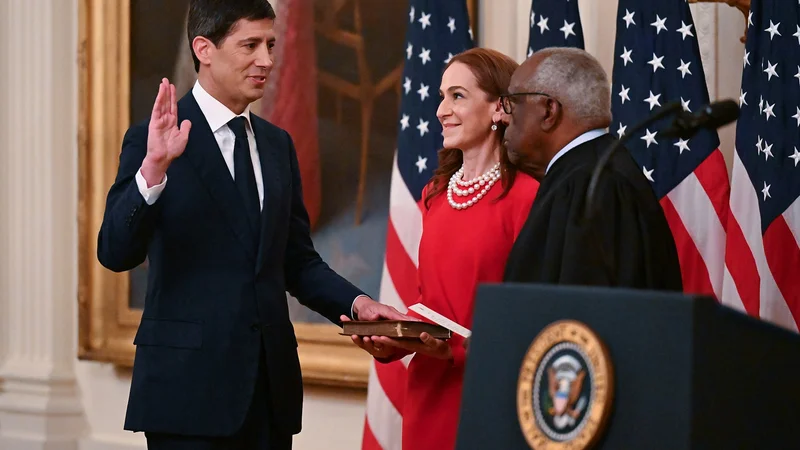
Image: Cfr
Main Takeaway
New Fed Chair Kevin Warsh held interest rates at 3.5%-3.75% in his first meeting, abandoning his previous advocacy for cuts as inflation hits a three-year high.
Jump to Key PointsSummary
Why Warsh reversed his rate cut stance
Kevin Warsh spent much of the past year publicly calling for interest rate cuts. On Wednesday, as newly installed Federal Reserve Chair, he presided over his first Federal Open Market Committee meeting and kept rates locked at 3.5% to 3.75%, their fourth consecutive hold. The reversal was not subtle. Warsh now confronts inflation at a three-year high and a labor market that refuses to crack, conditions that make the easing he once championed impossible to justify.
The shift exposes the gap between campaigning for a job and executing it. As a commentator and potential nominee, Warsh could advocate for cuts without consequence. As chair, he inherits the data. Hiring remains strong, prices keep climbing, and Treasury yields have surged. According to CNBC, Warsh is likely to confront a committee in no mood to ease, with hawks on the offensive. The macroeconomic reality sanded down his political positioning.
What the FOMC decision signals about Warsh's independence
Markets wanted clarity on whether Warsh would function as an independent technocrat or as a political appointee executing President Trump's demands. He delivered an answer, and Wall Street did not enjoy it. Fortune reported that Warsh came across as decisively hawkish in his post-meeting press conference, with the Wall Street Journal's Jon Hilsenrath, long known as the Fed whisperer, remarking that hawkish Kevin was the one who showed up. The message was clear: Warsh is not Trump's sock puppet.
That independence carried a cost. Equities slid as traders recalibrated expectations. The new chair stripped back forward guidance, refusing to commit to a timeline for future moves. This was a deliberate break from the communication style of his predecessor, Jerome Powell, who often telegraphed intentions months in advance. Warsh's opacity serves a purpose. It gives him room to maneuver between a president who wants cuts and an economy that cannot accommodate them.
How Trump's trust shapes Warsh's operating room
President Trump nominated Warsh in late January and has publicly praised him as central casting for the role. That trust matters concretely. According to CNBC, Trump trusts Warsh, which gives him scope to pursue longer-term structural changes at the central bank that Powell could never have attempted. The political cover is real, but it is not unlimited.
Trump has long demanded lower rates and has not been shy about attacking Fed chairs who disappoint him. Warsh's challenge is to use this goodwill to reshape the institution, perhaps around regulatory or operational priorities, without triggering a public rupture over monetary policy. The Council on Foreign Relations noted that concern over the Fed's independence remains elevated, and Warsh's first hundred days should give signs on how he will handle the central bank's core role and political pressures. So far, he has chosen policy substance over political alignment. Whether that holds as the 2026 midterms approach is an open question.
What markets misread about Warsh's intentions
Traders entered the week hoping for signals of imminent easing. They received the opposite. Warsh not only held rates but dropped explicit forward guidance, making it harder to predict the next move. The reaction was swift and negative, with equities selling off as the probability of near-term cuts collapsed. Markets had priced in a more dovish Warsh based on his recent commentary. They got the version last seen in 2011, when he resigned from the Fed in protest over quantitative easing.
This misreading reflects a broader pattern. Investors often conflate public advocacy with private conviction, or assume that a nominee's stated views survive contact with the data. Warsh's case proves the opposite. The same macro forces that made his cut calls plausible a year ago, subdued inflation and softening growth, have inverted. Now he must manage expectations without the tool he promised.
The structural reforms Warsh may still pursue
Monetary policy was not the only item on Warsh's agenda. He wants to remake the Fed, according to the Wall Street Journal, though the specifics remain contested. Potential targets include the Fed's regulatory footprint, its approach to bank supervision, and the operational mechanics of its balance sheet unwind. These changes do not require rate cuts and can proceed even with policy tight.
Warsh's background as a former Fed governor and his subsequent years in the private sector give him a perspective on institutional dysfunction that career central bankers may lack. The Darden School analysis from January noted that his nomination came as the central bank enters the final stretch of its years-long battle to stabilize prices without stalling the broader economy. If Warsh can deliver price stability while streamlining Fed operations, he will have achieved something his predecessors could not. The first meeting suggests he understands the sequencing: credibility first, reform second.
What happens next for rates and the Fed
The June hold resets the calendar. With inflation elevated and the labor market resilient, the next several meetings are likely to produce more of the same unless data shifts dramatically. Warsh's removal of forward guidance means markets will parse every speech and interview for hints, a return to the pre-Powell era of Fed watching. Volatility in rate-sensitive sectors, housing and autos especially, should be expected.
Longer term, Warsh's ability to maintain his independence while preserving Trump's support will define his tenure. The first test is passed. The harder ones, a recession that demands cuts, or inflation that demands hikes, lie ahead. For now, the Fed chair who called for easing has chosen restraint. The question is whether he can explain that choice to the president who appointed him.
Key Points
Kevin Warsh held Fed rates at 3.5%-3.75% in his first meeting as chair, reversing his prior cut advocacy.
Inflation at a three-year high and strong hiring eliminated the economic case for the easing Warsh had championed.
Warsh dropped forward guidance, making the Fed's communication more opaque and harder for markets to predict.
Markets reacted negatively to his hawkish tone, having priced in a more dovish chair based on his past statements.
Trump's personal trust in Warsh gives him political room to pursue structural Fed reforms independent of rate policy.
Questions Answered
No, Warsh held rates steady at 3.5% to 3.75% in his first meeting as Federal Reserve Chair. This was the fourth consecutive hold and contradicted his previous year of public advocacy for rate cuts, which he abandoned due to inflation reaching a three-year high and persistent labor market strength.
Markets expected a dovish Warsh based on his recent calls for cuts, but he delivered a hawkish message that included dropping forward guidance. Equities sold off as traders recalibrated expectations for near-term easing, with the Wall Street Journal's Jon Hilsenrath noting that hawkish Kevin was the one who appeared.
Warsh has moved quickly to strip back forward guidance and communicate less predictably than Powell, who often telegraphed intentions months ahead. Warsh also enjoys more personal trust from President Trump, giving him political cover to pursue structural reforms that Powell could not attempt.
According to the Wall Street Journal, Warsh wants to remake the Fed, with potential targets including its regulatory footprint, bank supervision approaches, and balance sheet management mechanics. These operational changes can proceed independently of monetary policy direction.
Warsh's first meeting suggests significant independence. He held rates despite Trump's demands for cuts and delivered a hawkish message that markets interpreted as non-political. However, Trump trusts Warsh personally, which analysts say gives him scope to pursue longer-term institutional changes.
Source Reliability
50% of sources are highly trusted · Avg reliability: 80
Go deeper with Organic Intel
Simple AI systems for your life, work, and business. Each one includes copyable prompts, guides, and downloadable resources.
Explore Systems