Wall Street Panics as Fed Chair Warsh Holds Rates Steady, Bond Yields Surge to 19-Year High
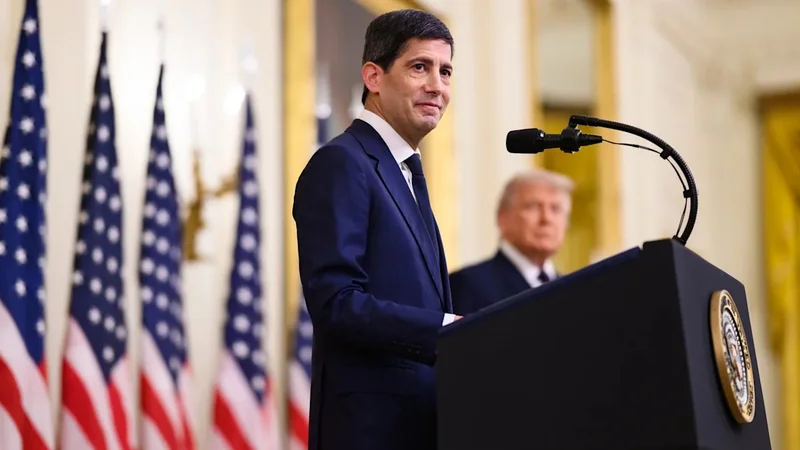
Image: Finance.yahoo
Main Takeaway
The Dow fell over 2% and 30-year Treasury yields hit 5.21% after Federal Reserve Chair Kevin Warsh held interest rates at 3.6% in a contentious 9-3 vote, sparking a brutal market sell-off.
Jump to Key PointsSummary
The decision that triggered the sell-off
The Federal Reserve held its benchmark interest rate steady at around 3.6% on Wednesday, marking the fifth consecutive meeting without a change. The 9-3 vote was the most divided in nearly a decade, with three regional bank presidents dissenting in favor of a quarter-point hike. Beth Hammack of Cleveland, Neel Kashkari of Minneapolis, and Lorie Logan of Dallas all pushed for tighter policy, signaling deep unease on the committee about inflation that has stayed above the 2% target for more than five years.
Inflation remains stubbornly high, driven by the Iran war and a spike in energy prices. The geopolitical uncertainty has complicated the economic outlook, leaving policymakers caught between persistent price pressures and the risk of slowing growth. According to Fortune, the Fed's statement acknowledged the war's impact on energy costs but offered no timeline for when conditions might allow rate cuts.
Why the bond market revolted
Chair Kevin Warsh, in only his second press conference, told reporters the bond market was doing his tightening for him. Within an hour, the market proved him right in dramatic fashion. The 30-year Treasury yield surged 10 basis points to 5.21%, its highest level in 19 years. The 10-year yield, critical for mortgage rates, climbed seven basis points to 4.67%.
Traders simultaneously backed off bets on an imminent rate hike and demanded higher compensation for holding long-term government debt, a signal they believe inflation will continue to bite. The 2-year yield actually fell four basis points, reflecting reduced expectations for near-term tightening. One analyst told Fortune the market reaction was brutal, quoting a trader who said the bond market puked on him. The sell-off in equities was equally severe, with the Dow dropping over 2% after Warsh's press conference.
Confusion over what inflation actually is
The Fed's own inflation metrics are giving conflicting signals, and Warsh's press conference put that confusion on full display. According to Fortune, the central bank's preferred measure shows inflation at roughly 3.7%, while an alternative gauge suggests it has fallen to 2.2%. The gap between these numbers is creating a credibility problem for policymakers who need to justify their decisions to markets and the public.
Tariffs are pushing up goods prices and energy markets are swinging on geopolitical news, making it harder to separate signal from noise. Consumers feel the squeeze at the gas pump, in housing costs, and at the grocery store every day, yet the Fed can't agree internally on whether prices are falling fast enough. The three dissenting votes underscore how divided the committee has become on the basic question of where inflation actually stands and where it's headed.
Trump's Fed pick faces a no-win scenario
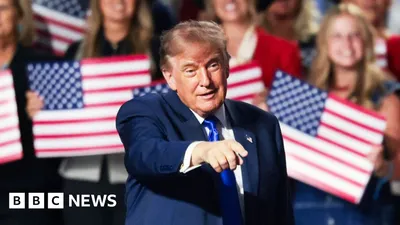
Warsh was nominated by President Trump in January 2026 to replace Jerome Powell, whose term ended in May. Trump posted on social media that Warsh would go down as one of the GREAT Fed Chairmen, calling him central casting. But the Senate confirmation process was contentious, and Wall Street reacted nervously to the pick even before Warsh took office, with US stocks sliding on the announcement day, according to Yahoo Finance.
Now, less than three months into the job, Warsh confronts a brutal set of constraints. Yahoo Finance describes it as a no-win scenario where any move he makes will anger either the White House or financial markets. If he hikes rates to fight inflation, he risks tanking the economy and drawing Trump's ire. If he holds steady, markets punish him for inaction. The bond market's verdict on Wednesday suggests patience is not what Wall Street wanted.
Global central banks face the same dilemma
The Bank of England also held its rate steady at 3.75% on Thursday, the fifth time this year, in a 6-3 vote that mirrored the Fed's own split decision. Fortune reports that the split highlights growing tensions within central banks worldwide about how to respond to stubbornly high inflation and the risk that the Iran war will trigger another round of price increases.
The BoE had more breathing room than the Fed because UK inflation dropped more than expected last month. But the underlying problem is the same: policymakers are caught between the need to fight inflation and the fear of breaking something in the economy. The coordination problem is intensifying as major economies diverge in their responses, creating further uncertainty for global markets.
What happens next for markets and policy
The Wall Street Journal reports that Warsh's first two months have already reshaped expectations inside the Fed, though the details of his internal changes remain unclear. The bond market's brutal reaction to his patience is likely to force a reckoning at the next policy meeting. If inflation data doesn't improve, the three dissenters may gain allies, and Warsh could face an even more embarrassing vote.
The sell-off in equities, with the Dow dropping more than 2%, suggests investors are pricing in the risk of policy error. A historically expensive stock market, which Yahoo Finance notes has powered to record highs since early June, now faces the twin threats of higher bond yields and geopolitical instability. The 30-year yield at 5.21% is a flashing red signal that the bond market thinks the Fed is behind the curve, and that judgment is not easily reversed.
The credibility gap no one is talking about
Warsh's comment that the bond market was doing his tightening for him backfired spectacularly. Rather than signaling confidence, it exposed a Fed chair who looked passive in the face of a market revolt. The immediate sell-off in equities and the spike in long-term yields suggest traders do not trust the Fed's inflation-fighting resolve under new leadership.
The credibility problem is compounded by the political backdrop. A Fed chair nominated by Trump, facing a divided committee, trying to navigate a war-driven energy shock, and using bond market moves as a policy crutch: it is not a recipe for confidence. If the 10-year yield keeps climbing toward 5%, the mortgage market and corporate borrowing costs will tighten conditions faster than any Fed rate hike could, but without the precision or the accountability.
Key Points
Fed Chair Kevin Warsh held interest rates at 3.6% in a 9-3 vote, the most divided decision in nearly a decade
The 30-year Treasury yield spiked to 5.21%, its highest level in 19 years, after Warsh's press conference
Three Fed presidents dissented in favor of a rate hike, citing inflation stuck above 2% for over five years
The Dow Jones Industrial Average fell more than 2% as markets punished Warsh's decision to hold steady
Conflicting Fed inflation measures of 3.7% and 2.2% are fueling confusion over the true pace of price growth
Questions Answered
The Dow fell over 2% because markets interpreted Warsh's decision to hold rates steady as a sign the Fed is falling behind on inflation. The bond market immediately sold off, with the 30-year Treasury yield surging to a 19-year high of 5.21%, and equities followed the rout.
The vote was 9-3 in favor of holding rates at 3.6%. The three dissenters, Beth Hammack of Cleveland, Neel Kashkari of Minneapolis, and Lorie Logan of Dallas, all pushed for a quarter-point hike, making it the most divided Fed decision in nearly a decade.
The 30-year Treasury yield surged 10 basis points to 5.21%, its highest level in 19 years. The 10-year yield, which influences mortgage rates, climbed seven basis points to 4.67%, while the 2-year yield actually fell four basis points.
The Fed's own metrics are contradictory. One measure puts inflation at roughly 3.7%, while an alternative gauge shows it at 2.2%. This gap is creating confusion among policymakers about whether price pressures are truly easing.
The Iran war has driven energy prices higher and created significant uncertainty over the economic outlook. This geopolitical shock is a major reason inflation has stayed above the Fed's 2% target for more than five years, complicating the central bank's ability to cut rates.
Source Reliability
67% of sources are trusted · Avg reliability: 79
Go deeper with Organic Intel
Simple AI systems for your life, work, and business. Each one includes copyable prompts, guides, and downloadable resources.
Explore Systems