Demis Hassabis Steps Aside as Google DeepMind Reorganizes Amid Talent Losses and Gemini Pressure
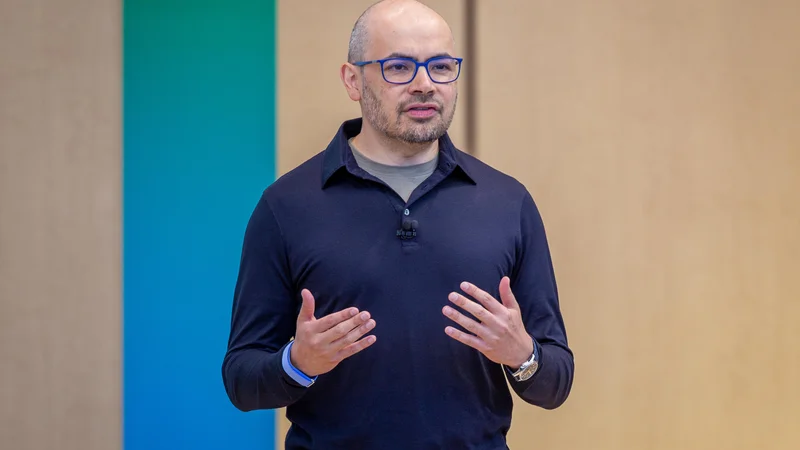
Image: Time
Main Takeaway
Demis Hassabis is leaving Google DeepMind’s CEO role for chairman and chief scientist positions as Alphabet restructures the lab amid talent departures and Gemini delays.
Jump to Key PointsSummary
Hassabis changes roles
Demis Hassabis is stepping aside as Google DeepMind’s chief executive and moving into a chairman role while becoming chief scientist at Alphabet, Google announced on August 5. The shift changes his day-to-day responsibilities at the AI lab he co-founded in 2010 and sold to Google in 2014.
Time reports that Hassabis told staff he wanted the “time and space” to focus on the broader scientific and societal questions surrounding artificial general intelligence, which he described as “close at hand.” Semafor reports that the transition had been developing for about a year, with Hassabis increasingly handing operational responsibility for Gemini and consumer AI to chief AI architect Koray Kavukcuoglu. Axios reported the executive change as a formal step aside, while Fortune described uncertainty among employees over whether the chairman position represents a promotion, a demotion, or the beginning of a longer departure.
A scientist returns to science
Hassabis’s new responsibilities align with the work that has held his attention most strongly, according to people familiar with his thinking. Semafor reports that he has been especially engaged by Isomorphic Labs, Google’s biotech spinout, and by efforts to use AI in drug discovery, materials research, and AI safety.
Time similarly reports that Hassabis had spent less time directly overseeing Gemini in recent months and more time on safety and the consequences of AGI for society. The distinction matters because DeepMind’s top challenge is both scientific and operational: the lab must advance frontier models while turning them into products that compete with OpenAI and Anthropic. Fortune’s reporting adds that Hassabis was often visible in media appearances but rarely seen by engineers in the Gemini office area. Together, the accounts portray an executive whose public influence remained substantial as his involvement in routine management narrowed.
DeepMind faces internal strain
The leadership change arrived during a difficult period for Google DeepMind, with current and former employees describing low morale, delayed models, burnout, and concern about the organization’s direction. Fortune reports that staff were already unsettled when the announcement was followed by the departure of longtime chief scientist Jeff Dean and other prominent researchers.
The talent losses extend beyond Dean. Fortune’s newsletter account says Gemini co-lead Noam Shazeer joined OpenAI in June, while Nobel laureate and AlphaFold co-inventor John Jumper left for Anthropic. Semafor reports that Hassabis’s move and Dean’s departure sent Alphabet shares down 4% on the day, intensifying questions about Google’s position in the AI race. Time describes the reshuffle as part of a broader reorganization aimed at helping Google catch up with OpenAI and Anthropic.
Power shifts inside Google
The reorganization is also raising questions about where authority over Google’s AI strategy will sit. Fortune reports that DeepMind employees wondered whether power was moving from the London-based lab to Google’s Mountain View headquarters, and whether Hassabis would retain meaningful influence as chairman.
Time reports that other changes accompany Hassabis’s new role, including a reporting shift involving Lila Ibrahim, DeepMind’s chief AI readiness officer. Semafor identifies Kavukcuoglu as the executive who had already absorbed more responsibility for Gemini and consumer AI. These changes point to a clearer separation between scientific leadership, model development, product execution, and corporate oversight. Google’s challenge is to make that structure work without further weakening the identity and research culture that made DeepMind influential.
Gemini carries the pressure
Gemini’s performance and delivery schedule sit at the center of the leadership debate. Fortune reports that stalled models and missed deadlines contributed to staff frustration, while its newsletter account says Gemini had fallen behind competitors in capabilities. Time likewise describes Google as trying to catch up with OpenAI and Anthropic.
The practical test for the new structure will be whether Gemini releases arrive on schedule and compete at the frontier. Hassabis’s reduced operational role gives Kavukcuoglu and other leaders greater responsibility for execution, while Alphabet’s chief scientist gains room to focus on longer-term research and safety. The arrangement also puts more weight on Google’s ability to retain researchers, coordinate its central AI teams, and translate DeepMind discoveries into products.
What happens next
Google DeepMind’s next phase will be judged through product results, researcher retention, and the clarity of Hassabis’s continuing influence. His appointment as Alphabet chief scientist keeps him close to the company’s highest-level AI and science decisions, while the chairman role preserves a formal connection to DeepMind.
The sources differ on the meaning of the transition inside the organization, but they agree on its timing and pressure points: leadership restructuring, talent departures, Gemini delays, and a widening gap with major rivals. Fortune reports that employees remain uncertain about the lab’s future, while Time and Semafor frame the change as a deliberate move toward scientific strategy. Google now has to show that separating executive management from scientific direction can steady DeepMind rather than deepen the disruption.
Key Points
Demis Hassabis leaves Google DeepMind’s CEO role for chairman and Alphabet chief scientist positions.
Google DeepMind is restructuring as Gemini faces model delays, capability pressure, and competition from OpenAI and Anthropic.
Jeff Dean, Noam Shazeer, and John Jumper are among prominent researchers departing Google’s AI organizations.
Hassabis had increasingly shifted Gemini’s operational management to chief AI architect Koray Kavukcuoglu.
Alphabet shares fell 4% after Hassabis’s transition and Jeff Dean’s departure became public.
Questions Answered
Demis Hassabis is leaving the Google DeepMind CEO role because he prefers scientific and strategic work over daily technology management, according to people familiar with his thinking. He is becoming chairman of DeepMind and chief scientist at Alphabet, with a focus on AGI, safety, and scientific research.
Demis Hassabis will serve as chief scientist at Alphabet while remaining chairman of Google DeepMind. The role gives him more time to focus on long-term AI science, safety, and projects such as Isomorphic Labs.
Google DeepMind’s restructuring gives chief AI architect Koray Kavukcuoglu more responsibility for Gemini and consumer AI operations. The changes come as Fortune and Time report model delays, missed deadlines, and competitive pressure from OpenAI and Anthropic.
Google DeepMind has lost prominent researchers including chief scientist Jeff Dean, Gemini co-lead Noam Shazeer, and AlphaFold co-inventor John Jumper. Fortune reports that Shazeer joined OpenAI and Jumper joined Anthropic.
Demis Hassabis remains formally connected to Google DeepMind as chairman and gains a senior scientific role at Alphabet. Employees cited by Fortune remain uncertain about how much practical influence he will retain over the lab’s direction.
Source Reliability
50% of sources are highly trusted · Avg reliability: 82
Go deeper with Organic Intel
Simple AI systems for your life, work, and business. Each one includes copyable prompts, guides, and downloadable resources.
Explore Systems