DeepSeek V4 Preview Drops: China's AI Challenger Returns with Million-Word Memory
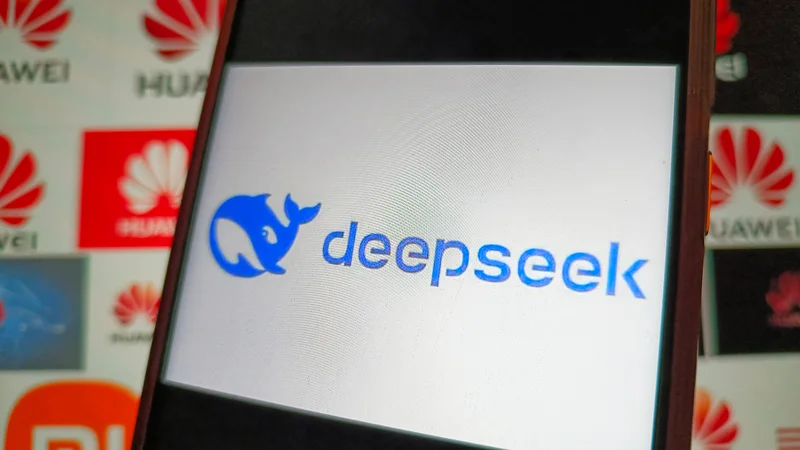
Image: Csis
Main Takeaway
Chinese startup DeepSeek previews V4 model with 1M-word context length, claiming parity with US rivals while running on domestic Huawei chips at.
Jump to Key PointsSummary
What DeepSeek V4 actually delivers
DeepSeek released preview versions of its V4 model Friday, exactly one year after its R1 reasoning model sent Nvidia stock tumbling and triggered a $1 trillion tech selloff. The Hangzhou startup claims V4 can handle one million words of context while matching performance of OpenAI's GPT-4, Google's Gemini, and Anthropic's Claude. According to TechCrunch, the model "closes the gap" with frontier systems through architectural improvements that make it more efficient than last year's V3.2.
The timing feels deliberate. DeepSeek launched during US market hours, just like last January when R1 blindsided Silicon Valley. Fortune reports the company paired the technical release with aggressive pricing: API access costs a fraction of OpenAI's rates, continuing the cost disruption that made the startup notorious.
How China built this without US chips
Here's where it gets spicy. DeepSeek optimized V4 specifically for Huawei's Ascend processors, according to Fortune. This matters because US export controls have blocked Chinese companies from Nvidia's latest GPUs since 2022. The Verge notes this represents a direct challenge to assumptions that Chinese AI firms need American hardware to compete.
CSIS analyst Gregory Allen points out the elephant in the room: if DeepSeek somehow obtained banned H100 chips, they'd be admitting to illegal activity. Instead, they've managed to squeeze frontier-level performance from domestic silicon. Reuters reports the model runs "adapted to run on" Chinese chips, suggesting significant engineering workarounds. Think of it like building a Ferrari engine using only parts from a Honda factory.
What this means for the AI price war
DeepSeek's pricing strategy hasn't changed: undercut everyone. Fortune notes V4 continues the company's pattern of offering capabilities at "rock-bottom prices" that make US rivals look bloated. OpenAI charges roughly $60 per million tokens for GPT-4; DeepSeek's rates reportedly sit closer to $10-15 for equivalent performance.
This creates an awkward situation for American firms. They're spending billions on compute while DeepSeek achieves similar results with cheaper hardware and lower overhead. The Verge suggests this could force US companies to either slash prices or justify massive infrastructure spending to investors. Neither option feels great when you're burning cash faster than you can raise it.
The geopolitical chess game behind the release
DeepSeek V4 isn't just a product launch; it's a geopolitical statement. CSIS argues the release demonstrates how export controls might actually accelerate Chinese innovation rather than stifle it. By forcing companies to optimize for domestic chips, the US may have inadvertently helped China build more efficient AI systems.
The timing coincides with fresh US restrictions on AI chip exports to China. Instead of backing down, DeepSeek's release feels like a middle finger to policymakers. Wired's analysis from January still holds: Chinese AI labs are proving they can close the gap with American firms through sheer engineering creativity and cost discipline.
What happens next for developers
Developers can start testing V4 immediately through DeepSeek's API and Hugging Face. The preview includes both the base model and an updated R1 reasoning variant. Early benchmarks show it handles complex reasoning tasks nearly as well as OpenAI's o1, according to RecodeChinaAI's testing.
But here's the catch: running V4 at full context length requires serious compute. One million words isn't just a marketing number; it's 8x longer than GPT-4's context window. For comparison, that's roughly four novels of text in a single prompt. Most developers will probably stick to shorter contexts unless they're building legal or academic research tools.
The reality check on US AI leadership
DeepSeek's continued progress challenges the narrative that the US has an insurmountable lead in AI. Last year's R1 proved Chinese labs could match American reasoning capabilities. V4 suggests they're not just catching up; they're potentially pulling ahead in efficiency.
This doesn't mean OpenAI or Google are doomed. They still have advantages in safety research, compute access, and enterprise partnerships. But the gap has narrowed from years to months. As Georgia State University's analysis noted, DeepSeek's 2025 launch triggered "shockwaves and panic through Silicon Valley." V4 might be the sequel nobody wanted.
Key Points
DeepSeek V4 launches with 1 million word context length, 8x longer than GPT-4
Model optimized for Huawei Ascend chips, bypassing US export restrictions
Pricing undercuts OpenAI by approximately 75% for equivalent performance
Release comes exactly one year after R1 triggered $1 trillion market selloff
Technical benchmarks show parity with leading US models across major tasks
Questions Answered
V4 handles 1 million words versus GPT-4's 128k limit and Claude's 200k maximum, representing roughly 8x improvement over current frontier models.
Yes, through DeepSeek's API and Hugging Face, though some enterprise features may have regional restrictions.
Specifically optimized for Huawei Ascend AI processors, avoiding banned Nvidia H100 chips entirely.
Roughly 75-80% cheaper per token, with API pricing around $10-15 per million tokens compared to OpenAI's $60+.
Benchmarks show near-parity on reasoning tasks, though full independent testing is still emerging.
Appears deliberate timing to mark the anniversary of their market-disrupting 2025 launch.
Source Reliability
42% of sources are highly trusted · Avg reliability: 70
Go deeper with Organic Intel
Simple AI systems for your life, work, and business. Each one includes copyable prompts, guides, and downloadable resources.
Explore Systems