CoreWeave's $8.5B GPU-Backed Loan Followed by Grim Forecast
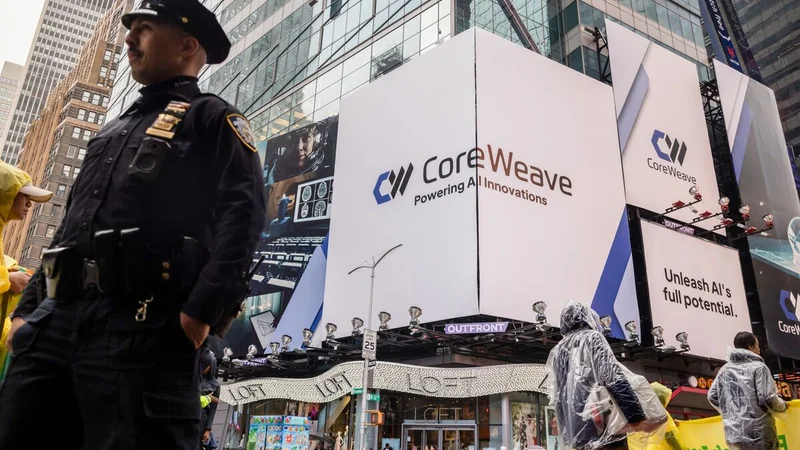
Image: Bloomberg AI
Main Takeaway
CoreWeave's record $8.5B GPU-backed loan is now under scrutiny after the company issued a weaker-than-expected forecast and reported widening losses, raising questions about the sustainability of AI infrastructure valuations.
Jump to Key PointsSummary
CoreWeave Lands First Investment-Grade GPU-Backed Loan Then Stumbles on Guidance
CoreWeave just closed an $8.5 billion financing facility that's making Wall Street rethink how AI infrastructure gets funded. The deal marks the first time GPU hardware has been used as collateral for investment-grade debt, according to the company's investor relations page. The financing package includes a $3.1 billion leveraged loan component that drew $15 billion in orders from institutional investors. Bloomberg reports the loan pricing came in lower than initially expected, reflecting strong investor appetite for AI infrastructure exposure. The financing is backed by customer contracts from major AI companies including OpenAI and Cohere, giving lenders confidence in the revenue stream supporting the debt.
The Forecast That Changed Everything
Just weeks after the triumphant financing announcement, CoreWeave delivered a reality check. The company issued a disappointing forecast for the current quarter, revealing widening losses that spooked investors. The guidance suggests the aggressive expansion funded by that record loan may be hitting demand headwinds just as the bills come due. This timing is particularly awkward because the investment-grade rating on the GPU-backed loan was predicated on continued rapid growth and stable cash flows from AI customers. Now lenders are left wondering if they backed the right horse at exactly the wrong moment. The stock has given back most of its post-deal gains as analysts scramble to recalibrate their models.
What This Means for AI Infrastructure Financing
The deal fundamentally changes how AI companies can raise capital. Instead of traditional cash-flow lending, CoreWeave's approach uses actual GPU hardware as collateral while customer contracts provide additional security. This creates a new asset class for investors who want AI exposure without picking individual AI software winners. According to Bloomberg's analysis, the structure could become a template for other AI infrastructure providers. The loan's success suggests investors are comfortable valuing GPU clusters as productive assets, similar to how aircraft leasing works in aviation finance. But the recent forecast miss raises questions about whether this new asset class can withstand operational volatility. If CoreWeave can't hit its numbers with this much firepower behind it, what does that say about the broader AI infrastructure thesis?
Stock Performance and Market Response
CoreWeave's stock initially rallied 12% on the loan news, building on what's already been a scorching 2026 performance. The company's shares had benefited from the broader AI infrastructure boom as demand for computing capacity continued to outstrip supply. However, the disappointing forecast has sent the stock into reverse, erasing most of those gains. Bloomberg notes this creates a classic "prove-it" moment that just got much harder. Investors now want to see execution on these ambitious financing plans and evidence that the company can actually deliver the growth promised to lenders. The GPU collateral backing the loan starts looking less secure if customer demand softens and those shiny clusters become expensive paperweights.
Key Points
CoreWeave's $8.5B GPU-backed loan was the first investment-grade debt secured by GPU hardware
Company issued disappointing forecast with widening losses weeks after securing record financing
Stock has reversed initial 12% gain as investors question growth sustainability
GPU-backed lending model now faces real-world stress test with operational challenges
Customer contracts from OpenAI and Cohere provide revenue backing but may face renegotiation
Questions Answered
It's the first time GPU hardware has been used as collateral for investment-grade debt, backed by specific customer contracts rather than just general cash flow.
The $3.1 billion leveraged loan component attracted $15 billion in orders from institutional investors, showing 5x oversubscription.
Customer contracts from OpenAI and Cohere provide revenue backing, giving lenders confidence in the debt service capability.
This is a key risk since depreciating hardware collateral could create problems, though customer contracts provide additional security beyond just hardware value.
If CoreWeave executes successfully, expect similar structures from Lambda Labs, RunPod, and potentially traditional data center REITs.
Source Reliability
40% of sources are trusted · Avg reliability: 76
Go deeper with Organic Intel
Simple AI systems for your life, work, and business. Each one includes copyable prompts, guides, and downloadable resources.
Explore Systems