IMF Warns Tokenized Finance May Outrun Central Banks in Next Crisis

Image: Imf
Main Takeaway
IMF report flags tokenized assets as potential accelerant for financial crises, backs wholesale CBDCs as structural safeguard as Wall Street races ahead.
Jump to Key PointsSummary
Why the IMF is sounding alarms now
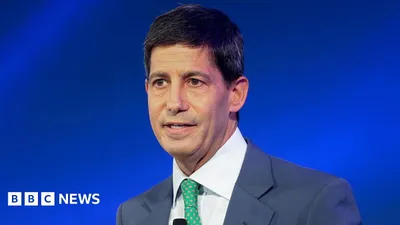
The International Monetary Fund issued its clearest warning yet on tokenized finance, arguing the technology could compress crisis timelines beyond central banks' response capacity. In an April 1 policy note led by financial counselor Tobias Adrian, the fund cautions that automated markets and smart contracts could amplify volatility in ways regulators haven't prepared for.
According to Bloomberg's coverage, the concern isn't hypothetical. Wall Street heavyweights like BlackRock and JPMorgan are actively piloting tokenization programs to trade stocks and boost fee revenue. The Business Times reports these experiments are moving ahead even as the IMF questions whether the infrastructure can handle stress scenarios.
The timing matters because tokenized real-world assets have ballooned to roughly $27.5 billion in value, per KuCoin's analysis of market data. That's still small relative to global finance, but the growth trajectory has regulators worried about systemic risks emerging before oversight catches up.
How tokenization changes crisis dynamics
Traditional finance operates with built-in delays. Settlement takes days. Human traders pause during volatility. Circuit breakers trigger when things get too wild. Tokenized markets strip away these friction points, and that's exactly what worries the IMF.
CoinDesk's analysis highlights how smart contracts could trigger cascading liquidations faster than any human intervention. When prices drop, automated systems might sell collateral instantly across multiple markets simultaneously. The IMF note warns this could create feedback loops where selling pressure begets more selling, all happening in milliseconds.
The fund's researchers point to crypto's May 2022 meltdown as a preview. Stablecoin redemptions triggered algorithmic responses that accelerated the collapse. Now imagine similar mechanisms applied to tokenized stocks, bonds, or real estate. The speed mismatch becomes acute: markets move in microseconds, while central banks need hours or days to coordinate responses.
The wholesale CBDC solution the IMF is pushing
The IMF isn't just issuing warnings—it's proposing a specific fix. The fund wants central banks to develop wholesale CBDCs as the settlement layer for tokenized markets. This would give regulators direct visibility into transactions and the ability to intervene in real-time.
According to Ledger Insights' breakdown of the IMF note, this represents more than a technical upgrade. It's a fundamental reconfiguration of how trust and settlement work in finance. Rather than relying on private banks or blockchain networks for final settlement, central banks would become the ultimate backstop.
The proposal faces resistance from crypto purists who see it as government overreach. But traditional banks might welcome the clarity. JPMorgan's blockchain initiatives, including its JPM Coin, already operate under regulatory frameworks. A central bank digital dollar could provide similar certainty across the entire tokenized market.
What happens to Wall Street's tokenization push
Despite the IMF's warnings, Wall Street isn't pumping the brakes. BlackRock's tokenized fund experiments continue. The New York Stock Exchange and Robinhood are exploring tokenized trading, according to DLNews' industry tracking. The revenue potential from faster settlement and reduced back-office costs remains too tempting.
This creates a regulatory Catch-22. Markets want the efficiency gains from tokenization, but not the systemic risks. The IMF's wholesale CBDC proposal offers a middle path, though implementation would take years. In the meantime, firms are left navigating uncertainty.
The fund's stance suggests regulators may start scrutinizing tokenization pilots more closely. Expect central banks to begin stress-testing how automated markets behave under extreme scenarios. The April report signals that voluntary industry standards alone won't satisfy global financial authorities.
The broader implications for crypto-traditional finance convergence
This IMF intervention marks a pivotal moment for the relationship between crypto innovation and traditional finance. The fund isn't dismissing tokenization's benefits—lower costs, faster settlement, 24/7 trading—but warning that crypto-native risks could infect established markets.
The $27.5 billion tokenized asset market represents just 0.1% of global securities, per KuCoin's analysis. Yet the IMF treats this as a structural threat because traditional finance increasingly relies on the same blockchain rails. When BlackRock tokenizes a treasury fund, it links traditional investors to crypto-style volatility.
This convergence means regulators can't treat crypto as a separate sandbox anymore. The IMF's call for wholesale CBDCs reflects recognition that tokenized markets need the same institutional backstops as traditional finance. Whether crypto builders accept this trade-off will determine how quickly tokenization scales beyond its current niche.
Key Points
IMF warns tokenized markets could trigger crises faster than central banks can respond due to automated liquidation cascades
Tokenized real-world assets have grown to $27.5 billion, with BlackRock and JPMorgan leading Wall Street experimentation
Fund proposes wholesale CBDCs as settlement layer to give regulators real-time visibility and intervention capability
Smart contract automation removes traditional friction that historically slowed market contagion
Regulatory stress-testing of tokenized markets likely to intensify following IMF intervention
Questions Answered
The IMF warns that smart contracts and automated markets could trigger cascading liquidations across multiple asset classes in milliseconds, outpacing central banks' ability to coordinate crisis responses. This removes the traditional delays that historically slowed market contagion.
According to market analysis cited by KuCoin, tokenized real-world assets currently represent approximately $27.5 billion in value, though this remains a small fraction of global securities markets.
The fund advocates for wholesale central bank digital currencies as the settlement layer for tokenized markets, giving regulators direct visibility into transactions and real-time intervention capabilities during crises.
BlackRock, JPMorgan, the New York Stock Exchange, and Robinhood are all actively exploring or piloting tokenized trading programs despite the regulatory warnings.
While the $27.5 billion market is tiny, the IMF sees risk in how tokenization links traditional finance to crypto-style volatility through shared blockchain infrastructure, potentially exposing established markets to new types of automated contagion.
Source Reliability
36% of sources are trusted · Avg reliability: 65
Go deeper with Organic Intel
Simple AI systems for your life, work, and business. Each one includes copyable prompts, guides, and downloadable resources.
Explore Systems