Dimon Warns Iran War Could Trigger Stagflation, Defends US Military Action
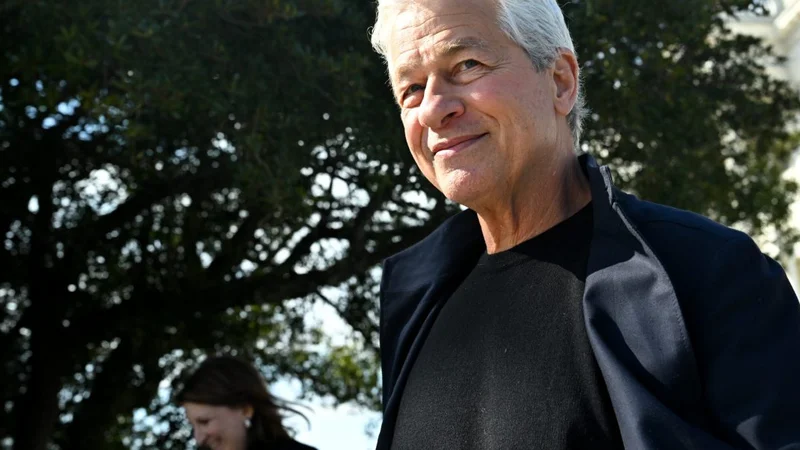
Image: Fortune AI
Main Takeaway
JPMorgan CEO Jamie Dimon calls Iran conflict 'skunk at the party' that may push US into recession and stagflation, while defending military action as necessary.
Jump to Key PointsSummary
The warning that crashed the party
Jamie Dimon doesn't do subtle. In his 2026 shareholder letter, the JPMorgan CEO dropped what he called the "skunk at the party" — stagflation risk driven by the US war with Iran. It's the kind of warning that makes investors sweat and policymakers reach for antacids.
Dimon mentioned "America" over 80 times in the letter, painting his usual picture of American exceptionalism. But buried in the patriotic prose was a single, chilling word: stagflation. The kind that combines stagnant growth with persistent inflation, a toxic cocktail the US hasn't tasted since the 1970s.
The timing couldn't be worse. Markets were already wobbling from rate hikes and supply chain chaos. Now add a Middle Eastern war that's pushing oil prices skyward and threatening to derail the Fed's carefully orchestrated soft landing.
Why Dimon supports the war despite economic risk
This is where it gets interesting. Dimon isn't just warning about economic fallout — he's actively defending the US war on Iran. According to Fortune, he offered a "full-throated, if measured" defense of military action while acknowledging it's driving the economy into "genuinely uncharted territory."
His argument boils down to national security over economic comfort. Dimon believes finishing the conflict is necessary to protect long-term American interests, even if it means short-term economic pain. It's a calculation that prioritizes geopolitical stability over market stability — a stance that's earned him both praise and criticism.
The Hill reports he acknowledged "short-term risks" but maintained the war is ultimately justified. CBS News caught him admitting he doesn't know if Iran will prove to be the "tipping point" for recession. That's not exactly reassuring from the guy who runs America's largest bank.
The stagflation scenario that's got Wall Street spooked
Stagflation isn't just a scary word — it's economic kryptonite. When growth stalls but prices keep rising, central banks face an impossible choice. Cut rates to boost growth and inflation runs wild. Raise rates to fight inflation and you crater the economy further.
Dimon sees this playing out through multiple channels. War-driven oil price spikes feed directly into inflation. Supply chain disruptions from Middle Eastern conflict add more price pressure. Meanwhile, higher defense spending and economic uncertainty sap productive investment, slowing growth.
Bloomberg reports he thinks the Fed is right to hold rates steady given these cross-currents. They're stuck between fighting inflation and supporting growth — the classic stagflation trap. Forbes notes this isn't just theoretical; market indicators are already flashing warning signs.
What this means for your money right now
The market reaction has been swift and unpleasant. Yahoo Finance reports investors are scrambling to reposition portfolios, with defensive sectors outperforming growth names. The usual stagflation playbook — commodities, gold, short-duration bonds — is getting crowded fast.
But here's the thing: Dimon's warnings have historically been early, not wrong. He called the 2008 crisis, the European debt mess, and pandemic disruptions ahead of the crowd. When the world's most connected banker says "uncharted territory," it's probably worth listening.
Fool suggests defensive positioning: cash buffers, inflation-protected securities, and companies with pricing power. The Motley Fool's take is that individual investors should prepare for volatility rather than panic-sell. After all, Dimon still sees America as fundamentally strong — just facing some serious near-term headwinds.
The Fed's impossible position
This puts Jerome Powell in an even tighter box than usual. The Fed was already threading a needle between inflation control and recession avoidance. Now add war-driven supply shocks and geopolitical uncertainty to the mix.
Dimon's assessment that the Fed is "right to hold" suggests he sees rate cuts as premature. But holding steady while inflation accelerates risks a repeat of the 1970s, when the Fed's delayed response let inflation expectations become entrenched.
The central bank's communication challenge just got harder. They need to sound hawkish enough to anchor inflation expectations while not triggering a recession through excessive tightening. It's a monetary policy high-wire act without a safety net.
What happens next depends on three variables
First, the duration of the Iran conflict. A quick resolution could limit economic damage. Prolonged fighting risks sustained oil price spikes and broader regional instability.
Second, the Fed's reaction function. Markets are pricing in rate cuts by late 2026, but Dimon's stagflation warning suggests the Fed might need to stay restrictive longer than expected. This could trigger the recession everyone's trying to avoid.
Third, the resilience of the US consumer. So far, Americans keep spending despite everything. But if job losses accelerate and inflation stays elevated, the consumption engine that drives 70% of GDP could sputter. That's when recession becomes reality rather than risk.
The broader message about American exceptionalism
Strip away the economic jargon and Dimon's letter carries a deeper message: American leadership has costs. Military supremacy, global stability, and economic dominance aren't free. Sometimes the bill comes due in the form of stagflation risk and recession warnings.
This represents a shift from the post-Cold War assumption that America could have guns and butter without consequence. Dimon's essentially arguing that defending the liberal order requires accepting economic volatility — a message that won't play well on Wall Street or Main Street.
Whether this trade-off proves worth it depends on how the Iran conflict resolves and whether America emerges stronger or just poorer. For now, the world's most powerful banker is telling us to buckle up. The party's still going, but that skunk isn't leaving anytime soon.
Key Points
Jamie Dimon explicitly warned of stagflation risk driven by US-Iran war, calling it "skunk at the party" in annual shareholder letter
Despite economic warnings, Dimon defended US military action against Iran as necessary for long-term national security interests
Transmission mechanisms include oil price spikes, supply chain disruptions, and defense spending crowding out productive investment
Fed faces impossible position balancing inflation control against recession risk while war complicates monetary policy
Market reaction shows defensive sector rotation and increased demand for inflation hedges like gold and commodities
Questions Answered
In his 2026 shareholder letter, Dimon warned that the US war with Iran could trigger stagflation — a toxic combination of stagnant economic growth and persistent inflation similar to the 1970s.
Dimon argues that national security and long-term American interests justify short-term economic pain. He believes finishing the conflict is necessary to protect the US position globally, even if it means accepting stagflation risk.
Market strategists recommend defensive positioning: holding cash buffers, inflation-protected securities, commodities, gold, and companies with strong pricing power that can maintain margins during inflationary periods.
Unlike his past warnings about banking crises or market corrections, this combines geopolitical conflict with economic policy in ways that create stagflation risk — a scenario the US hasn't faced in decades. It also represents acceptance that American military action carries direct economic costs.
The Fed faces an impossible choice between fighting inflation (which requires higher rates) and supporting growth (which requires lower rates). War-driven supply shocks make their job even harder, likely keeping rates restrictive for longer than markets expect.
Source Reliability
55% of sources are trusted · Avg reliability: 74
Go deeper with Organic Intel
Simple AI systems for your life, work, and business. Each one includes copyable prompts, guides, and downloadable resources.
Explore Systems