Microsoft's $5.5B Singapore AI Bet: Infrastructure, Education, and Asia's Next Power Hub
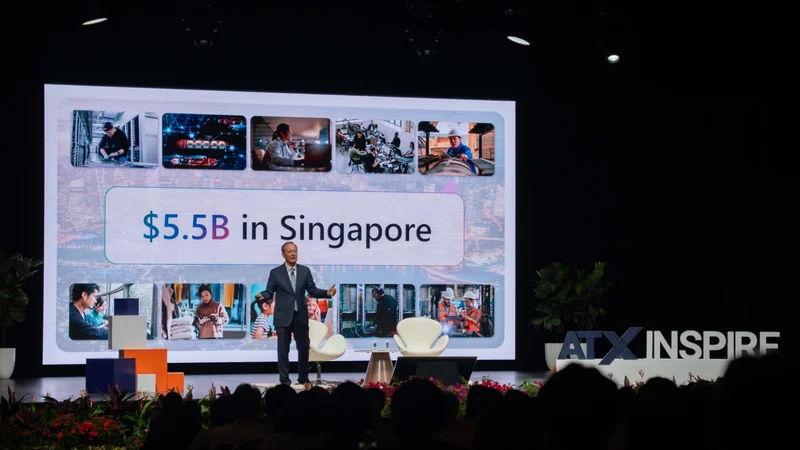
Image: News.microsoft
Main Takeaway
Microsoft commits $5.5B to transform Singapore into an AI powerhouse through 2029, adding cloud capacity and free Copilot access for every university student.
Summary
What the $5.5B actually buys
Microsoft will pour $5.5 billion into Singapore's cloud and AI infrastructure between 2025 and 2029, according to company president Brad Smith. The money funds new data centers, AI compute clusters, and ongoing operations to meet what Smith calls "exploding demand" for AI services across Southeast Asia. This isn't just hardware; it's Microsoft's largest infrastructure commitment in the region since it opened its first Singapore cloud region in 2010.
The investment arrives as Singapore pushes to become Asia's AI nerve center. Government agencies have been courting hyperscalers with land grants and streamlined permitting. Microsoft gets priority access to scarce data-center land and power allocations in exchange for training locals and keeping data within Singapore's jurisdiction.
Why Singapore matters for Microsoft's Asia strategy
Singapore sits at the crossroads of Asia's digital economy. Half of Southeast Asia's 680 million people live within a three-hour flight. More importantly, Singapore's regulators have crafted AI governance frameworks that enterprises actually want to use — unlike the compliance headaches in neighboring markets.
Microsoft's timing is deliberate. The company just announced a $10 billion Japan package and a $10 billion Portugal plan. These aren't isolated moves. They're pieces of a global capacity chess game against Google and Amazon, who are racing to lock down similar beachheads.
The Singapore play gives Microsoft something rivals can't easily replicate: a government partner willing to subsidize power costs and fast-track permits. That translates to cheaper inference costs for enterprise customers across the region.
Free Copilot for every university student
Here's the part that'll actually change daily life: every tertiary student in Singapore gets free Microsoft 365 Copilot access. Teachers and non-profits also receive AI training through Microsoft's new "Elevate" program.
This isn't charity. Microsoft is seeding the next generation of AI-native workers who'll graduate expecting Copilot-style interfaces everywhere. It's the same playbook that made Office the default productivity suite — get them young, keep them forever.
The company expects to train 200,000+ people across universities, polytechnics, and vocational institutes. Early pilots at National University of Singapore show students using AI for everything from coding assignments to literature reviews.
The ripple effects across Southeast Asia
Singapore's AI infrastructure won't just serve Singapore. Microsoft plans to use the expanded capacity as a hub for serving customers in Thailand, Vietnam, and Indonesia — markets where building local data centers isn't economically viable yet.
This creates a two-tier system. Enterprise customers in neighboring countries get Singapore-level latency and compliance without the capital investment. Meanwhile, local Singapore startups gain access to enterprise-grade AI tools that previously required Silicon Valley budgets.
Expect a talent drain reversal. Instead of Singapore's best engineers moving to San Francisco, AI startups from across the region are already setting up Singapore offices to tap Microsoft's infrastructure and talent pipeline.
What happens next
Construction starts immediately on new data-center campuses in the western part of Singapore island. Microsoft won't disclose exact locations (security reasons), but local contractors report land has been secured near Jurong and Tuas industrial zones.
The first phase delivers additional Azure AI capacity by late 2026. Full rollout completes by 2029, coinciding with Singapore's national AI strategy review. Government officials privately expect Microsoft to double this investment by 2030 if uptake exceeds projections.
Watch for Google and Amazon's countermoves. Both companies have Singapore cloud regions but neither has matched Microsoft's education commitment or dollar figure. The race for Southeast Asia's AI infrastructure just got very expensive.
Key Points
Microsoft commits $5.5B to Singapore AI infrastructure through 2029 — its largest regional investment since 2010
Every university student in Singapore receives free Microsoft 365 Copilot access as part of education initiative
Investment creates AI hub serving Singapore plus Thailand, Vietnam, and Indonesia markets
Singapore government provides land grants and fast-tracked permits in exchange for local training commitments
First new Azure AI capacity launches late 2026, full rollout completes 2029
FAQs
This $5.5B Singapore investment comes alongside $10B commitments in both Japan and Portugal announced within the past year, representing Microsoft's global strategy to secure AI infrastructure capacity in key markets.
Students and educators will get immediate access to free Microsoft 365 Copilot. Infrastructure changes won't be visible until late 2026 when the first new data-center capacity comes online.
Singapore offers stable regulations, government partnerships, strategic location for serving regional markets, and existing Microsoft cloud infrastructure dating back to 2010.
Microsoft plans to train over 200,000 students, educators, and non-profit workers across Singapore's universities, polytechnics, and vocational institutes.
Current customers will see expanded capacity and potentially lower costs as new infrastructure comes online, but no service disruptions are planned.
Government officials expect Microsoft could double the investment by 2030 if adoption exceeds projections, similar to how their initial 2010 Singapore investment expanded over time.
Source Reliability
41% of sources are trusted · Avg reliability: 71
Go deeper with Organic Intel
Our AI for Your Business systems give you practical, step-by-step guides based on stories like this.
Explore ai for your business systems