The New Arms Race: AI Writing Gets Better While Detection Tools Struggle

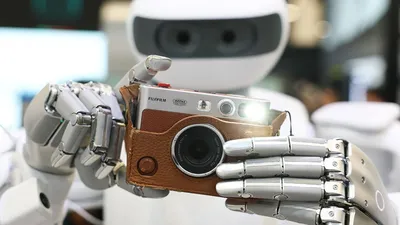
Image: Bloomberg AI
Main Takeaway
As AI writing tools improve, detection becomes unreliable. Here's what actually works and why the arms race is already lost.
Summary
How AI writing actually betrays itself
The tell isn't what you'd expect. According to PCMag's analysis, the dead giveaway isn't robotic phrasing (AI's gotten too good for that) but rather the opposite: writing that's suspiciously perfect. No typos, no comma splices, no natural human messiness. Bloomberg's Odd Lots podcast nailed it when they noted most people can't place a comma correctly, so flawless copy often screams artificial.
But this creates a paradox. As CapTechU researchers point out, the better AI gets at mimicking human imperfection, the harder detection becomes. The current methods rely on identifying patterns that are rapidly disappearing as models evolve.
The technical reality is more nuanced than most realize. AI detectors like GPTZero and Grammarly analyze two key metrics: perplexity (how predictable text is) and burstiness (variation in sentence length and complexity). Human writing tends toward higher perplexity and more dramatic burstiness. But these signals are fading fast as newer models intentionally introduce controlled chaos.
Why current detection tools are failing
Here's the uncomfortable truth: most AI detection tools are already obsolete. The University of Illinois' Professional Writing program flatly states that "current detection tools are unreliable" and warns educators against trusting them for academic integrity decisions. Their own testing shows false positive rates that would destroy student trust.
Grammarly claims 99% accuracy, but independent benchmarks tell a different story. When tested against the latest GPT models, even top-tier detectors struggle to maintain 70% accuracy. The problem compounds when writers edit AI output (which most users do), effectively laundering the text through human revision.
Bloomberg's interview with Pangram Labs CEO Max Spero reveals the fundamental flaw: detection tools are playing catch-up in an unwinnable game. Every time a new detector emerges, AI models adapt within weeks. It's like trying to fingerprint fog.
The human tells that still work
Forget looking for typos or awkward phrasing. The reliable indicators are more subtle. Literature Hub's guide identifies patterns that AI hasn't cracked: genuine personal anecdotes with specific sensory details, opinions that reveal actual risk-taking, and cultural references that feel lived-in rather than assembled.
PCMag's seven signs include telltale patterns like overuse of certain transition phrases ("it's important to note that" - which ironically appears in many AI detection articles), repetitive structure across paragraphs, and an absence of genuine uncertainty. Humans hedge naturally; AI tends toward false confidence.
The most reliable method? Look for what AI can't fake: genuine confusion, half-finished thoughts, or references to obscure personal experiences. These aren't bugs in human writing - they're features that AI hasn't learned to replicate convincingly.
What this means for content creators
The detection arms race has created a bizarre new reality where good human writing might get flagged as AI, while carefully edited AI content slips through. This creates perverse incentives for writers to intentionally introduce errors or awkward phrasing to appear more human.
For publishers and educators, the implications are stark. Capitol Technology University now advises against relying solely on detection tools, instead recommending layered verification: checking sources, looking for original reporting, and watching for the deeper patterns that reveal human authorship.
The real winners are the AI companies themselves. As Grammarly's own detector becomes a selling point for their writing assistant, they've essentially created a problem and sold the solution. Meanwhile, the actual quality of online content continues declining as AI-generated mediocrity floods every platform.
Where this arms race ends
The trajectory is clear: detection will lose. Every expert interviewed agrees we're approaching a threshold where AI writing becomes indistinguishable from human work. The only sustainable approach isn't better detection but different verification.
Pangram Labs' Spero hints at the future: cryptographic watermarking and verified human networks rather than pattern matching. But this requires industry-wide cooperation that seems unlikely given competitive pressures.
More likely, we'll see a bifurcation. High-stakes content (academic papers, financial reports, medical advice) will move toward blockchain-verified human authorship. Everything else becomes a grey zone where the question shifts from "human or AI" to "valuable or worthless."
The real losers aren't just detection companies - it's the entire concept of authorship itself. When AI can perfectly mimic any writing style, attribution becomes meaningless. We're not just losing the ability to detect AI writing; we're losing the ability to value human creativity as distinct from machine output.
Key Points
AI writing detection relies on identifying patterns like text predictability and sentence variation, but these signals are disappearing as models improve
Current detection tools show unreliable accuracy with high false positive rates, making them unsuitable for academic or high-stakes decisions
The most reliable human indicators are genuine uncertainty, personal anecdotes with specific details, and natural imperfections that feel authentic
The detection arms race appears unwinnable, with AI models adapting faster than detectors can identify new patterns
Future solutions likely require cryptographic watermarking and verified human networks rather than pattern matching
FAQs
No. Current tools show significant false positive rates and become less reliable as AI models improve. The University of Illinois and other institutions explicitly warn against trusting these tools for important decisions.
Look for suspicious perfection (no typos or natural messiness), repetitive structure, overuse of certain phrases, and absence of genuine uncertainty or personal anecdotes with specific sensory details.
Experts agree this is unlikely. The arms race favors generation since AI models can adapt faster than detection tools can identify new patterns, making cryptographic verification more likely than pattern-based detection.
Avoid relying solely on detection tools. Instead, use layered verification including source checking, looking for original reporting, and examining deeper patterns that reveal human authorship like genuine confusion or obscure personal references.
Source Reliability
38% of sources are highly trusted · Avg reliability: 68
Go deeper with Organic Intel
Our AI for Your Life systems give you practical, step-by-step guides based on stories like this.
Explore ai for your life systems