ICE Airport Deployment Becomes Semi-Permanent as TSA Exodus Continues Despite Trump's Pay Order
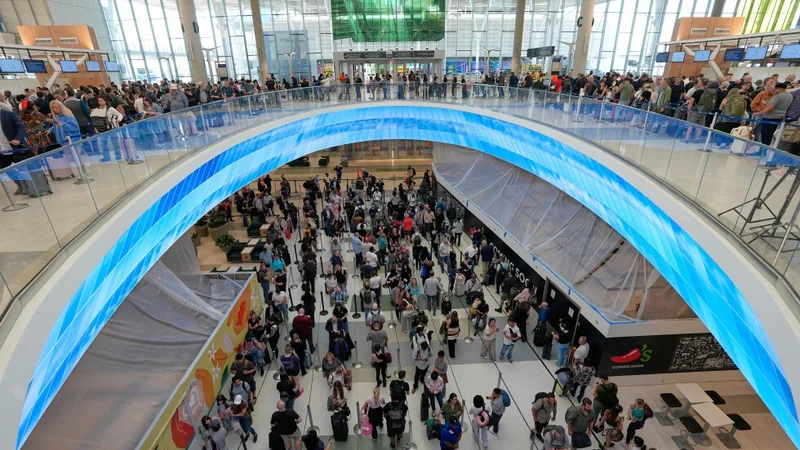
Image: Apnews
Main Takeaway
Trump's emergency pay for TSA can't stop the bleeding: 500+ screeners already quit, ICE agents stay indefinitely, and spring-break travelers still face.
Jump to Key PointsSummary
TSA Exodus Reaches 500 Officers as Pay Order Arrives Too Late
President Trump's Friday executive order to immediately pay TSA agents came after nearly 500 officers had already walked off the job, according to the Department of Homeland Security. The White House border czar, Tom Homan, told reporters that the actual number of returning employees "depends on how many TSA employees would be coming back." Houston's Bush Intercontinental Airport alone saw ICE agents checking IDs and handling logistics days before the pay directive landed, highlighting how desperate the situation became. The exodus began in mid-February when routine TSA funding lapsed, creating a cascading staffing crisis that pay alone may not reverse quickly.
Why ICE Agents Are Still Getting Paid While TSA Isn't
The irony isn't lost on travelers: immigration officers in tactical gear continue receiving paychecks because ICE funding was secured through Trump's 2025 tax bill, while TSA agents worked without pay for over a month. This funding disparity allowed the administration to deploy ICE teams to a dozen major airports starting March 22, creating the unusual scene of immigration enforcement officers managing civilian travel logistics. The deployment wasn't just symbolic—agents were actively checking boarding passes and directing passenger flow at hubs like Atlanta, Houston, and Washington-Dulles.
Spring Break Travelers Face Multi-Hour Lines Despite Emergency Measures
Even with ICE reinforcements and the promise of back pay, airports continued urging passengers to arrive three hours early through the March 30 weekend. The TSA's own experts privately told GovExec that ICE deployments have "no practical use" for actual security screening, since immigration agents lack the specialized training to operate x-ray machines or conduct pat-downs. Travelers at Atlanta's Hartsfield-Jackson reported lines stretching through entire terminals, while Houston saw passengers sleeping on floors overnight when flights were missed. The timing couldn't be worse—spring break travel volume typically peaks during this exact period.
Congressional Deal Collapse Triggered Unilateral Executive Action
The pay order became necessary after House Republicans rejected a Senate-passed funding deal that would have resolved the Department of Homeland Security's budget impasse. Democrats had tied the funding to immigration enforcement reforms, creating a legislative deadlock that Trump bypassed through emergency powers. The executive action covers TSA and most DHS agencies, but notably excludes immigration operations—the very issue at the heart of the budget standoff. This sets up a potential constitutional clash over separation of powers, as Congress hasn't actually appropriated the money being promised to federal workers.
What Happens to Airport Security Now
White House officials indicate ICE agents will remain deployed indefinitely, creating a de facto hybrid security system that nobody planned. TSA will need months to rebuild staffing levels even with back pay, since new hires require 120 hours of training and background checks. Meanwhile, the administration's messaging suggests this arrangement might become semi-permanent—Homan refused to give a timeline for withdrawing ICE support, saying only "we'll see how this plays out." For travelers, this means continued unpredictability: some airports report normal operations while others maintain multi-hour waits, with no clear pattern. The real test comes with summer travel season, when passenger volumes typically increase 25-30% above spring break levels.
Key Points
Over 500 TSA officers quit during the 40+ day partial shutdown before Trump ordered emergency pay
ICE agents deployed to airports continue receiving paychecks through separate funding while TSA went unpaid
Airport lines remain multi-hour despite emergency measures as spring break peaks
House GOP rejection of Senate funding deal forced Trump's unilateral executive action
ICE presence likely becomes semi-permanent as TSA faces months-long hiring and training process
Questions Answered
ICE agents were deployed because 500+ TSA officers quit during the shutdown, creating massive security line backups. ICE continues receiving paychecks through separate 2025 tax bill funding while TSA funding lapsed.
No. Even with back pay, it will take months to rebuild TSA staffing levels since new hires require 120+ hours of training. ICE agents lack security screening training and can't fully replace TSA functions.
Indefinitely. White House border czar Tom Homan refused to give a withdrawal timeline, saying "we'll see how this plays out," suggesting the deployment could become semi-permanent.
House Republicans rejected a Senate-passed DHS funding bill that Democrats tied to immigration enforcement reforms, creating a 40+ day partial shutdown of TSA and other agencies.
Major hubs including Atlanta, Houston, Washington-Dulles, and others in a dozen cities saw ICE deployments and multi-hour lines, though impacts vary by location and day.
Source Reliability
64% of sources are highly trusted · Avg reliability: 83
Go deeper with Organic Intel
Simple AI systems for your life, work, and business. Each one includes copyable prompts, guides, and downloadable resources.
Explore Systems