SoftBank's $40B Bridge Loan Signals OpenAI IPO Timeline and Debt-Fueled AI Arms Race
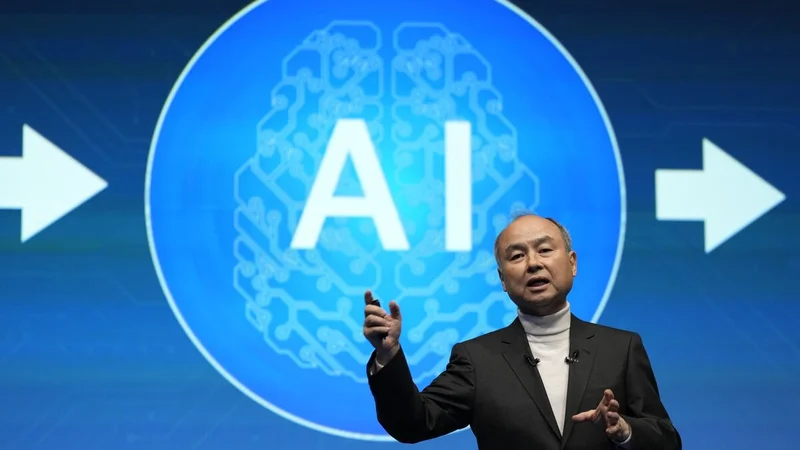
Image: Bloomberg AI
Main Takeaway
SoftBank secures record $40B unsecured loan from JPMorgan and Goldman Sachs to fund $30B OpenAI stake, setting stage for 2026 IPO.
Jump to Key PointsSummary
The massive bridge loan and what it funds
SoftBank has secured a record $40 billion bridge loan from JPMorgan and Goldman Sachs to finance its $30 billion investment in OpenAI. The Japanese conglomerate announced the 12-month unsecured facility on March 27, representing the largest corporate bridge loan in history. The structure is notable because the loan is unsecured, meaning SoftBank didn't need to pledge assets as collateral, and carries a tight 12-month repayment window that likely signals an imminent OpenAI public offering.
The financing covers SoftBank's portion of OpenAI's $110 billion raise from February, which stands as one of the largest private funding rounds ever completed. According to TechCrunch, the remaining $10 billion beyond SoftBank's $30 billion commitment will provide additional working capital for the AI company as it scales operations ahead of going public.
Why this matters for the AI investment landscape
This deal fundamentally changes how AI companies access capital. Instead of traditional equity rounds, we're seeing debt-financed mega-investments that blur the line between venture capital and leveraged buyouts. The $40 billion loan exceeds the GDP of numerous countries and demonstrates how SoftBank's Vision Fund playbook has evolved from equity investments to debt-fueled stakes in AI leaders.
The structure signals that major banks now view AI companies like OpenAI as bankable assets worthy of massive unsecured lending. This creates a new template where traditional Silicon Valley venture capital becomes secondary to Wall Street debt financing. For other AI companies seeking funding, this raises the bar dramatically - if you can't attract $40 billion bridge loans, you're playing in a different league entirely.
Financial engineering and risk implications
SoftBank's balance sheet now carries unprecedented leverage. The $40 billion loan adds to existing debt from Vision Fund investments, creating a complex web of obligations that must be unwound within 12 months. According to Bloomberg, this represents a calculated bet that OpenAI's IPO will generate sufficient returns to refinance the facility before maturity.
The unsecured nature of the loan is particularly striking. Banks typically require collateral for facilities this size, but JPMorgan and Goldman Sachs accepted SoftBank's creditworthiness and the implicit backing of its diverse asset portfolio. This suggests extreme confidence in both SoftBank's repayment ability and OpenAI's valuation trajectory. However, if the IPO market sours or OpenAI's growth stalls, SoftBank faces a refinancing cliff that could force asset sales at distressed prices.
What happens next for OpenAI and SoftBank
Industry observers interpret the 12-month term as a clear signal that OpenAI plans to go public in 2026. The timeline aligns with typical bridge loan structures designed to provide temporary financing before permanent capital markets access. According to TechCrunch, OpenAI has been quietly building out its public company infrastructure, including hiring CFO-level talent and establishing audit committees.
For SoftBank, the next 12 months will involve positioning its OpenAI stake for maximum IPO value. This likely includes additional strategic investments, partnership announcements, and potentially spinning off portions of the stake to permanent capital vehicles. The company must also manage its broader debt portfolio while ensuring the OpenAI investment generates sufficient returns to justify the leverage. Failure means SoftBank could face its own version of the WeWork crisis, but with much higher stakes.
Impact on enterprise AI adoption and competition
This deal accelerates the AI arms race among tech giants. Microsoft's existing OpenAI partnership now faces direct competition from SoftBank's deeper capital commitment. Google, Meta, and Anthropic must respond with their own massive funding rounds or risk falling behind in the model development race. Enterprise customers can expect more aggressive AI feature rollouts as companies justify massive investments through rapid monetization.
The debt financing model also changes competitive dynamics. Traditional AI companies funded through equity rounds now face competitors with effectively unlimited capital access. This could trigger consolidation as smaller players struggle to match the compute budgets and talent acquisition capabilities of debt-fueled giants. For enterprise buyers, this creates both opportunity (better AI tools) and risk (vendor concentration in a few highly leveraged players).
Broader market implications beyond AI
The $40 billion loan represents a new peak in corporate leverage that extends beyond tech. Banks' willingness to extend unsecured credit at this scale suggests broader credit market conditions remain accommodative despite rising rates. This could encourage similar mega-deals across industries, particularly in sectors viewed as AI-adjacent.
However, the concentration risk is significant. JPMorgan and Goldman Sachs now have massive single-name exposure to both SoftBank and indirectly to OpenAI's valuation. If the AI bubble bursts, these banks could face substantial losses. The deal also highlights the increasing financialization of AI development, where breakthrough capabilities become secondary to financial engineering and IPO timing.
Key Points
SoftBank's $40B bridge loan is the largest corporate facility ever arranged, fully unsecured with 12-month maturity
Loan finances SoftBank's $30B portion of OpenAI's $110B February raise, with $10B additional working capital
Structure strongly signals planned 2026 OpenAI IPO as exit strategy for refinancing
Creates new template for AI funding through debt rather than traditional venture capital
Forces Microsoft, Google, Meta, Anthropic to respond with comparable scale investments
Questions Answered
The extra $10 billion provides working capital and cushions against potential overruns or additional OpenAI requirements. More importantly, the loan size reflects SoftBank's need to maintain liquidity across its broader portfolio while making this concentrated bet.
Unsecured means SoftBank didn't pledge specific assets as collateral, which is virtually unheard of for loans this size. This signals extreme bank confidence in SoftBank's creditworthiness and the implicit value of its diverse holdings, but also represents massive risk if valuations decline.
The 12-month loan term essentially sets a hard deadline for OpenAI's IPO. Bridge loans are designed as temporary financing before permanent capital markets access, making a 2026 public offering almost certain to refinance SoftBank's position.
SoftBank faces a refinancing crisis that could force asset sales across its portfolio. The company would need to either extend the loan (expensive), find alternative financing (difficult at scale), or liquidate other positions, potentially at distressed prices.
Yes, it creates a new bar where debt financing becomes viable for AI companies with sufficient scale and bankability. However, most AI startups lack the asset base and revenue predictability to access this type of funding, potentially widening the gap between haves and have-nots.
Extremely risky. They now have $40 billion in single-name exposure to a highly leveraged conglomerate making concentrated bets on private AI companies. If the AI market corrects or SoftBank faces liquidity issues, these banks could face substantial losses.
Source Reliability
30% of sources are highly trusted · Avg reliability: 66
Go deeper with Organic Intel
Simple AI systems for your life, work, and business. Each one includes copyable prompts, guides, and downloadable resources.
Explore Systems