Meta Hit With $375M Verdict After New Mexico Jury Finds It Misleads Teens on Safety
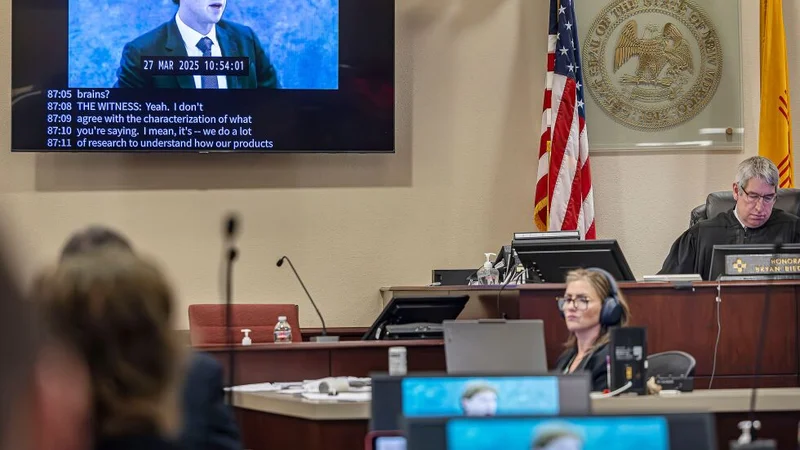
Image: Apnews
Main Takeaway
A New Mexico jury found Meta guilty of thousands of violations of the state’s consumer-protection law for concealing the risks its platforms pose to children.
Jump to Key PointsSummary
What did the jury decide and why?
A Santa Fe jury concluded that Meta knowingly harmed New Mexico teens’ mental health and deliberately hid from parents and users what it knew about child sexual exploitation on Facebook and Instagram. Jurors checked “liable” on every count, ruling that the company engaged in “unfair and deceptive” and “unconscionable” trade practices under the state’s Unfair Practices Act. The panel found thousands of discrete violations, one for each time the platforms were served to New Mexico minors without proper warnings. The verdict is the first jury decision in the U.S. holding a social-media firm civilly responsible for child-safety failures.
How big is the penalty and what does it cover?
The court immediately imposed a $375 million civil penalty—the maximum allowed under New Mexico law for repeated violations. The award is not compensatory; it is a pure fine meant to punish Meta and deter similar conduct. Because the jury found thousands of violations, the per-incident fine is modest, but the aggregate figure is among the largest ever assessed against a tech company in a child-safety case. The money goes to the state’s general fund and is earmarked for future consumer-protection enforcement.
What specific design features were blamed?
Prosecutors argued that Meta’s algorithms, infinite scroll, like-count displays, friend-suggestion tools, and direct-messaging defaults created what they called a “marketplace for predators.” Evidence showed that teens who spent more than three hours a day on Instagram had higher rates of self-harm and that one in three young users developed “problematic use” patterns. The state also introduced internal emails in which Meta employees acknowledged that younger users were at risk but decided against adding friction features that might reduce engagement.
Could the ruling spark copy-cat cases?
Legal scholars say the verdict gives a roadmap to other state attorneys general. Because New Mexico’s consumer-protection statute is similar to laws in at least 25 states, and because the same design features are deployed worldwide, plaintiffs’ lawyers are already drafting complaints. Meta itself disclosed in SEC filings that it faces “multiple ongoing and potential” child-safety suits. Apple, TikTok, and Snap are watching closely; their platforms employ comparable engagement mechanics.
How is Meta responding?
Meta called the decision “disappointing” and vowed to appeal on First Amendment and federal pre-emption grounds. In a statement, the company maintained that it has introduced more than 30 safety tools since 2021, including parental supervision dashboards and AI-powered nudity detection. It argues that state-law penalties cannot override Section 230 immunity, a question likely to reach the U.S. Supreme Court. Meanwhile, Meta continues to roll out teen accounts with built-in limits and says it will “vigorously defend” its record.
What happens next in the courtroom?
The trial judge still must rule on post-trial motions and set a bond while the appeal proceeds. If the verdict survives, New Mexico can seek additional injunctive relief—forcing design changes or ongoing monitoring. A separate federal MDL (multidistrict litigation) in California covering similar claims by school districts is on hold pending the appeal. Observers expect a final decision to take two to four years, with settlement talks likely once the appellate posture becomes clearer.
Key Points
A New Mexico jury found Meta guilty on all counts of violating the state’s Unfair Practices Act by deceiving teens and parents about platform safety.
The company must pay a $375 million civil penalty—the maximum allowed—for thousands of violations tied to child sexual exploitation and mental-health harms.
Evidence centered on engagement-maximizing features (algorithms, infinite scroll, friend suggestions) that prosecutors labeled a “marketplace for predators.”
The verdict sets a legal template for other states with similar consumer-protection laws to pursue copy-cat suits against Meta and rivals.
Meta intends to appeal on First Amendment and federal pre-emption grounds, a fight that could reach the Supreme Court.
Questions Answered
No. The $375 million is a civil penalty paid to the state, not compensation to victims. Separate personal-injury suits are still pending.
Not directly, but the legal reasoning can be copied by other states with similar consumer-protection statutes.
Unlikely. Meta will first appeal, and any court-ordered changes would take years unless the company settles or loses the appeal.
This case was civil. Criminal probes would require different standards of proof and are not currently announced.
Firms like TikTok, Snap, and YouTube use similar engagement mechanics and could face analogous suits under comparable state laws.
Parental dashboards, time-limit prompts, AI nudity detection, and restricted teen accounts that block unknown adults from messaging minors.
Source Reliability
47% of sources are trusted · Avg reliability: 75
Go deeper with Organic Intel
Simple AI systems for your life, work, and business. Each one includes copyable prompts, guides, and downloadable resources.
Explore Systems