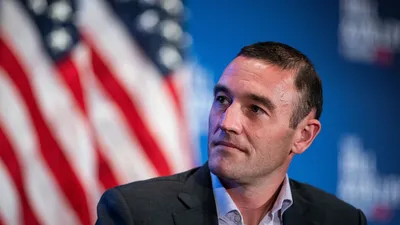
Fink Warns AI Boom Will Widen Wealth Gap Unless Masses Start Investing
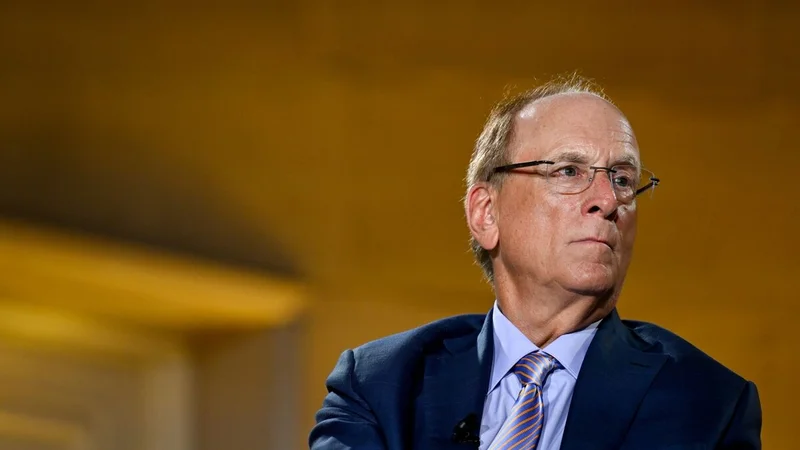
Image: Bloomberg AI
Main Takeaway
BlackRock CEO Larry Fink says AI will enrich investors while leaving others behind—his solution: buy stocks to ride the wave.
Jump to Key PointsSummary
What exactly did Larry Fink say about AI and inequality?
BlackRock CEO Larry Fink used his 2026 annual shareholder letter to flip the AI narrative. Rather than fretting over robots stealing jobs, he argues the real danger is that AI-driven productivity gains will flow almost exclusively to shareholders and companies that deploy the tech fastest. According to Fortune, Fink believes these gains "will take time to trickle down" and may never reach people who don't own capital. Bloomberg reports he framed it bluntly: the AI boom "threatens to make wealthy companies and investors even richer while exacerbating inequality." His prescription isn't policy reform but portfolio expansion—ordinary people must buy into the AI economy via index funds and equities or risk permanent left-behind status.
Why does Fink think job loss isn't the biggest AI risk?
Fink's view hinges on timing and ownership. CNN notes he argues displaced workers won't be the primary victims because AI productivity gains accrue first to capital, not labor. The WSJ summary captures his logic: companies pocket higher margins from AI long before wages rise or new jobs appear. In the interim, only shareholders capture the upside. Fortune quotes Fink linking today's "economic anxiety" to people feeling capitalism "isn't working for them" precisely because asset owners reap outsized rewards from technological leaps. By the time productivity gains theoretically push wages up, the wealth gap may have already calcified.
How does Fink want people to protect themselves?
Invest, and do it through BlackRock products. Multiple outlets (Business-Standard, The Hill, Virginia Business) emphasize that his solution is mass equity ownership, ideally via low-cost index funds—the exact instruments BlackRock pioneered. The Guardian paraphrases Fink urging people to "share in the market gains" rather than rely on policy fixes. This isn't subtle; as Fortune notes, Fink helped create the index-fund revolution and now sees it as the inequality antidote. The message: if you can't beat the capital class, join it through ETFs.
What historical pattern does he see repeating?
Fink explicitly links AI to past technological disruptions that first enriched investors while leaving workers behind. Yahoo Finance quotes him warning AI "threatens to repeat that pattern." He draws parallels to the early internet and industrial automation waves where equity holders saw massive returns long before median wages budged. Fortune adds that Fink sees these episodes creating a recurring sense that capitalism "isn't working" for ordinary people, fueling political instability. His fear is AI will compress this cycle, concentrating gains so rapidly that social cohesion fractures before any trickle-down occurs.
How are markets reacting to Fink's warning?
The coverage itself is the reaction. No single outlet reports immediate market moves, but the sheer volume of same-day articles (Bloomberg, WSJ, CNN, Guardian, etc.) shows Fink's letter dominated financial headlines. The Hill notes he used the platform to make a "case for long-term investing"—a clear signal BlackRock will lean into AI-themed ETFs and funds. Implicitly, the firm stands to benefit if retail investors heed his call and pour money into its products. The NY Post flags Fink's mention of a "costly global push" for AI infrastructure, suggesting BlackRock sees lucrative bond and equity issuance ahead.
What happens next for everyday investors?
Expect a marketing blitz. Fink's letter essentially reframes AI risk as a sales opportunity: buy BlackRock funds or get left behind. Virginia Business and others note his emphasis on long-term investing aligns with the firm's push into retirement accounts and target-date funds. The message will likely filter into advisor talking points and 401(k) menus. For developers and startup founders, the takeaway is that capital providers now see AI inequality as a feature, not a bug—so long as they can package access for the masses. AI safety debates may shift toward financial inclusion rather than job retraining.
Key Points
Fink claims AI will enrich shareholders first, leaving non-investors behind unless they buy stocks.
He views job loss as secondary; the real risk is wealth concentration among asset owners.
BlackRock's solution: mass equity ownership via index funds—the firm's core business.
Fink sees AI repeating past tech cycles where investors gained while wages stagnated.
The warning doubles as a sales pitch for BlackRock ETFs and retirement products.
Questions Answered
He believes AI will boost corporate profits long before it eliminates enough jobs to matter, so the bigger issue is who captures those profits.
By buying broad market index funds and ETFs—conveniently the exact products BlackRock offers—to gain exposure to AI-driven earnings growth.
No. His letter focuses entirely on individual investment behavior, not government intervention, which aligns with BlackRock's business model.
The early internet boom and industrial automation, both of which first enriched shareholders while median wages lagged for years.
Expect more AI-themed or tech-heavy index funds in employer plans, marketed as essential for not falling behind the wealth curve.
While not detailed in the letter, BlackRock's funds hold major AI players like Nvidia, Microsoft, and Google, so inflows benefit the firm directly.
Source Reliability
45% of sources are trusted · Avg reliability: 77
Go deeper with Organic Intel
Simple AI systems for your life, work, and business. Each one includes copyable prompts, guides, and downloadable resources.
Explore Systems