Apple Cuts China App Store Fees 17% as Cook Praises Local Partners Under Regulatory Heat
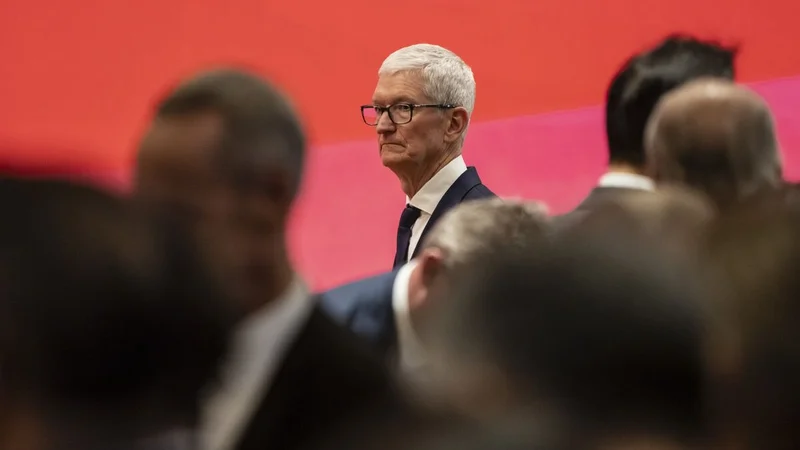
Image: Bloomberg AI
Main Takeaway
Apple trims China App Store cut to 25% after state-media attack and regulatory talks, while CEO Tim Cook tours Chengdu and Beijing praising local AI and.
Jump to Key PointsSummary
Why is Apple suddenly cutting its China App Store commission?
Apple slashed its mainland China App Store commission from 30% to 25% on March 15, an immediate 17% reduction that drops an estimated $1.2-1.5 billion in annual revenue straight to developers. The move came after direct discussions with Chinese regulators, according to Apple's own developer site, and was framed by state media as a victory for government pressure. The cut applies to both iOS and iPadOS apps, marking the first time Apple has offered region-specific pricing anywhere in the world.
How did Beijing ramp up pressure on Apple?
China's state-run People's Daily published a pointed editorial on March 17 calling Apple's policies "monopolistic" and demanding further concessions beyond the commission cut. The timing was deliberate: the editorial dropped just two days after Apple announced the fee reduction, signaling regulators aren't satisfied. China's message is clear — they now view Apple's entire payment and app distribution model as fair game, shifting the fight from revenue splits to fundamental control over how apps reach Chinese consumers.
What exactly did Tim Cook say during his China charm offensive?
Speaking at the China Development Forum in Beijing on March 22, Cook praised Chinese developers as "excellent" and quoted a Chinese proverb: "a single tree does not make a forest... together, I believe we can plant that forest." He specifically endorsed Hangzhou-based AI startup DeepSeek's models as "excellent" while highlighting Apple's shared goals with China on green development and carbon neutrality. The CEO also toured an Apple Store in Chengdu on March 18 for the company's 50th anniversary celebration, a carefully timed appearance meant to show commitment to local consumers.
Why is Apple Intelligence stuck in regulatory limbo in China?
Apple Intelligence, the company's flagship AI features, remains unavailable in mainland China because Apple hasn't secured regulatory approval from Beijing's cyberspace authorities. Cook's praise for DeepSeek appears calculated — by publicly supporting a local AI partner, Apple is signaling it wants to work within China's data localization and censorship requirements rather than fight them. The Shanghai developer conference this week is expected to showcase how Apple plans to localize its AI offerings, potentially through partnerships with domestic firms like DeepSeek or Baidu.
What does this mean for Apple's China revenue strategy?
China represents roughly 18% of Apple's total revenue, but iPhone sales have declined 6-8% year-over-year as domestic brands like Huawei and Xiaomi gain ground. The App Store commission cut removes a key competitive disadvantage for Chinese developers who increasingly favor local platforms like Tencent's MyApp and Huawei's AppGallery. While the 5% revenue hit is manageable, the precedent is dangerous — if other countries demand similar treatment, Apple's global services margins could face systematic erosion.
Which other tech giants are watching this showdown?
Google, Meta, and Microsoft are all quietly monitoring Apple's China concessions as they navigate their own regulatory pressures. Google's Play Store faces similar commission scrutiny in India and South Korea, while Meta's WhatsApp and Instagram are under antitrust investigation in Europe. Microsoft, which just launched its AI Copilot in China through a partnership with 21Vianet, has already agreed to data localization requirements. Apple's willingness to cut fees and partner locally sets a template others may be forced to follow.
How significant is the DeepSeek endorsement for Chinese AI?
Cook's public praise for DeepSeek marks a rare endorsement from a major Western tech CEO for a Chinese AI startup. DeepSeek, based in Hangzhou, has developed large language models optimized for Chinese language tasks and local regulatory compliance. The endorsement could accelerate DeepSeek's partnerships with other Western firms seeking China entry, while giving Apple a potential local AI partner to satisfy regulators who view Apple Intelligence's cloud processing as a data sovereignty risk.
What's the broader pattern in US-China tech relations?
Apple's concessions fit a broader pattern of US tech giants increasingly complying with Chinese regulatory demands to maintain market access. From Microsoft's data localization partnerships to Tesla's Shanghai Gigafactory, companies are finding that China's market is too large to ignore but too regulated to enter on Western terms. The Apple case shows Beijing's strategy: use state media pressure, regulatory threats, and market access as leverage to extract concessions that benefit domestic competitors and align with national technology priorities.
Key Points
Apple cut China App Store commission to 25% (17% reduction) after direct regulatory pressure, first region-specific pricing globally
China's People's Daily called Apple's policies "monopolistic" and demanded further concessions beyond revenue sharing
Tim Cook publicly endorsed Chinese AI startup DeepSeek while Apple Intelligence remains blocked pending regulatory approval
China represents 18% of Apple's revenue but iPhone sales declining 6-8% year-over-year as domestic brands gain market share
The commission cut sets dangerous precedent for Apple's global services margins if other countries demand similar treatment
Questions Answered
Apple reduced the commission from 30% to 25% after direct discussions with Chinese regulators, following state media criticism of "monopolistic" policies. This marks the first region-specific pricing adjustment Apple has made globally.
Cook praised Chinese developers as "excellent," quoted a Chinese proverb about cooperation, and specifically endorsed AI startup DeepSeek's models. He emphasized shared goals on green development and carbon neutrality with China.
Apple Intelligence remains unavailable in mainland China because Apple hasn't secured regulatory approval from Beijing's cyberspace authorities, who likely have concerns about data processing and localization requirements.
The 5 percentage point reduction is estimated to cost Apple $1.2-1.5 billion annually in China, though this represents a manageable portion of Apple's total services revenue.
Google, Meta, and Microsoft are watching closely as they face similar regulatory pressures. The Apple case shows how Western tech firms may need to make concessions to maintain access to China's market.
Chinese developers gain an immediate 17% revenue increase on App Store sales, removing a competitive disadvantage they faced compared to local platforms like Tencent's MyApp and Huawei's AppGallery.
Source Reliability
71% of sources are trusted · Avg reliability: 74
Go deeper with Organic Intel
Simple AI systems for your life, work, and business. Each one includes copyable prompts, guides, and downloadable resources.
Explore Systems