NASA Sidelines Boeing SLS for SpaceX Starship in Lunar Orbit Push
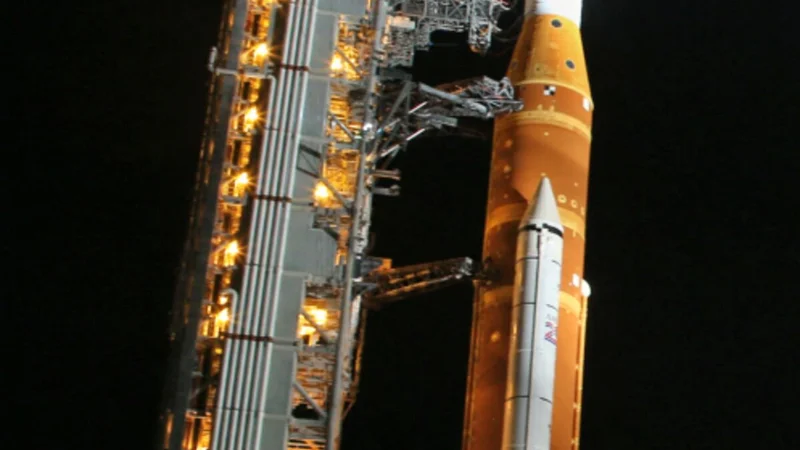
Image: Bloomberg AI
Main Takeaway
NASA is quietly rewriting its Artemis playbook, shifting the critical lunar-orbit insertion job from Boeing’s troubled SLS to SpaceX’s Starship, sources.
Jump to Key PointsSummary
What exactly is NASA changing?
NASA is revising the Artemis lunar-transport architecture so that SpaceX’s Starship, not Boeing’s Space Launch System, will carry astronauts from Earth orbit into lunar orbit, according to multiple Bloomberg sources. The change keeps SLS alive—each Orion crew capsule will still ride an SLS booster off Earth—but once in low-Earth orbit the crew would transfer to Starship for the translunar injection burn, a role previously assigned to an SLS upper stage. Officials stressed to Bloomberg that no final decision has been made and a March 24 meeting with Boeing, SpaceX and Blue Origin is scheduled to iron out details.
Why is Boeing being demoted?
Cost and schedule overruns, plain and simple. NASA’s inspector general pegs each SLS/Orion launch at roughly $4 billion, and the rocket has yet to fly more than once a year. Meanwhile, Starship has chalked up ten orbital test flights since early 2024 and is on track for cargo missions to the Moon as early as 2028. NASA leadership reportedly sees Starship as the only vehicle that can hit the newly accelerated cadence—annual Moon landings starting after Artemis V in 2029—without blowing the budget.
How far does this go?
The shift is surgical, not total. SLS remains the ride to orbit for Orion through at least Artemis V, per NASA Administrator Isaacman’s statement to Bloomberg. After that, SLS could still fly cargo or logistics missions, but its headline job—pushing humans toward the Moon—would be ceded to Starship. One source described the change as “evolutionary, not revolutionary,” noting that SLS engineers will be reassigned to propulsion upgrades rather than laid off.
What does this mean for SpaceX?
Winning the lunar-orbit role vaults Starship from a test vehicle to the backbone of U.S. deep-space exploration. The contract modification could be worth $5–7 billion over the next decade, according to aerospace analysts cited by Bloomberg. More importantly, it gives SpaceX operational data on high-energy cryogenic refueling in orbit—experience no other company has—cementing its lead in the race to Mars. Elon Musk tweeted that the new mission profile “aligns perfectly” with the company’s 2028 lunar-cargo timeline.
Who else feels the fallout?
Boeing’s space division faces a credibility crunch just as it fights separate safety probes on the Starliner capsule. Shares slipped 3.2% on the Bloomberg report. Blue Origin, which is developing its own lunar lander, gains negotiating leverage; NASA may need Blue’s New Glenn rocket as a backup if Starship hits snags. Lockheed Martin, prime contractor for Orion, could see extended production runs since the capsule is still required for early Artemis flights. European suppliers who build Orion’s service module may need to retool for a Starship docking interface.
What happens next?
NASA will brief Congress within weeks, and any formal contract amendment must survive a Government Accountability Office review. Industry lobbyists expect Boeing to argue that dual redundancy—keeping SLS in the critical path—reduces risk. Meanwhile, SpaceX is racing to demonstrate orbital refueling at scale before the Artemis III mission in 2027. If that demo fails, NASA could revert to the original plan. For now, the message from Houston is clear: the cheapest rocket that works gets the glory.
Key Points
NASA is quietly shifting the translunar injection duty from Boeing’s SLS to SpaceX’s Starship, according to Bloomberg sources.
Each SLS launch costs ~$4 billion and flies once a year; Starship has flown ten times since 2024 and promises annual cadence.
SLS remains the booster for Orion through Artemis V, but Starship will take astronauts from Earth orbit to lunar orbit thereafter.
Boeing faces a credibility hit and 3% stock drop; SpaceX could gain $5–7 billion in additional contract value.
A final decision hinges on a March 24 industry meeting and SpaceX’s upcoming orbital refueling demo.
Questions Answered
No. SLS will still launch Orion crews to Earth orbit for at least Artemis III, IV and V. After that, its role is under review.
NASA wants to keep Orion as the crew capsule for now, and Starship cannot yet launch humans directly from Earth. The hybrid approach buys time.
If approved, the revised plan would debut on Artemis III, currently targeted for 2027.
SpaceX must first prove it can refuel Starship in orbit—something no one has done at this scale—and do so with cryogenic propellants.
Boeing declined to comment on the record, but insiders told Bloomberg the company will lobby Congress to preserve SLS missions for redundancy.
Source Reliability
50% of sources are trusted · Avg reliability: 76
Go deeper with Organic Intel
Simple AI systems for your life, work, and business. Each one includes copyable prompts, guides, and downloadable resources.
Explore Systems