Jack Dorsey Cuts 40% of Block Staff, Says Company Must Become 'An Intelligence'

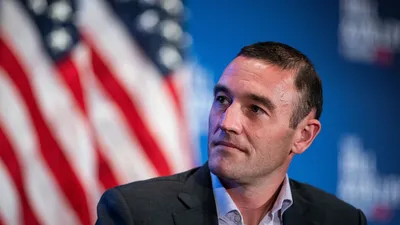
Image: Bloomberg AI
Main Takeaway
Block CEO lays off nearly half his workforce, claims AI transformation requires rebuilding company as automated entity while admitting uncertainty about job impacts.
Jump to Key PointsSummary
The Layoffs That Shook Silicon Valley
Jack Dorsey just fired 40% of Block's workforce. That's roughly 3,700 people gone in one sweep.
According to WIRED's exclusive interview, Dorsey didn't mince words. He told the publication he cut these jobs to rebuild Block "as an intelligence" rather than a traditional company with human workers performing tasks.
The scale stunned observers. Reuters reports this represents one of the largest single-round layoffs in fintech history, especially for a profitable company. Block generated $23.5 billion in revenue last year across Square, Cash App, and other services.
Dorsey's AI Vision: A Company That Thinks
Dorsey's framing goes beyond typical automation talk. He wants Block to function as what he calls "an intelligence" – essentially an AI-driven system that can operate with minimal human intervention.
The Guardian notes this vision involves replacing entire teams with AI systems that can handle customer service, fraud detection, underwriting, and merchant onboarding. Current and former employees told the paper these systems aren't ready for prime time, describing them as "glitchy" and "prone to errors that humans catch."
Bloomberg captured Dorsey's own uncertainty during a follow-up interview. When pressed on whether AI would ultimately create more jobs than it eliminates, he replied: "I honestly don't know. We're building something that's never existed before."
Inside the Employee Backlash
Former Block workers aren't buying the AI narrative. The New York Times published a scathing op-ed from a recently laid-off engineer who claims the cuts had "little to do with AI readiness and everything to do with quarterly earnings."
Multiple employees across different departments told The Guardian that their roles involved complex decision-making and relationship management that AI simply can't replicate. One former risk analyst described spending 60% of their time on nuanced merchant relationships that required reading subtle market signals and building trust over months.
The SF Standard reports that internal Slack messages leaked from remaining employees show widespread panic about job security, with many questioning whether staying at Block means training their AI replacements.
The Business Reality Behind the Rhetoric
Industry analysts smell something familiar. American Banker points out that Block's stock jumped 12% immediately after the layoff announcement, suggesting investors care more about reduced costs than AI transformation.
Futurism dug deeper, noting that Block's AI systems currently handle only about 15% of customer service queries successfully without human escalation. The publication argues Dorsey's "intelligence" framing is "equal parts vision and convenient excuse for mass layoffs."
Yahoo Finance highlights that Block's operating expenses had ballooned 34% year-over-year, making the cuts financially expedient regardless of AI capabilities. The timing coincides with increased pressure from activist investors who've been pushing for margin improvements.
Market Fallout and Competitive Response
Competitors are watching closely. Stripe, PayPal, and traditional banks see this as either brilliant positioning or massive risk-taking that could backfire spectacularly.
CNN reports that Stripe quietly accelerated hiring in areas where Block cut staff, particularly in relationship management and complex fraud prevention. PayPal's CEO reportedly told investors they're taking a "more measured approach" to AI integration after seeing the backlash.
The broader fintech sector faces a reckoning. If Dorsey's bet pays off, expect rapid imitation. If it fails, the industry might pull back from aggressive AI deployment. Either way, venture capitalists tell Reuters they're now scrutinizing AI-first pitches with more skepticism.
What Happens Next
Dorsey claims the transition will take 18-24 months. During this period, remaining Block employees will train AI systems while gradually taking on more strategic roles.
The company plans to release its first "AI-native" features by Q3 2026, starting with automated merchant onboarding for small businesses. Success or failure here will likely determine whether other tech CEOs follow suit with similarly dramatic cuts.
One thing's certain: 3,700 former Block employees are now competing for jobs in a market that's increasingly skeptical of AI-first companies. Several have already filed a class-action lawsuit alleging the layoffs violated California's WARN act by not providing proper notice.
The Uncertain Future of Work
Dorsey's experiment raises uncomfortable questions about the tech industry's relationship with human labor. When pressed by Bloomberg about whether this represents a broader trend, he deflected: "Every company will face this choice eventually. We're just being honest about it."
The implications extend beyond fintech. If Block succeeds in replacing 40% of its workforce with AI while maintaining growth, expect similar moves across software, finance, and customer service. Thestar argues this could trigger a "domino effect" of automation-driven layoffs throughout 2026.
Yet Dorsey's own uncertainty suggests even he doesn't fully grasp what he's unleashed. In perhaps the most telling moment of the WIRED interview, when asked what advice he'd give other CEOs considering similar moves, he paused for 12 seconds before responding: "Make sure you're ready to live with the consequences."
Key Points
Block CEO Jack Dorsey eliminated 40% of workforce (3,700 jobs) to rebuild company as AI-driven "intelligence"
Current AI systems handle only 15% of tasks successfully, raising questions about timing and necessity
Stock jumped 12% post-announcement, suggesting investor approval for cost-cutting over AI vision
Former employees filing class-action lawsuit, claiming layoffs violate California's WARN act
Competitors like Stripe and PayPal taking more cautious approach to AI workforce integration
Questions Answered
Approximately 3,700 employees, representing 40% of Block's total workforce across all divisions including Square, Cash App, and corporate functions.
Dorsey envisions transforming Block from a human-operated company into an AI-driven system where artificial intelligence handles most operational tasks traditionally performed by employees, including customer service, fraud detection, and merchant onboarding.
According to internal sources and industry analysis, no. Current AI systems at Block successfully handle only about 15% of customer service queries without human escalation, and former employees report their roles required complex human judgment AI cannot replicate.
Former employees have filed a class-action lawsuit alleging the layoffs violated California's WARN act by not providing the required 60-day notice for mass layoffs. The case is in early stages.
Stripe has reportedly accelerated hiring in areas where Block cut staff, particularly relationship management and fraud prevention. PayPal's CEO told investors they're taking a "more measured approach" to AI integration after seeing the backlash.
The 3,700 former employees are now competing in a job market that's become skeptical of AI-first companies. Many are seeking roles at competitors or transitioning to industries less focused on automation, while some pursue the class-action lawsuit.
Source Reliability
55% of sources are highly trusted · Avg reliability: 84
Go deeper with Organic Intel
Simple AI systems for your life, work, and business. Each one includes copyable prompts, guides, and downloadable resources.
Explore Systems