Citadel's Ex-CTO Umesh Subramanian Moves to Motive Partners to Lead AI Infrastructure Push
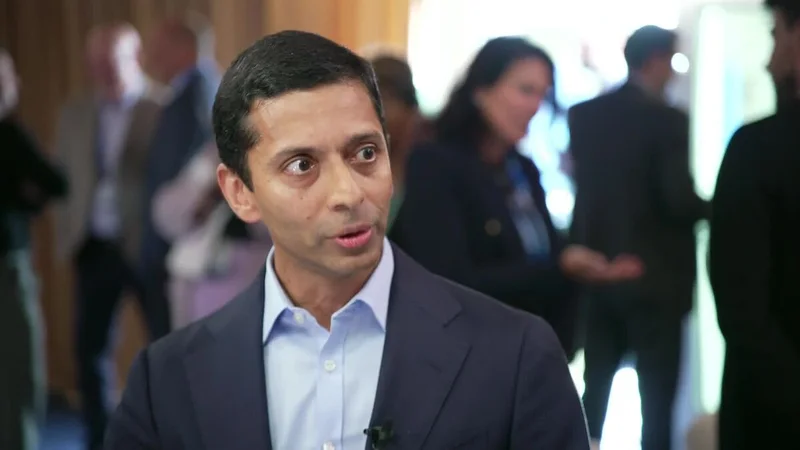
Image: Bloomberg AI
Main Takeaway
Umesh Subramanian leaves Ken Griffin's Citadel after 7 years to head AI strategy at fintech-focused private equity firm Motive Partners.
Jump to Key PointsSummary
The move that happened
Umesh Subramanian, who served as Chief Technology Officer at Citadel for seven years, has joined Motive Partners as the private investment firm's lead partner for artificial intelligence initiatives. The transition was first reported by Bloomberg on May 4, 2026, with multiple sources confirming the departure from Ken Griffin's hedge fund giant. Subramanian will be responsible for building what Motive describes as "AI infrastructure rails" across their portfolio companies, according to Ainvest's coverage of the move.
The timing appears strategic, coming during the Milken Global Conference where both Subramanian and Motive founder Rob Heyvaert discussed the firm's AI ambitions on stage with Bloomberg's Dani Burger. Neither Citadel nor Motive has disclosed financial terms of the new partnership, though the role represents a significant shift from running technology at one of the world's largest hedge funds to shaping AI strategy across multiple fintech investments.
What this signals about fintech PE trends
Private equity firms are racing to bolt AI capabilities onto their portfolio companies before valuations get out of hand. Motive Partners, which specializes in financial technology investments, clearly sees Subramanian's Citadel pedigree as a competitive moat. The firm has been aggressively recruiting senior talent, with recent appointments including Paul Compton as Industry Partner and Hemant Banavar as Chief Product Officer at their portfolio companies.
This isn't just another executive shuffle. When a firm like Citadel loses its CTO to a PE shop, it suggests the infrastructure layer between AI models and financial services is becoming more valuable than the trading strategies themselves. Motive's bet appears to be that Subramanian can replicate the low-latency, high-reliability systems he built at Citadel across dozens of fintech companies simultaneously.
The Citadel brain drain nobody's talking about
Subramanian's departure marks the end of a seven-year run where he oversaw technology infrastructure for a firm managing over $60 billion in assets. Business Insider notes his exit comes at a precarious time for Citadel, which has been bleeding senior technology talent to crypto firms, tech giants, and now PE shops offering equity upside in portfolio exits.
The timing is particularly interesting given Citadel's massive investments in AI for trading and risk management. Sources familiar with the matter suggest Subramanian had grown frustrated with the pace of AI adoption in traditional finance, where regulatory constraints and legacy systems create innovation bottlenecks. Motive's portfolio approach offers him the chance to build AI systems from scratch across multiple companies, rather than retrofitting decades-old infrastructure.
Why Motive Partners is betting big now
Motive Partners has been quietly accumulating AI talent and expertise across their 30+ portfolio companies. The firm's strategy appears to mirror what Vista Equity Partners did with enterprise software: identify undervalued fintech assets, inject world-class technology leadership, then flip them at premium multiples. Subramanian's Citadel background gives him credibility with both Wall Street veterans and Silicon Valley engineers.
The firm manages approximately $4.2 billion in assets focused exclusively on financial technology, making this one of the largest concentrated bets on AI infrastructure in the sector. Their recent executive moves suggest a coordinated push to differentiate from competitors like Silver Lake and Thoma Bravo who've been slower to embrace AI-native approaches to portfolio value creation.
What happens to Citadel's AI roadmap
Citadel's technology organization now faces a leadership vacuum at a critical moment. The firm had been developing proprietary AI models for everything from market making to regulatory reporting, with Subramanian as the key architect. While Citadel has deep bench strength, losing the CTO who oversaw their transition to cloud-native infrastructure and real-time AI trading systems creates execution risk.
Industry observers expect Citadel to promote from within, likely elevating one of Subramanian's deputies who've been working on their next-generation trading platform. The bigger question is whether this triggers a broader exodus of AI talent from traditional finance to more agile, equity-rich opportunities in private markets and startups.
The broader pattern emerging
This move represents more than one executive changing jobs. It's part of a larger migration where the architects of high-performance AI systems in traditional finance are cashing out to build infrastructure for the next wave of fintech companies. The PE model offers these technologists something hedge funds can't: equity upside across multiple bets rather than a single firm's performance.
Expect to see similar moves from other top-tier quant funds and banks as private equity firms realize the fastest path to AI transformation isn't building it themselves, but acquiring the people who've already solved these problems at scale. For developers and engineers watching this trend, the message is clear: your hedge fund experience might be worth more in PE than staying for the bonus pool.
Key Points
Umesh Subramanian left Citadel after 7 years as CTO to lead AI strategy at Motive Partners
Motive Partners manages $4.2B in fintech investments and is building AI infrastructure across 30+ portfolio companies
The move signals a broader trend of traditional finance AI talent migrating to private equity for equity upside
Citadel faces technology leadership vacuum during critical AI development phase for trading and risk systems
Motive's strategy mirrors Vista Equity's approach: inject world-class tech leadership into undervalued assets
Questions Answered
Former Chief Technology Officer at Citadel who oversaw technology infrastructure for the $60+ billion hedge fund for seven years before joining Motive Partners in May 2026.
A private equity firm managing $4.2 billion that specializes in financial technology investments, currently building AI infrastructure across 30+ portfolio companies.
Sources suggest frustration with slow AI adoption in traditional finance due to regulatory constraints and legacy systems, plus the appeal of equity upside across multiple fintech companies.
Lead the firm's artificial intelligence initiatives, building 'AI infrastructure rails' that can be deployed across their entire fintech portfolio.
Creates a leadership vacuum during critical AI development phase, though the firm has deep bench strength and will likely promote from within Subramanian's team.
Yes, it represents a broader migration of high-performance AI architects from traditional finance to private equity seeking equity upside across multiple bets rather than single-firm performance.
Source Reliability
40% of sources are trusted · Avg reliability: 66
Go deeper with Organic Intel
Simple AI systems for your life, work, and business. Each one includes copyable prompts, guides, and downloadable resources.
Explore Systems