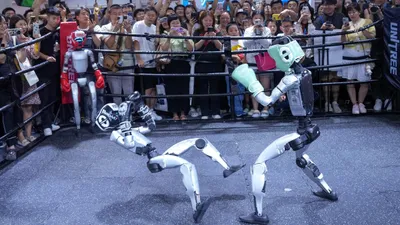
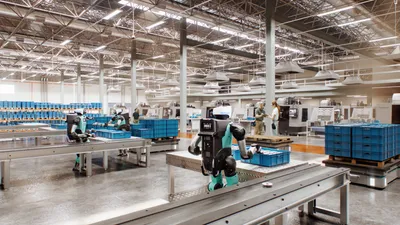
Chinese Humanoid Robot Shatters Human Half-Marathon Record in Beijing
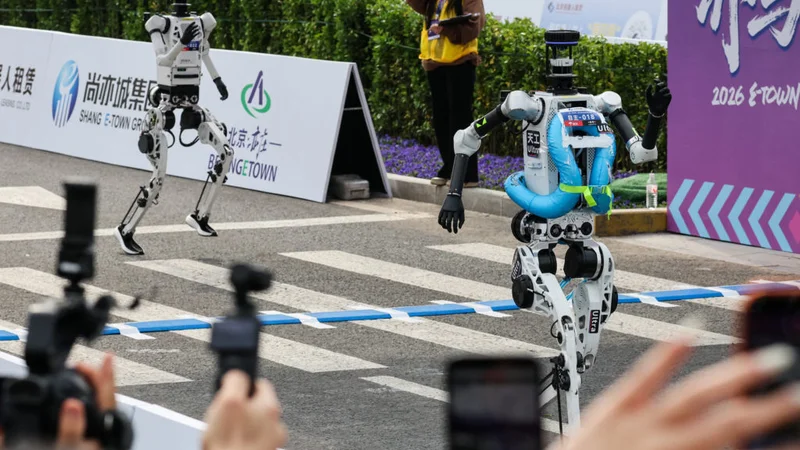
Image: Pbs
Main Takeaway
Honor's 'Lightning' robot ran 21.1 km in 50:26, beating human world record by 6+ minutes in China's robot marathon featuring 300 bots.
Jump to Key PointsSummary
What just happened in Beijing
A red humanoid robot named Lightning developed by Chinese smartphone maker Honor completed a 21.1-kilometer half-marathon in Beijing's Economic-Technological Development Area in 50 minutes and 26 seconds. This performance shattered the human world record of 57 minutes and 20 seconds held by Ugandan runner Jacob Kiplimo, according to World Athletics. The race featured over 300 robots from more than 100 teams, including international participants, with about 40% navigating autonomously while others were remotely controlled.
How far these machines have come
Last year's inaugural robot half-marathon was a disaster. Most robots couldn't finish, and the champion took 2 hours 40 minutes, more than double the human record. This year, several robot frontrunners were noticeably faster than professional human athletes. The transformation from mechanical failures to record-breaking performance happened in just 12 months.
The technical leap behind the speed
While specific technical details remain limited, the dramatic improvement suggests advances in battery efficiency, motor control systems, and autonomous navigation. The robots demonstrated both speed and endurance capabilities that were theoretical just a year ago. However, one designer noted that "robots today have the body of Mike Tyson but are still missing a brain like Stephen Hawking," hinting that intelligence might be the next frontier.
Geopolitical implications of robot athletics
China's technological showcase comes amid intensifying US-China competition in robotics and AI. The event, staged in Beijing's E-Town tech hub, serves as a public demonstration of China's manufacturing capabilities and engineering prowess. With 100+ teams participating and international presence, the race positions China as a serious contender in the global robotics race.
What this means for human-robot competition
The symbolic defeat of human athletic records by machines raises questions about the future of sports. While this was technically a robot-only race, the performance gap suggests we're approaching a threshold where human athletic achievements may become secondary to machine capabilities. The event drew 12,000 human spectators who witnessed their mechanical successors in action.
Why the timing matters
The record comes as China accelerates its robotics push across manufacturing, logistics, and now public demonstrations. With Tesla's Optimus and other Western humanoid projects still in development, China's ability to field functional, record-breaking robots in public races gives it a perception advantage. The timing also coincides with broader US-China tech tensions around AI and semiconductor access.
What happens next
Expect more public demonstrations of robot capabilities as companies seek to prove real-world functionality beyond lab conditions. The leap from 2:40 to 50:26 in one year suggests exponential improvement curves may continue. However, questions remain about energy density, durability, and cost, factors that will determine whether these feats translate to commercial viability.
Key Points
Honor's Lightning robot ran 21.1km in 50:26, beating human world record by 6+ minutes
Over 300 robots from 100+ teams participated, with 40% navigating autonomously
Massive improvement from 2025 champion time of 2:40 to 2026 record of 50:26
Event staged in Beijing's E-Town tech hub amid US-China robotics competition
12,000 human spectators watched robots outperform human athletes
Questions Answered
Yes. Lightning completed the half-marathon in 50:26, beating the human world record of 57:20 set by Jacob Kiplimo. However, this was a robot-only race, not direct competition against humans.
Over 300 robots from more than 100 teams participated. While exact finish numbers aren't provided, sources note 'several' frontrunners were faster than humans and some robots malfunctioned near the finish.
Honor, a Chinese smartphone maker, developed the Lightning robot that set the record.
The 2025 champion took 2 hours 40 minutes. In 2026, Lightning completed the same distance in 50:26 — a 73% improvement in time.
About 40% navigated autonomously, while the remaining 60% were remotely controlled by human operators.
It demonstrates rapid advancement in robot mobility, battery life, and control systems, positioning China as a serious competitor in the global robotics race while showcasing practical applications beyond labs.
Source Reliability
64% of sources are highly trusted · Avg reliability: 81
Go deeper with Organic Intel
Simple AI systems for your life, work, and business. Each one includes copyable prompts, guides, and downloadable resources.
Explore Systems