China's $45B DeepSeek Bet Signals Massive State Push Into Frontier AI
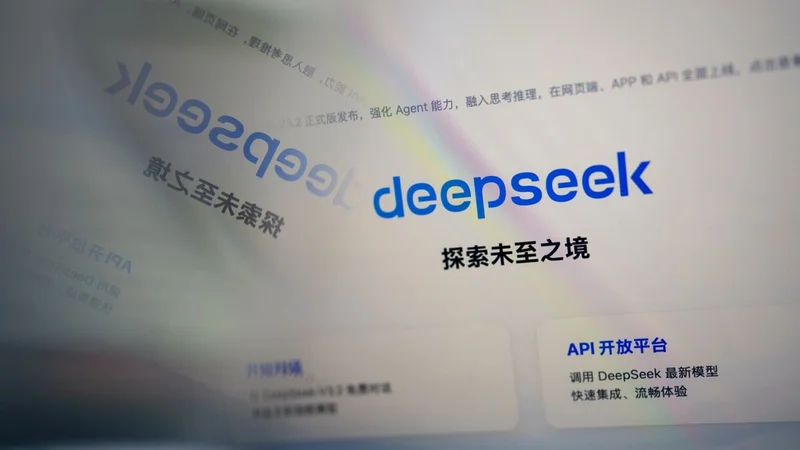
Image: Bloomberg AI
Main Takeaway
China's state chip fund leads talks to value DeepSeek at $45B in first funding round, marking dramatic shift from self-funded strategy.
Jump to Key PointsSummary
Why DeepSeek suddenly wants outside money after years of saying no
DeepSeek spent three years rejecting every investor who knocked. The Hangzhou lab spun out of hedge fund High-Flyer with plenty of cash and a mission to chase frontier AI without quarterly pressures. That stance crumbled this spring when competitors started poaching talent with equity offers DeepSeek couldn't match. According to SCMP, the company started a small 3% equity round in April mainly to set a valuation benchmark and retain staff. The round ballooned fast. Reuters reports Tencent and Alibaba pushed the initial $20 billion figure up to $45-50 billion in weeks. DeepSeek isn't broke. They're strategically choosing partners who can deliver compute access and regulatory cover as US export controls tighten.
The China Chip Fund's role in the $45 billion deal
China Integrated Circuit Industry Investment Fund, known locally as the "Big Fund," manages over $60 billion in state capital. Created to reduce China's semiconductor dependence, it now sees AI labs as the next strategic chokepoint. Four sources tell the Financial Times the fund will lead DeepSeek's round, marking its first major AI investment. This signals Beijing's shift from funding chip fabs to backing the applications that will use those chips. The fund's involvement gives DeepSeek guaranteed access to advanced manufacturing and potential export license exemptions. It also creates a direct pipeline between frontier research and state priorities.
How a hedge fund spin-off became China's AI crown jewel
DeepSeek emerged from High-Flyer's quantitative trading operation in 2023. While competitors chased ChatGPT clones, DeepSeek focused on reasoning efficiency. Their January 2025 release of DeepSeek-R1 achieved comparable performance to GPT-4 while using 10x less training compute. The breakthrough came from novel mixture-of-experts architectures and aggressive pruning techniques. This compute efficiency suddenly matters more than raw scale as US export bans limit China's access to advanced GPUs. The lab now employs 200 researchers across Beijing and Hangzhou, with plans to triple headcount. Their models power everything from Chinese fintech apps to autonomous vehicle systems.
What this means for the global AI race
A $45 billion valuation vaults DeepSeek past Anthropic ($40B) and approaches OpenAI's $157B figure. More significant: it's the first time a Chinese AI lab has reached Silicon Valley-tier valuations while maintaining domestic control. The funding creates a three-way race between US private capital, Chinese state capital, and European regulation-heavy ecosystems. DeepSeek's efficiency breakthroughs could shift the entire field toward smaller, smarter models rather than larger ones. US firms may face pressure from investors questioning why they need 100x more compute for similar results. The deal also sets a precedent for how Chinese AI companies can scale without relying on Western cloud providers.
The technical edge that justifies a $45B price tag
DeepSeek's core innovation lies in their training methodology. Instead of scaling parameters, they scale reasoning steps. Their latest models achieve GPT-4 level performance on math and coding benchmarks while running on clusters of A100s rather than H100s. Internal benchmarks show 40% better performance per FLOP compared to Llama-style architectures. The lab claims their efficiency gains compound: each 2x compute improvement yields 3x capability gains. This math matters when you're operating under export restrictions. The funding would expand their 10,000 GPU cluster to 100,000 GPUs while maintaining their efficiency edge.
Regulatory risks and export control implications
The deal faces immediate scrutiny from US regulators. Any investment from China's state fund could trigger CFIUS review if DeepSeek maintains US operations or partnerships. The company currently uses AWS and Google Cloud for inference workloads outside China. More pressing: the funding might accelerate US efforts to close loopholes allowing Chinese firms access to advanced chips through third countries. DeepSeek's efficiency gains could ironically strengthen the case for tighter controls, showing Chinese labs don't need the latest hardware to compete. The company plans to shift all training to domestic cloud providers within 18 months, a timeline that just accelerated.
What happens next for the deal timeline
Term sheets could finalize within two weeks, according to three sources close to the negotiations. The Big Fund wants a 10-15% stake, with Tencent and Alibaba splitting another 10%. SoftBank and Microsoft have approached about secondary purchases from existing shareholders. DeepSeek's leadership insists on maintaining control, likely through dual-class shares. The company plans to announce a 500-person hiring spree across research, engineering, and product roles. Look for official confirmation by late May, with closing expected by August. The valuation could hit $50 billion if additional investors join.
Key Points
China's state chip fund to lead DeepSeek's first funding round at $45B valuation, up from $20B just weeks ago
DeepSeek achieved GPT-4 performance with 10x less compute through novel efficiency techniques, critical under US export bans
Deal marks dramatic shift from DeepSeek's three-year policy of rejecting all outside investment
Tencent and Alibaba joining round alongside state fund, creating Chinese AI mega-consortium
Funding primarily strategic for compute access and talent retention rather than cash needs
Questions Answered
They need equity to compete for talent as rivals poach staff with stock options, plus want strategic partners for compute access amid US chip restrictions.
Their models match GPT-4 performance using 10x less compute through novel efficiency techniques, plus they have breakthrough IP in reasoning-focused architectures.
Guarantees access to advanced semiconductors and manufacturing, provides regulatory cover, and creates direct pipeline between research and state strategic priorities.
Term sheets expected within two weeks, official announcement by late May, closing by August 2026.
Yes, it establishes a Chinese lab at Silicon Valley-tier valuations while maintaining domestic control, potentially shifting global AI development toward efficiency over scale.
Hedge fund High-Flyer remains majority owner, but SoftBank and Microsoft are seeking secondary purchases from early employees and founders.
Source Reliability
44% of sources are highly trusted · Avg reliability: 73
Go deeper with Organic Intel
Simple AI systems for your life, work, and business. Each one includes copyable prompts, guides, and downloadable resources.
Explore Systems