Bureau Veritas CEO Hinda Gharbi Sees Resilience in a Complex World, Bets on AI and Climate Verification

Image: Group.bureauveritas
Main Takeaway
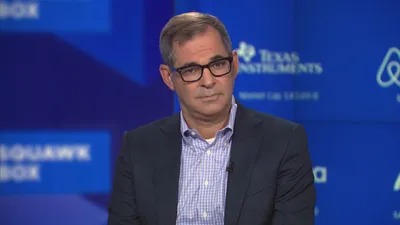
Bureau Veritas CEO Hinda Gharbi told Bloomberg the testing and inspection giant remains resilient despite geopolitical tensions, while steering the company toward certifying AI systems and climate projects.
Jump to Key PointsSummary
How the CEO defines the current business climate
Bureau Veritas is navigating a moment of profound global friction. In an exclusive interview with Bloomberg's Francine Lacqua from Paris, CEO Hinda Gharbi described the operating environment as "complex" but underscored that the company has demonstrated "resilience" despite ongoing tensions in the Middle East and a shifting macro backdrop. The group's Q1 2026 figures back that claim: organic revenue grew 4.5 percent to EUR 1,547.0 million, with Marine & Offshore surging 11.2 percent and Buildings & Infrastructure climbing 7.3 percent.
That growth comes even as currency headwinds shaved 5.2 percent off the top line, driven by the euro's appreciation against most currencies. Gharbi's diagnosis is that globalization hasn't disappeared, it's been reconfigured. Speaking at the 348th HEC Morning Talk in June, she argued that supply chains are not retreating but redirecting, creating fresh demand for testing, inspection, and certification services at every new node. The company's LEAP 28 strategy, built on portfolio diversification, people investment, and performance discipline, is the operational backbone of that resilience.
The pivot toward certifying artificial intelligence
Gharbi is pushing the nearly 200-year-old French group into a role few would have predicted: certifying the digital economy. At the HEC Morning Talk, she laid out a vision where Bureau Veritas becomes a key player in the AI world, not by building algorithms but by verifying them. The logic is straightforward: as AI penetrates safety-critical sectors like healthcare, energy, and transportation, independent validation becomes non-negotiable.
The company's existing footprint in functional safety and cybersecurity gives it a running start. Gharbi's engineering background, a degree in Electrical Engineering from the École Nationale Supérieure d'Ingénieurs Électriciens de Grenoble and a Master of Science in signal processing, plus 26 years at Schlumberger in operational roles, informs a technical approach to this expansion. The move aligns with the broader LEAP 28 framework, which has already seen more than 20 strategic acquisitions reshape the portfolio. Certifying AI is not a side bet; it's a logical extension of the group's core mission of trust and safety.
Climate resilience verification as a growth engine
Climate services are the other half of Gharbi's growth thesis. According to reports on her strategic direction, Bureau Veritas is positioning itself as a key verifier of climate resilience for a €6 billion inspection empire. The opportunity sits at the intersection of regulation and corporate demand: as companies face mandatory climate disclosures and net-zero pledges, independent verification of those claims transforms from a nice-to-have into a compliance requirement.
Marine & Offshore's 11.2 percent organic growth in Q1 2026 hints at how sustainability tailwinds already benefit the business, with shipowners needing emissions verification and new fuel compliance services. Gharbi's operational playbook, forged at Schlumberger managing global and regional operations, emphasizes turning regulatory shifts into revenue streams. The company isn't just talking about sustainability, it's building the auditing infrastructure that other companies need to prove theirs.
The leadership timeline that shaped the strategy
Gharbi's path to the CEO seat was a structured succession. She joined Bureau Veritas as Chief Operating Officer in May 2022, was named Deputy CEO in January 2023, and took the top job in June 2023, succeeding Didier Michaud-Daniel whose term was renewed through the 2023 Annual General Meeting specifically to bridge the handover. The Board of Directors ran a rigorous selection process led by the Nomination and Compensation Committee, signaling that the LEAP 28 transformation was not a sudden pivot but a planned evolution.
Her 26 years at Schlumberger, a global technology leader in the energy sector, gave her general management experience across core business activities at both regional and global levels. That operational depth matters because Bureau Veritas is a decentralized giant: the Executive Committee supervises worldwide operations aligned to a market-centric structure. Gharbi's mandate from day one has been to execute a strategy that is simultaneously defensive, holding ground in traditional sectors like Marine and Industry, and offensive, pushing into digital and sustainability verification.
What the Q1 2026 numbers reveal about the transition
The Q1 2026 results expose a company in the middle of a portfolio transition. Organic growth was broad but uneven: Marine & Offshore at 11.2 percent and Buildings & Infrastructure at 7.3 percent are the clear leaders. Consumer Products Services grew a moderate 4.3 percent, Certification 2.3 percent, Agri-Food & Commodities 2.1 percent, while Industry limped at 0.7 percent. The company pointed to an evolving macro-environment and a transitioning portfolio mix as the reason for updating its 2026 outlook.
Bolt-on acquisitions contributed 1.8 percent to the scope effect, net of a 1.9 percent drag from disposals, a nearly neutral outcome that reflects the active portfolio reshaping Gharbi has led. The negative currency impact of 5.2 percent underscores the geographic breadth of the business and its exposure to a strong euro. For investors, the signal is that organic growth engines are firing, but the transition toward higher-margin digital and sustainability services is still a work in progress, not a completed pivot.
What happens next for the testing giant
Bureau Veritas enters the second half of 2026 with an updated outlook that acknowledges the macro complexity Gharbi described. The company's resilience narrative has been tested by currency headwinds and an uneven growth picture across divisions, but the strategic direction is locked in. The push into AI certification and climate verification represents a bet that trust will be the scarcest commodity in the next decade of the digital and energy transitions.
Gharbi's HEC remarks suggest the company sees no contradiction between its 200-year heritage and a digital future. The core competency, independent verification, is the same; the assets being verified are shifting from physical ships and buildings to algorithms and carbon credits. The question for the next 12 months is whether the organic growth engines in Marine and Buildings can compensate for the slower segments while the newer verification services scale.
Key Points
Bureau Veritas CEO Hinda Gharbi says the company is resilient despite geopolitical tensions and a complex macro environment.
Q1 2026 organic revenue grew 4.5 percent to EUR 1.547 billion, with Marine & Offshore surging 11.2 percent.
Gharbi is repositioning the 200-year-old firm to certify AI systems and verify corporate climate resilience claims.
More than 20 strategic acquisitions under the LEAP 28 strategy have reshaped the company's portfolio.
Gharbi argues globalization is not ending but reconfiguring, creating new demand for testing and certification services.
Questions Answered
Hinda Gharbi became CEO of Bureau Veritas in June 2023 after serving as Deputy CEO and Chief Operating Officer. She holds an electrical engineering degree and a master's in signal processing, and spent 26 years at Schlumberger in global operational leadership roles before joining Bureau Veritas.
Hinda Gharbi told Bloomberg the business environment is complex but Bureau Veritas has shown resilience, particularly despite tensions in the Middle East. She also said at an HEC event that globalization has been reconfigured rather than ended, redirecting global supply chains and creating new demand for verification services.
Bureau Veritas reported Q1 2026 revenue of EUR 1.547 billion, representing 4.5 percent organic growth. Marine and Offshore grew 11.2 percent and Buildings and Infrastructure grew 7.3 percent, though currency impacts reduced overall revenue by 5.2 percent due to euro appreciation.
Yes, CEO Hinda Gharbi is steering Bureau Veritas toward certifying AI systems and software. At an HEC Morning Talk, she outlined plans to turn the company into a key player in the digital economy by verifying AI systems, building on its existing expertise in cybersecurity and safety-critical testing.
LEAP 28 is Bureau Veritas's strategic transformation framework built on three pillars: Portfolio, People, and Performance. Under this strategy, the company has executed more than 20 acquisitions to diversify its business, strengthened its workforce model, and delivered sector-leading financial results.
Source Reliability
50% of sources are low credibility · Avg reliability: 47
Go deeper with Organic Intel
Simple AI systems for your life, work, and business. Each one includes copyable prompts, guides, and downloadable resources.
Explore Systems