Apple's WWDC 2026 Promises Long-Delayed Siri Overhaul and iOS 27 AI Push
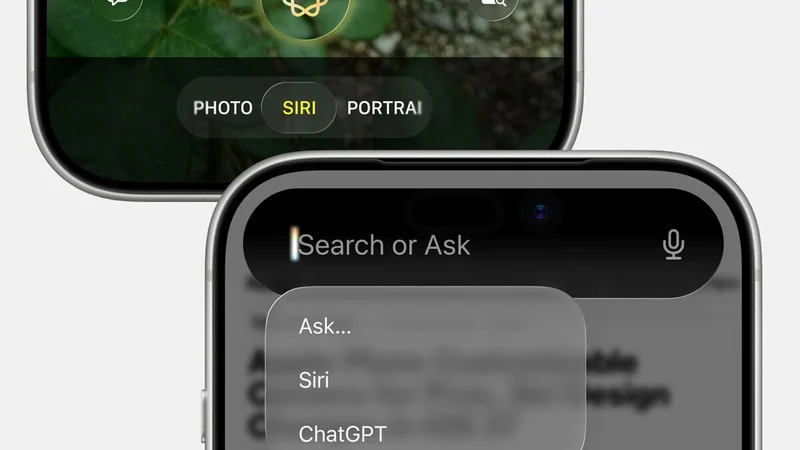
Image: Bloomberg AI
Main Takeaway
Apple will unveil iOS 27 and a Gemini-powered Siri revamp at WWDC 2026, attempting to close a two-year AI gap with rivals.
Jump to Key PointsSummary
Why this Siri overhaul took so long
Apple first promised a smarter Siri at WWDC 2024, embedding it in the Apple Intelligence marketing push for iOS 18. The underlying architecture failed to deliver, forcing Apple to shelve the feature entirely. Two years later, the company is still chasing that same promise. According to MacRumors, the original Siri with Apple Intelligence never shipped because Apple's backend couldn't support the conversational, context-aware assistant it had demoed on stage.
The delay has cost Apple dearly in the AI race. While Google pushed Gemini deeper into Android and OpenAI expanded ChatGPT's reach, Apple's assistant remained stuck in 2014-era patterns. Bloomberg reports that Monday's keynote represents Apple's attempt at an "artificial intelligence turnaround," a phrase that underscores how far behind the company has fallen. The iPhone maker now faces the unusual position of playing catch-up in a category it helped popularize.
What the new Siri actually does
The revamped Siri expected at WWDC 2026 will reportedly shift from command-based responses to a chatbot-style conversational interface. According to Mashable and Sea.mashable, the Gemini-powered AI Siri should make its grand debut alongside iOS 27, enabling back-and-forth dialogue, better context retention across sessions, and more natural language understanding. This marks the most significant overhaul in Siri's 15-year history, per PCMag.
Apple's partnership with Google on Gemini represents a strategic reversal. Rather than building everything in-house, Apple is licensing foundational models while wrapping them in its privacy-focused, on-device processing layer. TWiT's MacBreak Weekly panel notes this hybrid approach, combining cloud-based Gemini intelligence with Apple's traditional emphasis on local computation, directly challenges solutions from Google, OpenAI, and Anthropic. The question is whether Apple can maintain its privacy marketing while leaning this heavily on Google's infrastructure.
iOS 27 beyond Siri
WWDC 2026 will bring the usual annual operating system updates across Apple's product line. AppleInsider expects iOS 27, iPadOS 27, macOS 27, and watchOS 27 to debut, with developer betas available immediately after the keynote. Tom's Guide anticipates Apple Intelligence features taking center stage beyond just Siri, suggesting broader AI integration into Photos, Messages, and system-wide writing tools that were teased in 2024 but never fully delivered.
The software updates arrive at a transitional moment. Sea.mashable notes this will be the final WWDC of the Tim Cook era, adding symbolic weight to announcements that might otherwise feel routine. iOS 27 will ship with the iPhone 18 in September, giving Apple roughly three months to refine beta feedback before consumer release. The compressed timeline means features announced Monday need to be substantially complete, not aspirational demos.
Privacy as Apple's differentiator
Apple's marketing around iOS 27 will lean heavily into privacy, a familiar playbook as it enters the generative AI market later than competitors. TWiT's panel discussion highlights how Apple is positioning on-device AI processing as a counterweight to cloud-dependent rivals, even as its Gemini partnership requires data to leave the device for complex queries. This tension, between marketing privacy and delivering capable AI, will define how Apple messages its AI strategy.
The company has reportedly built automatic chat deletion features into the new Siri app, per PCMag, allowing users to erase conversation histories. This mirrors Apple's broader approach of giving users visible controls over data retention, a feature that resonates with consumers increasingly wary of AI data practices. Whether these controls meaningfully limit data exposure, or merely create the impression of control while Gemini processes queries, remains to be seen.
What success and failure look like
The stakes for Apple extend beyond product reception to investor confidence and competitive positioning. Bloomberg frames Monday as an attempted turnaround, implying the alternative, a continued AI stumble, would deepen concerns about Apple's innovation pipeline. Tom's Guide notes it felt like "Apple's AI took a year off in 2025," a charitable framing of what critics view as a multi-year retreat from the assistant space Apple pioneered.
Success means Siri finally becomes a genuine competitor to Google Assistant and ChatGPT, not merely adequate for setting timers and checking weather. Failure means another cycle of promises and delays, further cementing Apple's reputation as an AI laggard. The iPhone 18 hardware arriving in September will need software that justifies upgrade cycles in a saturated market. For developers at WWDC, the more immediate question is whether Apple's new AI frameworks offer genuine capability or another layer of abstraction over the same limited functionality.
How to watch and what comes next
WWDC 2026 runs June 8 through June 12 at Apple Park in California, with the keynote scheduled for Monday at 10 a.m. PT. TechCrunch AI reports the event will stream live via the Apple Developer app, Apple's website, and YouTube. For developers unable to attend in person, session videos and documentation typically release within hours of live presentations.
The real test begins after the keynote glow fades. iOS 27 developer beta will drop immediately, giving the first signal of whether promised features are functional or placeholder. Apple's track record on AI promises, specifically the 2024 Siri debacle, means skepticism is warranted until code ships. The September iPhone 18 launch remains the hard deadline for everything announced Monday to coalesce into a coherent consumer experience.
Key Points
Apple will unveil a Gemini-powered Siri overhaul at WWDC 2026 after a two-year delay.
iOS 27, iPadOS 27, macOS 27, and watchOS 27 will debut with developer betas available immediately.
The new Siri shifts from command-based responses to chatbot-style conversational AI.
Apple's Google partnership marks a strategic reversal from purely in-house AI development.
Privacy features like automatic chat deletion attempt to differentiate Apple from cloud-dependent rivals.
Questions Answered
Apple is expected to unveil a completely revamped Siri powered by Google's Gemini AI, shifting from command-based responses to conversational chatbot-style interactions. The overhaul represents the most significant change in Siri's 15-year history after Apple failed to deliver promised AI features in 2024.
Apple announced smarter Siri capabilities at WWDC 2024 for iOS 18, but the underlying architecture was not good enough to support the promised features. The company was forced to delay the upgrade, leaving Siri functionally stagnant while competitors advanced rapidly.
Apple is employing a hybrid approach that combines cloud-based Gemini intelligence with on-device processing for simpler queries. The company is adding automatic chat deletion features, though complex queries still require sending data to Google's servers, creating tension with Apple's privacy marketing.
iOS 27 will release alongside the iPhone 18 in September 2026, following the pattern of previous years. Developer beta versions will be available immediately after the WWDC 2026 keynote on June 8.
Multiple sources indicate WWDC 2026 will be Tim Cook's final developers conference as chief executive, adding symbolic significance to announcements that might otherwise seem routine for an annual software update cycle.
Source Reliability
61% of sources are trusted · Avg reliability: 76
Go deeper with Organic Intel
Simple AI systems for your life, work, and business. Each one includes copyable prompts, guides, and downloadable resources.
Explore Systems