Apple Adds Always-Listening AI to New Watches as Privacy and Wearable Competition Intensify
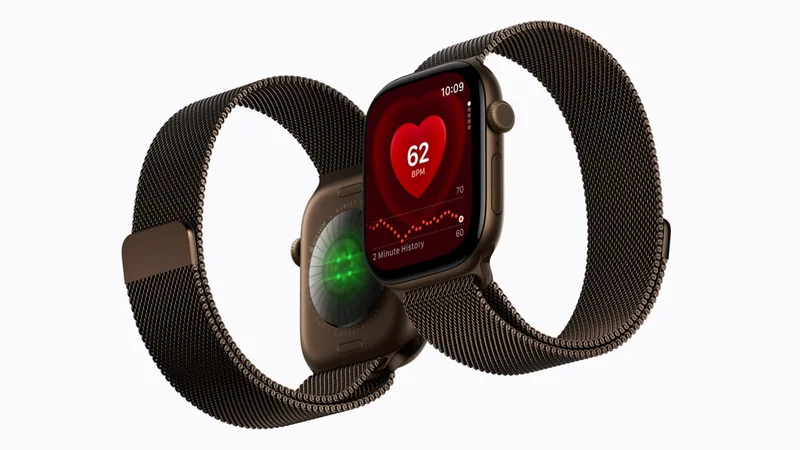
Image: Apple
Main Takeaway
Apple’s Watch Series 12 and Ultra 4 add AI tools that summarize conversations and process ambient audio, putting privacy safeguards at the center of wearable competition.
Jump to Key PointsSummary
Apple’s watch becomes an AI listener
Apple is putting ambient audio at the center of its next-generation wearable strategy. The Apple Watch Series 12 and Apple Watch Ultra 4 introduce Audio Intelligence tools that use microphones, Apple silicon and AI models to detect sounds, rewind recent speech and summarize conversations. Apple announced the watches on Sept. 9 alongside broader hardware and software updates.
The headline features are Siri Recap and Live Rewind. Siri Recap creates high-level notes and key points from conversations during the day, while Live Rewind lets users review recently spoken content. Apple’s support documentation says the features will enter beta later this year, beginning in English. Bloomberg described the move as Apple’s response to a growing class of AI wearables that make audio capture and immediate assistance central to the product.
What Audio Intelligence does
Audio Intelligence combines several functions rather than offering one general-purpose recorder. Sound Recognition identifies events such as sirens, alarms and doorbells, including when an iPhone isn’t nearby. Siri Recap focuses on summarizing ambient conversations, and Live Rewind processes recent speech so users can recover information they missed.
The features build on the watches’ new hardware. Apple says Series 12 and Ultra 4 use the S11 chip, microphones and an updated sensing system to run a mix of on-device and cloud-based AI models. The company also positions the watches around higher-frequency heart-rate measurements, fitness tools and longer battery life on Ultra 4. A redesigned Health app adds an Insights tab, personalized guidance, a readiness score and a Health Age calculation, extending Apple Intelligence beyond audio.
Privacy becomes the product test
Apple says the watches don’t store raw audio and that Audio Intelligence uses end-to-end encryption. The Verge reported that Apple says it can’t access users’ raw audio, while Ground described the privacy architecture as a central part of the announcement. Those safeguards address the narrow technical question of where recordings go, but they don’t settle the social question of when people nearby have effectively entered an AI-assisted conversation.
That distinction is driving the strongest criticism of the launch. TechCrunch framed the feature as a step toward normalizing technology that is always listening, while Business Insider described the ability to take notes from conversations as unsettling. The concern reaches beyond data retention: people speaking with a watch wearer might not know that speech is being processed, and users may change how they behave when a microphone is active throughout the day.
Apple enters a crowded wearable race
Apple’s move places its watch against a broader push to make AI available through devices worn on the body. Ambient audio gives wearables a persistent stream of context that phones access less naturally, allowing assistants to summarize, identify sounds and answer questions without requiring a user to reach for a screen. Bloomberg characterized Apple’s launch as an effort to compete in the expanding AI-wearables category.
The strategy also points beyond the watch. Fast Company linked the new listening capabilities to Apple’s longer-term interest in smart glasses, where cameras, microphones and hands-free assistants would make privacy design even more visible. Apple’s established health platform gives the company a large base for testing contextual AI, while the Series 12 and Ultra 4 provide a controlled setting for users to decide whether constant audio processing feels useful or intrusive.
Health and audio converge
Apple is packaging conversational AI alongside health interpretation, making the watch a broader personal data interface. The Health app’s readiness score and Health Age turn existing measurements into assessments, while Audio Intelligence turns surrounding speech and sounds into summaries or alerts. Together, those functions ask the watch to interpret both the wearer’s body and the wearer’s environment.
That combination raises the value of Apple’s hardware and software integration. The microphone, S11 chip, sensors, Health app and Apple Intelligence models work as one product system, rather than as separate accessories. It also raises the stakes for accuracy. A missed alarm is inconvenient, an incorrect health assessment can mislead, and a flawed conversation recap can distort what someone said. Apple’s beta rollout gives the company time to refine performance before wider availability.
What happens after the beta
The immediate next step is Apple’s English-language beta for Live Rewind and Siri Recap later this year. Adoption will depend on whether users find the summaries accurate, battery costs acceptable and privacy controls clear enough to use around other people. Apple’s claims about encryption and raw-audio handling will face practical scrutiny as the features reach everyday conversations rather than staged demonstrations.
The launch also creates a new standard for wearable etiquette. Apple is asking customers to treat a watch microphone as an assistant, recorder, accessibility tool and health sensor at once. Competitors in AI hardware, smart glasses and voice assistants now have a prominent benchmark for ambient computing, while regulators and workplaces will have to consider consent rules for devices that listen without an obvious recording gesture.
Key Points
Apple adds Siri Recap and Live Rewind ambient-audio features to Watch Series 12 and Ultra 4.
Apple says Audio Intelligence avoids storing raw audio and protects processing with end-to-end encryption.
New Sound Recognition alerts users to sirens, alarms and doorbells without requiring an iPhone nearby.
Apple’s redesigned Health app adds readiness scoring, Health Age and AI-generated personalized guidance.
Privacy critics say ambient conversation processing raises consent concerns for people near watch wearers.
Questions Answered
Apple Watch Siri Recap summarizes ambient conversations, while Live Rewind lets users review recently spoken content. Both are part of Apple’s Audio Intelligence features and begin in English beta later in 2026.
Apple says Apple Watch Series 12 does not store raw audio from Audio Intelligence features. Apple also says end-to-end encryption protects processing and that it cannot access users’ raw audio.
Apple Watch Series 12 and Apple Watch Ultra 4 support the new Audio Intelligence features. The lineup includes Siri Recap, Live Rewind and Sound Recognition, with availability beginning in beta.
Apple’s always-listening Watch features raise consent and privacy concerns because nearby people may not know their speech is being processed. Critics also question how constant microphones could affect social behavior and workplace conversations.
Apple added an Insights tab, readiness score, Health Age calculation and personalized guidance to its redesigned Health app. The Series 12 and Ultra 4 also include updated health sensing hardware and the S11 chip.
Apple plans to begin an English-language beta for Siri Recap and Live Rewind later in 2026. User feedback will test accuracy, battery use, privacy controls and social acceptance before broader availability.
Source Reliability
45% of sources are highly trusted · Avg reliability: 80
Go deeper with Organic Intel
Simple AI systems for your life, work, and business. Each one includes copyable prompts, guides, and downloadable resources.
Explore Systems