Apollo Economist Says AI Will Mirror China's WTO Boom, Not Bust
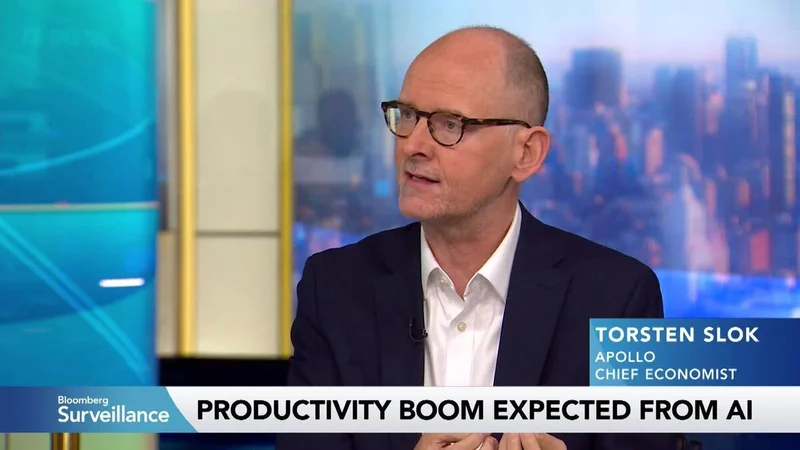
Image: Bloomberg AI
Main Takeaway
Apollo's chief economist predicts AI will create more jobs than it eliminates, drawing parallels to China's 2001 WTO entry that initially disrupted.
Jump to Key PointsSummary
The China shock comparison
Torsten Sløk, Apollo Global Management's chief economist, sees artificial intelligence following the same job-creating pattern as China's 2001 WTO entry. According to Bloomberg, Sløk argues that while AI will disrupt white-collar work initially, the productivity gains will ultimately generate more employment than they eliminate. This mirrors what happened when China's manufacturing surge first threatened US factory jobs but eventually contributed to broader economic expansion and new job categories.
Why this matters for open source
The economic framework Sløk presents has direct implications for open-source AI development. If AI follows the China shock pattern, the focus shifts from job replacement to job creation through new applications and services. Open-source projects that democratize AI capabilities could accelerate this job creation effect by enabling smaller companies and individual developers to build AI-powered businesses. This suggests that open-source AI tools might be more economically beneficial than proprietary systems in the long run, as they lower barriers to entry for new AI-driven ventures.
What this means for developers
Developers can stop worrying about coding themselves out of jobs. Sløk's analysis, drawing on Jevons paradox from economics, suggests that making AI more efficient actually increases demand for human oversight, customization, and new applications. The parallel to China's WTO entry shows that initial displacement in specific sectors gets offset by growth in adjacent areas. For developers, this means focusing on AI integration, specialized applications, and human-AI collaboration tools rather than competing directly with AI. The economic expansion creates more niches for technical talent than it eliminates.
The impact on enterprise adoption
Enterprise leaders can accelerate AI adoption without fear of workforce collapse. Sløk's framework indicates that companies implementing AI will see productivity gains that enable expansion into new markets and services, requiring more human workers overall. This reframes AI investment from a cost-cutting measure to a growth strategy. The China shock analogy suggests that early adopters who embrace AI productivity gains will capture disproportionate market share, similar to how companies adapted to China's manufacturing integration gained competitive advantages.
What happens next
The economic data will tell the story before the job market does. CNBC reports that Sløk notes AI's impact isn't yet visible in macroeconomic data, suggesting we're still in the early disruption phase. As productivity gains start appearing in quarterly reports, expect increased corporate AI investment followed by gradual job market expansion. The timeline likely mirrors China's WTO integration: initial 2-3 years of disruption headlines, followed by 5-7 years of net job creation as new AI-driven industries emerge. Watch for early signals in sectors like AI consulting, AI-human collaboration tools, and entirely new service categories that don't exist yet.
Key Points
Apollo's chief economist Torsten Sløk predicts AI will create more jobs than it eliminates, similar to China's 2001 WTO impact
Economic framework applies Jevons paradox: AI efficiency gains will expand human employment opportunities rather than reduce them
White-collar disruption phase expected to last 2-3 years, followed by 5-7 years of net job creation through new AI-driven industries
Enterprise AI adoption should be reframed from cost-cutting to growth strategy based on productivity gains enabling market expansion
Open-source AI development may accelerate job creation by democratizing access to AI capabilities for new business formation
Questions Answered
The China shock refers to how China's 2001 WTO entry initially disrupted US manufacturing jobs but ultimately created more employment through economic expansion. Sløk argues AI will follow this pattern with white-collar jobs.
Jevons paradox states that increased efficiency in resource use leads to greater overall consumption. Applied to AI, making AI more efficient will increase demand for human workers to manage, customize, and build upon AI systems.
Based on the China shock timeline, expect 2-3 years of initial disruption headlines followed by 5-7 years of net job creation as new AI-driven industries and services emerge.
No. The framework suggests early AI adopters will capture disproportionate advantages, similar to companies that successfully adapted to China's manufacturing integration. AI investment should be viewed as growth strategy, not cost-cutting.
Focus on AI integration, specialized applications, and human-AI collaboration tools rather than competing directly with AI. The economic expansion will create more technical niches than it eliminates.
Source Reliability
40% of sources are highly trusted · Avg reliability: 68
Go deeper with Organic Intel
Simple AI systems for your life, work, and business. Each one includes copyable prompts, guides, and downloadable resources.
Explore Systems