Angie Nixon’s Florida Senate Primary Upset Exposes Democrats’ Fight Over Ideology and Electability
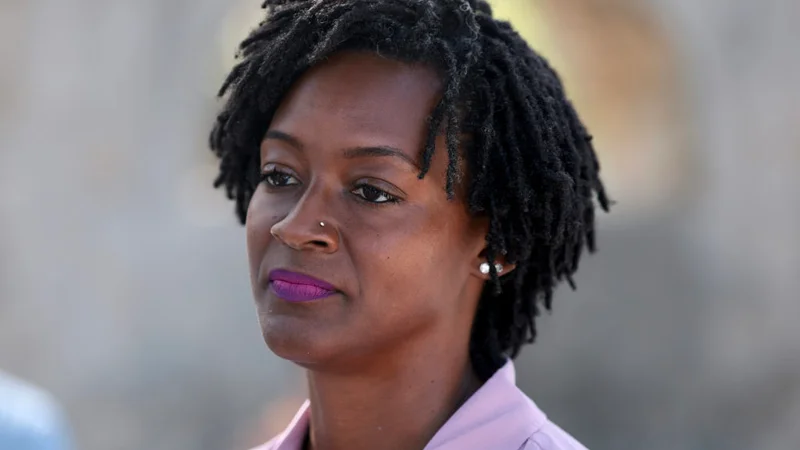
Image: Pbs
Main Takeaway
Angie Nixon defeated Alexander Vindman in Florida’s Democratic Senate primary despite a major fundraising gap, setting up a long-shot November contest against Republican Ashley Moody.
Jump to Key PointsSummary
Nixon’s upset victory
State Rep. Angie Nixon won Florida’s Democratic Senate primary, defeating Alexander Vindman in a result that jolted the party establishment. Nixon, a member of the Democratic Socialists of America, entered the race as a progressive legislator from Jacksonville, while Vindman brought national recognition from his role as a former Army intelligence officer and key witness in Donald Trump’s first impeachment.
The November election will pit Nixon against Republican Sen. Ashley Moody, whom Gov. Ron DeSantis appointed after Marco Rubio vacated the seat to become secretary of state. Moody remains the favorite in a state that has moved sharply toward Republicans, making Nixon’s primary victory more significant as a test of Democratic strategy than as an immediate forecast of a Senate takeover.
A campaign built on contrast
Nixon overcame a striking financial disadvantage. Vindman had raised about $16.3 million through late July, compared with roughly $975,000 for Nixon, according to figures cited by The Guardian, USA Today and Washington Jewish Week. His campaign benefited from his impeachment-era profile and establishment support, while Nixon built her case around economic demands and a grassroots identity.
Her platform includes universal health care and a $25 minimum wage. Those positions gave Democratic voters a clear ideological choice, while her organizing network helped compensate for the spending gap. Vindman congratulated Nixon after the contest and said he would stand with her against Moody, an early sign that the primary fight won't automatically become a general-election fracture.
The impeachment legacy
Vindman’s defeat carries unusual political symbolism because of his place in Trump’s first impeachment. As a former National Security Council aide and Army intelligence officer, he became one of the most recognizable figures associated with the congressional inquiry into Trump’s dealings with Ukraine. That background gave him a national profile but didn't translate into a Democratic nomination in Florida.
Nixon’s victory places a locally rooted progressive ahead of a candidate whose credentials were shaped by national security and presidential accountability. The result reflects a broader Democratic argument over whether candidates should emphasize opposition to Trump, institutional experience and moderation, or a more forceful economic program. The Guardian, PBS and Democracy Now all framed the contest as another upset for the party’s progressive wing.
A win within mixed results
Florida’s primary results offered no uniform verdict for democratic socialism. Nixon won the Senate nomination, but 2 other democratic socialist candidates lost to incumbent Democratic Reps. Jared Moskowitz and Debbie Wasserman Schultz, according to USA Today. The split gives both party factions evidence for their arguments: progressives can defeat heavily funded rivals, while moderates can still defend established congressional seats.
The wider primary map also produced mixed outcomes for Trump-backed candidates in Alaska and Wyoming. The Guardian described the contests as an early read on voter sentiment before the November midterms, while Fortune characterized Nixon’s win as part of a broader wave that has unsettled Democratic moderates. The pattern points to a competitive nomination environment rather than a single national formula.
Florida’s difficult November math
Nixon now faces a general-election contest against Moody, a Republican who entered the race with the advantages of incumbency, statewide visibility and Florida’s partisan alignment. Democratic hopes of reclaiming ground in the state have focused on its diverse electorate and dissatisfaction with Republican governance, but the Senate contest remains a steep climb.
Her primary victory gives Democrats a candidate with a distinct message and a ready-made organizing base. It also gives Republicans an opening to portray the Democratic nominee as too far left for Florida, especially around health care, wages and the DSA label. Nixon must turn a low-turnout primary coalition into a statewide electorate while raising the money required for a race against a well-known Republican.
What happens next
The immediate test is whether Nixon’s campaign can preserve its grassroots energy while broadening its appeal. Vindman’s promised support removes one potential obstacle, but Democratic voters who preferred his moderate profile still need a reason to participate in November. Nixon’s fundraising gap will also become harder to manage in a statewide campaign where television, digital advertising and field operations are expensive.
For Democrats nationally, the race will serve as another measure of whether progressive primary victories can survive general-election conditions in difficult states. For Nixon, the task is more concrete: make universal health care and wage policy competitive with Moody’s record and Republican advantage. The primary proved that money and national credentials don't guarantee a nomination. November will test whether organization and ideological clarity can overcome Florida’s electoral math.
Key Points
Angie Nixon defeated Alexander Vindman in Florida’s Democratic Senate primary despite a roughly $15 million fundraising disadvantage.
Nixon’s platform centers on universal health care, a $25 minimum wage and democratic socialist organizing.
Alexander Vindman’s impeachment-era national profile failed to overcome Nixon’s grassroots campaign and ideological clarity.
Republican Ashley Moody remains favored in November because of Florida’s partisan alignment and statewide GOP strength.
Florida’s primary produced mixed results for democratic socialists, with Nixon winning while 2 House challengers lost.
Questions Answered
Angie Nixon is a Florida state representative and Democratic Socialists of America member who won the 2026 Democratic Senate primary. Her campaign focused on universal health care, a $25 minimum wage and grassroots organizing.
Angie Nixon beat Alexander Vindman by combining a progressive economic message with grassroots support despite a major fundraising gap. Vindman raised about $16.3 million through late July, compared with Nixon’s roughly $975,000.
Alexander Vindman was a central witness in Donald Trump’s first impeachment and previously served as an Army intelligence officer and National Security Council aide. His national security credentials made him the better-known moderate candidate, but they didn't secure the nomination.
Angie Nixon will face Republican Ashley Moody in Florida’s November Senate election. Moody, a former state attorney general appointed by Ron DeSantis, enters the race with a strong partisan advantage.
Angie Nixon is not favored to win the Florida Senate seat because Florida has shifted strongly toward Republicans. Her primary victory gives Democrats a clear progressive nominee, but she must expand her coalition and close a substantial fundraising and electoral gap.
Source Reliability
56% of sources are trusted · Avg reliability: 76
Go deeper with Organic Intel
Simple AI systems for your life, work, and business. Each one includes copyable prompts, guides, and downloadable resources.
Explore Systems