Amazon Discloses $600 Million Trump Tariff Refund and Says Some Shoppers Will Get Money Back
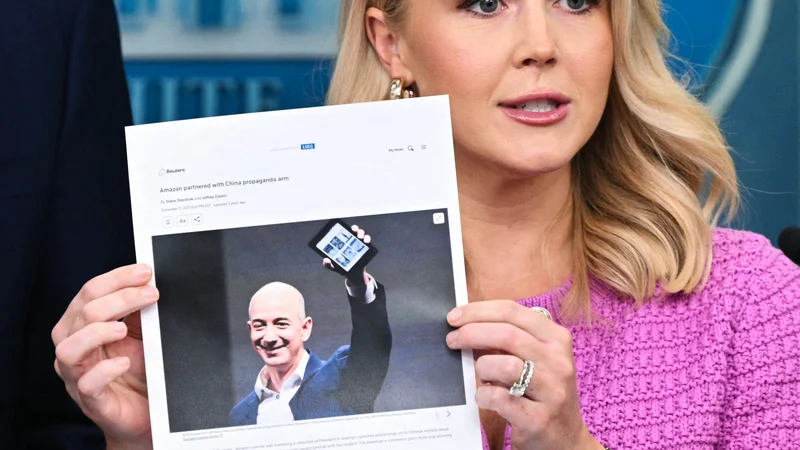
Image: Cnbc
Main Takeaway
Amazon disclosed it recouped $600 million in tariff refunds during the second quarter after the Supreme Court struck down President Trump's trade levies and says it will automatically reimburse some customers.
Jump to Key PointsSummary
Why Amazon is getting a $600 million refund
Amazon disclosed Thursday that it collected approximately $600 million in tariff refunds during the second quarter, one of the largest publicly confirmed payouts since the Supreme Court invalidated many of President Donald Trump's trade levies. The ruling in February determined Trump could not use the International Emergency Economic Powers Act of 1977 to impose sweeping "Liberation Day" tariffs without congressional approval, compelling the federal government to reimburse companies that paid duties on imported goods.
U.S. businesses collectively paid roughly $166 billion in duties tied to those tariffs, according to court documents cited by the Seattle Times. Major retailers and manufacturers including Apple, Walmart, Costco, Home Depot, and General Motors all said they would apply for refunds, Tech Echelon reports. Amazon had previously declined to say whether it planned to seek reimbursement, a silence that became a legal liability when consumers sued.
The class-action lawsuit that forced Amazon's hand
A class-action lawsuit filed in federal court in Seattle in May accused Amazon of profiting off "hundreds of millions of dollars in unlawful tariff costs" and alleged the company wasn't seeking refunds in order to "curry favor" with the Trump administration, according to Fortune and Yahoo Finance. The complaint claimed Amazon prioritized political goodwill over reimbursing shoppers for invalidated IEEPA tariffs.
Amazon had landed in hot water with the White House the prior year after reports surfaced that the company planned to display tariff-related surcharges on its website, CNBC notes. CEO Andy Jassy conceded in January that tariffs were hitting prices, months before the refund disclosure came to light. The lawsuit framed Amazon's silence on refund applications as a deliberate strategy to avoid antagonizing the administration while consumers footed the bill.
How much money customers will actually see
CFO Brian Olsavsky said on the earnings call that Amazon will automatically issue reimbursements to consumers under what Bloomberg described as a "limited set of circumstances." The payout to shoppers will be far smaller than the headline $600 million figure for two reasons Olsavsky outlined, according to Fortune: Amazon's teams did extensive work forward-buying and prepositioning inventory to avoid tariff costs in the first place, and the company is not the importer of record for many goods sold on its platform.
That means the tariff burden on a large share of products fell on third-party sellers, not Amazon directly. The company has not specified what percentage of the $600 million will flow to consumers, nor has it detailed the criteria determining which purchases qualify for automatic reimbursement. The vagueness leaves open the question of whether the refunds will meaningfully offset the price hikes shoppers absorbed during the tariff period.
The political tightrope Amazon walked
Amazon's handling of the tariff saga reveals the political balancing act facing large tech platforms operating under a hostile administration. The White House had previously targeted Amazon over its relationship with China, with Press Secretary Karoline Leavitt displaying a printout during a press briefing that accused the company of partnering with Chinese propaganda arms, CNBC reports.
Against that backdrop, Amazon's months-long silence on whether it would pursue refunds looks less like oversight and more like risk management. The class-action plaintiffs argued exactly that point: the company stayed quiet to avoid provoking an administration already inclined to view it as an adversary. Only after the lawsuit forced disclosure did the $600 million figure and the partial customer reimbursement plan emerge, suggesting legal pressure rather than voluntary transparency drove the timeline.
What this means for other retailers and refunds
The Amazon disclosure sets a high-water mark for publicly confirmed tariff refunds and signals that the reimbursement process is moving forward for large importers. Walmart, Home Depot, Target, and other retailers who paid tariffs on imported goods now face pressure to disclose what they have collected and whether they intend to pass refunds to consumers.
The class-action mechanism that forced Amazon's hand could become a template. If other major retailers also remained silent on refund applications, consumer lawsuits may follow, particularly where companies raised prices explicitly citing tariff costs. The $166 billion in total duties paid by U.S. businesses represents a massive pool of potential reimbursements, and Amazon's $600 million slice is just one piece of a much larger puzzle that will unfold across retail earnings calls in the coming quarters.
What happens next for shoppers and the company
Amazon has committed to automatic reimbursements, meaning affected customers will not need to file claims or take action to receive what they are owed. The company has not provided a timeline for when refunds will appear in customer accounts or what the average payout might look like.
The broader tariff refund process continues as businesses navigate the claims system established after the Supreme Court ruling. For Amazon, the $600 million refund arrived in the same quarter the company beat Wall Street expectations with 20 percent revenue growth driven by booming cloud computing, the Seattle Times reports. The tariff refunds, while material, are a footnote compared to the company's core business momentum, but for individual shoppers who paid inflated prices during the tariff period, any reimbursement, however small, represents a tangible correction of an illegal levy.
Key Points
Amazon collected $600 million in tariff refunds in Q2 2026 after the Supreme Court struck down Trump's IEEPA trade levies as illegal
CFO Brian Olsavsky said Amazon will automatically refund some customers under a limited set of circumstances, without specifying amounts or timelines
A May 2026 class-action lawsuit accused Amazon of prioritizing political favor with Trump over reimbursing shoppers for inflated prices
The refund pool is limited because Amazon forward-bought inventory to dodge tariffs and is not the importer of record for many goods
Apple, Walmart, Costco, Home Depot, and General Motors are among the other retailers seeking refunds from $166 billion in total duties paid
Questions Answered
Amazon received approximately $600 million in tariff refunds during the second quarter of 2026. CFO Brian Olsavsky disclosed the figure on the company's earnings call following the Supreme Court ruling that struck down Trump's IEEPA tariffs as illegal.
Amazon said it will automatically issue reimbursements to consumers under a limited set of circumstances. The company has not specified which customers qualify, how much they will receive, or when refunds will appear.
A class-action lawsuit filed in May 2026 in Seattle accused Amazon of profiting from hundreds of millions of dollars in unlawful tariff costs and deliberately not seeking refunds to curry favor with the Trump administration, rather than reimbursing shoppers who paid higher prices.
The Supreme Court ruled in February 2026 that President Trump could not use the International Emergency Economic Powers Act of 1977 to impose sweeping tariffs without congressional approval, invalidating the Liberation Day tariffs and compelling the government to reimburse businesses that paid duties.
Major retailers and manufacturers including Apple, Walmart, Costco, Home Depot, and General Motors all said they would apply for refunds. U.S. businesses collectively paid around $166 billion in duties related to the invalidated tariffs.
Amazon's CFO said the refund amount is limited because the company forward-bought and prepositioned inventory to avoid tariff costs, and because Amazon is not the importer of record for many goods sold on its platform, meaning third-party sellers bore the tariff burden.
Source Reliability
50% of sources are highly trusted · Avg reliability: 77
Go deeper with Organic Intel
Simple AI systems for your life, work, and business. Each one includes copyable prompts, guides, and downloadable resources.
Explore Systems