Amazon Bets $220 Billion on AI Infrastructure as AWS Growth Hits an 18-Quarter Record
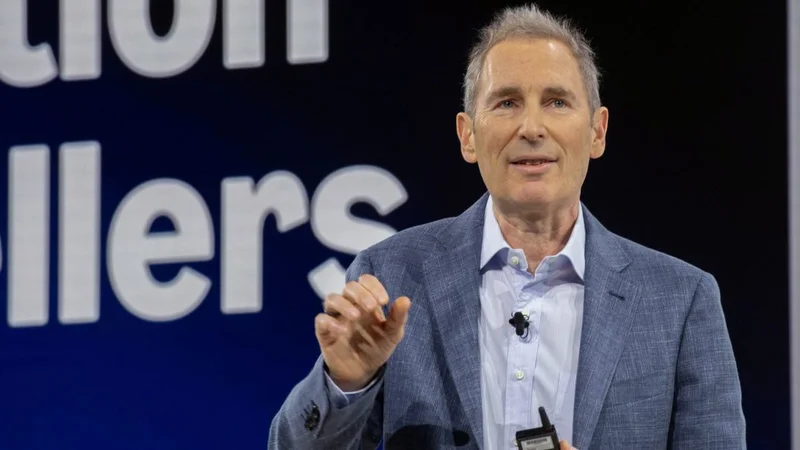
Image: Fortune AI
Main Takeaway
Amazon CEO Andy Jassy raised the company's annual AI infrastructure spending forecast to $220 billion as AWS revenue surged 37% to $42.2 billion in Q2, its fastest growth in more than four years.
Jump to Key PointsSummary
The scale of the spending surge
Amazon is now planning to pour roughly $220 billion into capital expenditures this year, the vast majority of it directed at AI infrastructure for its AWS cloud division. CEO Andy Jassy confirmed the elevated figure during the company's Q2 2026 earnings call, framing it as a direct response to demand that continues to outstrip the company's ability to build data centers. According to Fortune, the spending level represents a dramatic acceleration from previous years and makes Amazon the most aggressive spender among the hyperscale cloud providers.
TD Cowen analyst John Blackledge, speaking on Bloomberg Open Interest, noted that Amazon's spending trajectory is beginning to deliver measurable returns. The sheer scale of the investment, roughly $220 billion in a single year, dwarfs the annual GDP of many countries. Amazon's leadership made clear that even this record spending level may not be enough to satisfy near-term demand, with Jassy warning that the company will remain capacity-constrained through at least the remainder of 2026.
AWS posts its strongest revenue acceleration since 2021
Amazon Web Services delivered $42.2 billion in revenue for the second quarter, a 37% jump from $30.9 billion in the same period last year. Fortune reports that this marks the unit's fastest growth rate in 18 quarters, a span stretching back more than four years. The acceleration ended a prolonged period of growth rate normalization that had followed the pandemic-era cloud boom and subsequent optimization cycle.
Ynetnews characterized the moment with a straightforward headline: "AWS is booming." The cloud division's operating income also expanded meaningfully, reinforcing the unit's role as Amazon's primary profit engine. Calcalistech noted that the growth acceleration came as enterprises moved beyond cost-cutting exercises and into large-scale AI workload deployment, a shift that AWS has been aggressively positioning itself to capture.
Why the trillion-dollar framing matters
Jassy told investors that AWS has a path to becoming a trillion-dollar business, a projection that reframes the entire investment thesis around Amazon's cloud division. Yahoo Finance captured the headline directly: "Amazon CEO: AWS could be a 'trillion-dollar' business." The framing is not casual. It positions AWS not as a mature cash cow but as an asset still in the early innings of a multi-decade growth arc.
Observer magazine contextualized Jassy's leadership through this lens, describing the $200 billion-plus AI charge as the defining bet of his tenure. The trillion-dollar target implies AWS would need to roughly triple its current annualized revenue run rate, a goal that would require sustained high-double-digit growth for years. TD Cowen's Blackledge indicated that the capacity constraints, while frustrating in the short term, actually validate the underlying demand signal that makes the trillion-dollar aspiration credible.
Wall Street's immediate reaction
Amazon's stock price jumped more than 9% in after-hours trading following the earnings release, according to Fortune. The market's embrace of the spending increase, rather than punishing it, reflects a broader shift in investor sentiment toward AI infrastructure. The Wrap captured the dynamic directly: "Amazon Plans to Spend $20 Billion More on AI. Wall Street Loves It."
Investing.com had previewed the earnings with a more skeptical framing, questioning whether AWS growth would justify the enormous capital outlay. The answer, at least for this quarter, was a decisive yes. The revenue acceleration combined with Jassy's trillion-dollar framing gave investors a narrative that converted spending from a risk factor into a growth signal. Datacenterknowledge noted that the capacity constraints, while operationally frustrating, created a scarcity premium that investors interpreted as evidence of durable demand rather than mismanagement.
The capacity constraint paradox
Jassy explicitly stated that Amazon still would not have enough capacity to meet demand, even at the elevated $220 billion spending level. This admission, reported by Fortune and echoed across multiple outlets, creates an unusual dynamic. The capacity constraint simultaneously limits near-term revenue growth and validates the investment thesis by demonstrating demand that exceeds the company's ability to supply.
CRN, which covers the IT channel and cloud partner ecosystem, reported that AWS's AI demand was specifically outpacing capacity in the data center build-out pipeline. The bottleneck is not demand but physical infrastructure: power availability, chip supply, construction timelines, and cooling systems. Diginomica emphasized Jassy's warning that the spending ramp would continue, with "lots more to come," suggesting that the $220 billion figure could itself prove to be a floor rather than a ceiling in subsequent years.
What happens next for the cloud wars
The spending escalation reshapes the competitive dynamics among Microsoft Azure, Google Cloud, and AWS. Amazon's $220 billion commitment is a signal that the company intends to maintain its market share lead even as AI reshapes the cloud computing landscape. Microsoft, which has been the primary beneficiary of the early AI wave through its OpenAI partnership, now faces a direct infrastructure challenge from Amazon's sheer scale of investment.
News.microsoft.com covered the spending increase as a significant development, and the framing from multiple outlets suggests that the hyperscaler race is entering a new phase where capital expenditure scale becomes the primary differentiator. Calcalistech reported that the cloud growth acceleration was directly tied to AI workloads, implying that the winner of the infrastructure race will capture an outsized share of the next generation of enterprise AI spending. For Google Cloud, the pressure to match Amazon's investment pace will now intensify, potentially forcing similar CapEx escalations.
Key Points
Amazon is raising its 2026 AI infrastructure spending to roughly $220 billion, primarily for AWS data center expansion.
AWS posted $42.2 billion in Q2 revenue, a 37% increase and its fastest growth rate in 18 quarters.
CEO Andy Jassy said AWS could become a trillion-dollar business as AI demand outpaces the company's capacity to build.
Amazon's stock jumped more than 9% in after-hours trading as Wall Street embraced the elevated spending plan.
The company remains capacity-constrained through the rest of 2026, limiting near-term revenue despite surging demand.
Questions Answered
Amazon is spending roughly $220 billion on capital expenditures in 2026, with the vast majority directed at AI infrastructure for AWS. CEO Andy Jassy confirmed the figure during the Q2 earnings call and indicated spending could continue to rise.
AWS reported $42.2 billion in revenue in the second quarter of 2026, up 37% from $30.9 billion a year ago. This marks the cloud division's fastest growth rate in 18 quarters, or more than four years.
Amazon's stock rose more than 9% in after-hours trading because investors embraced the combination of accelerating AWS growth and the company's aggressive AI infrastructure spending plan. The capacity constraints were interpreted as evidence of strong demand rather than mismanagement.
No. CEO Andy Jassy explicitly stated that Amazon will remain capacity-constrained through at least the remainder of 2026, even at the elevated $220 billion spending level. Demand for AI cloud services is outpace the company's ability to build new data centers.
Andy Jassy said AWS could become a trillion-dollar business, framing the cloud division as an asset still in the early stages of a multi-decade growth arc. The projection implies AWS would need to roughly triple its current annualized revenue run rate.
Source Reliability
46% of sources are trusted · Avg reliability: 73
Go deeper with Organic Intel
Simple AI systems for your life, work, and business. Each one includes copyable prompts, guides, and downloadable resources.
Explore Systems