Trump Claims U.S. Secured Majority Control of 65 Billion Venezuelan Oil Barrels Amid Gas Price Surge
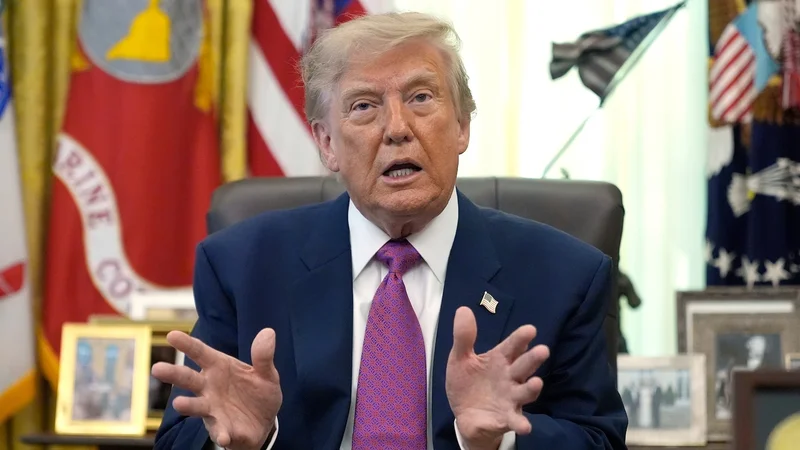
Image: Abcnews
Main Takeaway
President Donald Trump says a U.S.-Venezuela agreement grants American control of more than 65 billion barrels of reserves, with lower gasoline prices promised.
Jump to Key PointsSummary
The claimed oil agreement
President Donald Trump says the United States has reached an agreement with Venezuela granting it majority control of more than 65 billion barrels of proven oil reserves. He described the arrangement as the “biggest oil deal in world history” in a Truth Social post, saying it would substantially lower gasoline prices for Americans.
The announcement names Secretary of State Marco Rubio, Defense Secretary Pete Hegseth and Venezuelan interim President Delcy Rodriguez as negotiators. Public details remain limited. The reported stake represents roughly one-fifth of Venezuela’s more than 303 billion barrels of proven reserves, the world’s largest national total.
Why prices are driving the timing
The proposal arrives as U.S. gasoline prices have climbed and domestic crude inventories have tightened. Americans are paying an average of $4.08 per gallon for regular gasoline, up from $3.20 a year earlier, according to AAA data cited by Finance Yahoo. Disruptions linked to the Iran war have added pressure to global energy markets.
Trump is presenting Venezuelan access as an answer to that squeeze, tying foreign oil control directly to household fuel costs and U.S. reserve replenishment. Politico and ABC News both describe the administration’s central claim as increased crude supply and lower prices, while NPR frames the arrangement as access to reserves that would come at a cost.
Venezuela’s reserves require rebuilding
Venezuela’s oil wealth is enormous, but turning reserves into gasoline or exportable crude requires years of investment, repairs and infrastructure work. Much of the country’s production system has deteriorated, and the Orinoco Belt’s heavy crude needs specialized equipment and refining capacity.
The reported agreement focuses on areas including the Orinoco Belt and Lake Maracaibo. Time says officials have provided no public timeline for development, leaving unanswered questions about financing, operators, sanctions, transport networks and refinery capacity. A larger reserve base therefore doesn’t translate into an immediate increase at U.S. pumps.
A new role for Washington
The plan would place the U.S. government in a role usually held by national oil companies. Saudi Aramco, Russia’s Rosneft, Abu Dhabi National Oil Company, Brazil’s Petrobras and Mexico’s Pemex serve as state-backed champions, while American production has traditionally remained in private hands.
A separate Fortune analysis says the federal government would control 55% of effective output through equity ownership and production rights. That structure would give Washington influence over a major foreign energy company while leaving practical extraction and investment work to industry participants. Exxon Mobil and Chevron are among the private-sector companies positioned in the broader American oil system, though no specific operator has been publicly identified for the Venezuelan arrangement.
Questions over execution and economics
The agreement’s effect on gasoline prices depends on how quickly Venezuelan production rises, where the crude is refined and how global markets respond. Oil is traded internationally, so additional Venezuelan supply would compete with other producers rather than flow automatically into American fuel tanks.
The plan also raises legal and political questions. The announcements describe majority control, but they do not publicly spell out ownership terms, payment arrangements, congressional involvement or Venezuela’s obligations. Any transition would also require coordination with U.S. sanctions policy and protection for workers, facilities and shipping routes.
What happens next
The next test is whether the administration releases a formal agreement with enforceable terms. Investors, Venezuelan officials and oil producers will look for details on governance, capital spending, production targets and the treatment of existing contracts.
For consumers, the immediate benchmark remains gasoline prices, not the headline reserve figure. Development of Venezuela’s fields requires substantial funding and infrastructure work, and the administration has offered no public schedule for new production. Until those details emerge, the announcement is a major strategic claim with an uncertain delivery timeline.
Key Points
Donald Trump claims a U.S.-Venezuela agreement grants American control of more than 65 billion oil barrels.
Venezuela’s 303 billion proven barrels form the world’s largest national oil reserve base.
U.S. gasoline averages $4.08 per gallon amid global disruptions linked to the Iran war.
Venezuelan production needs major investment, infrastructure repairs and specialized heavy-crude refining.
The proposed arrangement would give Washington an unusual ownership role in foreign oil production.
Questions Answered
Donald Trump said the agreement gives the United States majority control of more than 65 billion barrels of Venezuelan proven oil reserves. He said the arrangement would replenish U.S. reserves and substantially lower gasoline prices.
Venezuela’s claimed agreement covers more than 65 billion barrels of proven reserves. The country has more than 303 billion proven barrels overall, according to figures cited in coverage of the announcement.
The Donald Trump Venezuela oil deal won’t immediately lower U.S. gas prices because production requires investment, repairs and infrastructure work. Officials have provided no public development timeline, and Venezuelan crude would enter global markets.
The Venezuela oil deal would give the U.S. government an ownership and production role in a major foreign oil enterprise. Fortune says the federal government would control 55% of effective output through equity ownership and production.
Donald Trump’s Venezuela oil announcement now requires formal terms covering ownership, financing, operators, sanctions and production targets. The administration has not publicly released those details or a schedule for additional output.
Source Reliability
40% of sources are highly trusted · Avg reliability: 71
Go deeper with Organic Intel
Simple AI systems for your life, work, and business. Each one includes copyable prompts, guides, and downloadable resources.
Explore Systems